This piece transcends the typical war reportage by revealing a quiet, devastating front line: the systematic dismantling of Ukraine's intellectual sports legacy. Tim Mak does not merely recount board game victories; he exposes how a conflict designed to erase national identity is successfully targeting the very minds that have defined it for decades.
The Human Cost of Intellectual Loss
Mak anchors his argument in the staggering, often overlooked casualty figures within Ukraine's mind-sports community. He writes, "According to official figures from Ukraine’s Ministry of Foreign Affairs and Ministry of Youth and Sports, more than 500 Ukrainian athletes and coaches have been killed by the Russian military." This statistic is not a footnote; it represents a generational severing of expertise that took centuries to cultivate.
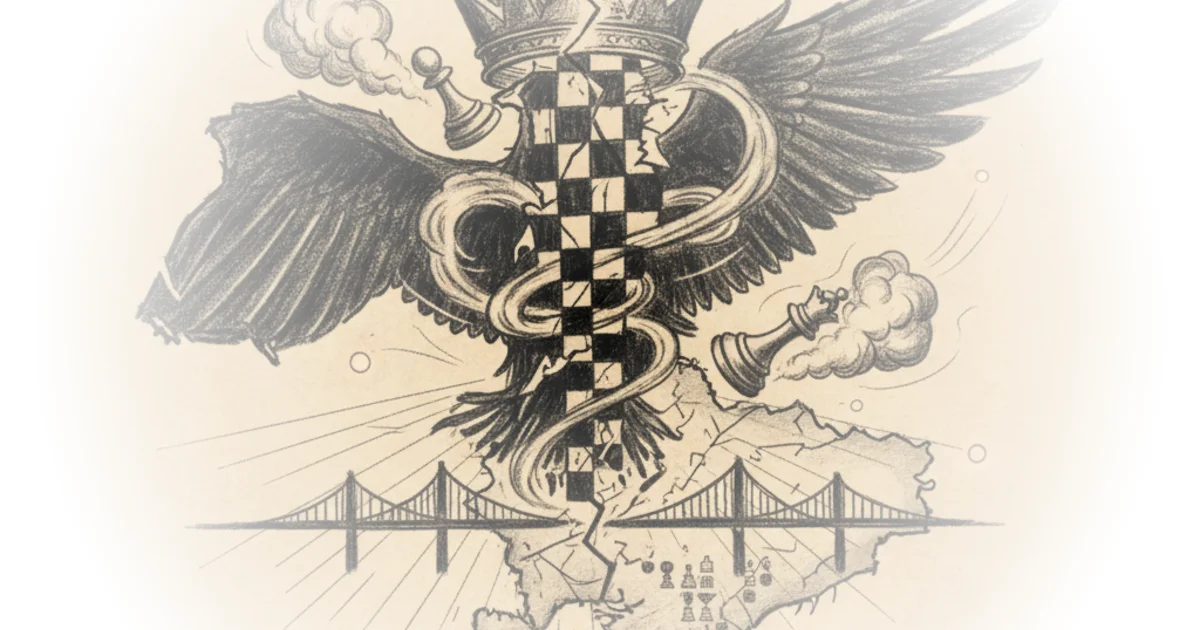
The author illustrates this loss through the story of Yurii Anikeiev, a champion who now serves in the 225th Separate Assault Regiment. Mak notes that while Anikeiev recently led his team to a historic silver medal, his participation required navigating a "multi-stage bureaucratic process" simply because he is mobilized. The narrative effectively highlights the absurdity of war: a world-class athlete must fight red tape just as fiercely as he fights for territory. As Mak puts it, "Without extra support, the country risks losing not only its long-established championship positions but also another platform for self-representation and international cooperation." This framing is crucial; it shifts the conversation from mere sporting defeats to the erosion of soft power and national morale.
Critics might argue that in a total war, the fate of checkers champions is a secondary concern compared to immediate survival. However, Mak's inclusion of the 21 confirmed chess players killed—and estimates suggesting up to 50 losses including juniors—demonstrates that the violence is indiscriminate, striking at the heart of civilian intellectual life regardless of utility.
"Everything that exists in sport also exists in the army. In sport, you impose limits on yourself... Here [in the army], the restrictions are imposed on you from the outside, so in a way it feels easier to adjust."
From Soviet Hubs to Battlefield Tactics
Mak skillfully weaves historical context into the present crisis, reminding readers that Ukraine's dominance in these games is not accidental but built upon deep roots. He traces the lineage back to Kyivan Rus and notes how "Kyiv and Kharkiv were the main hubs in checkers" under Soviet rule, where the state regulated leisure to foster a specific type of disciplined mind.
The piece draws a fascinating parallel between the game mechanics and military survival. Mak explains that Anikeiev believes his skills translate directly to combat: "Checkers trains the mind to calculate cascading effects, chains of consequences triggered by a single move, under strict time pressure." This is a compelling observation on how cognitive training survives even when the physical infrastructure does not. The author suggests that the discipline required for international draughts—where a 100-square board demands complex foresight—is now being repurposed for close-quarters survival.
Yet, the article also touches on the fragility of this ecosystem. Mak points out that despite Ukraine's post-independence successes, including champions like Mariia Muzychuk in 2015, the "devastating blow" to the community threatens to unravel decades of progress. The historical depth provided here—referencing gaming pieces from Slavic graves and the Soviet-era infrastructure—adds weight to the loss; this is not just about a game, but about a cultural continuity that has existed since at least the third century.
The Broader Strategic Landscape
While the main story focuses on Anikeiev, Mak contextualizes the struggle within a rapidly shifting geopolitical arena. He notes that "Ukraine has maintained some of the top positions in international competitions for games such as chess and checkers since gaining independence in the 1990s," but now faces an existential threat to this status.
The commentary implicitly critiques the lack of resources available to these athletes. Mak writes, "Some of Ukraine’s top players have moved abroad because of the war and lack of governmental funding." This highlights a critical vulnerability: even as the nation fights for its physical borders, it is hemorrhaging its intellectual capital due to financial strain. The contrast between the historic silver medal in France and the reality of soldiers playing checkers on phones during blackouts underscores the resilience of the Ukrainian people, but also the precariousness of their future.
Mak's reporting suggests that the preservation of these sports is a proxy for preserving national identity itself. When he notes that "For some of The Counteroffensive’s members, the game took on new meaning during the winter blackouts," he elevates checkers from a pastime to a form of psychological resistance.
Bottom Line
Tim Mak's most powerful contribution is reframing the death of athletes not as collateral damage, but as a strategic loss for Ukraine's cultural sovereignty. The piece's greatest strength lies in its humanization of high-level strategy, showing how the discipline of checkers mirrors the grim calculus of modern warfare. However, the argument leaves readers with an unsettling question: if the infrastructure and funding vanish entirely, can this intellectual legacy survive the war, or will it be another casualty of the invasion?