Helen De Cruz does something rare in the face of a terminal prognosis: she refuses to let the diagnosis become the entire story, instead using her own mortality to dissect the structural fragility of American healthcare and the philosophical resilience required to survive it. While many essays on illness retreat into the private sphere of grief, De Cruz leverages her experience in the infusion center to expose a system where the flourishing of "tough wildflowers" is systematically penalized by insurance denials and a lack of political will. This is not a eulogy for a life ending; it is a forensic examination of why so many lives are cut short by policy failures that politicians treat as footnotes.
The Theology of Suffering
De Cruz begins by confronting the raw, unglamorous reality of her medical decline. After three failed treatments, she faces a prognosis of one to two years, a timeline she describes with chilling clarity. "Those are pooled numbers," she writes. "It could be significantly longer, depending on how I respond to life-extending chemo which will not cure me but keep cancer at bay, hopefully, for a good while." This admission sets a tone of radical honesty that rejects the platitudes often offered to the dying. She explores the limits of faith, noting that her fervent prayers have led not to miracles, but to a numbness that forces a theological reckoning. She considers the distinction between general and special providence, citing Maimonides, to suggest that perhaps disease falls outside a divine plan for rational creatures, or alternatively, adopts Schleiermacher's view that suffering is a "foreseen but unwanted byproduct of how creation works." This philosophical pivot is crucial; it allows her to move from asking "Why me?" to asking "How do I live?" without relying on the promise of a supernatural rescue.
The Wildflower and the Orchid
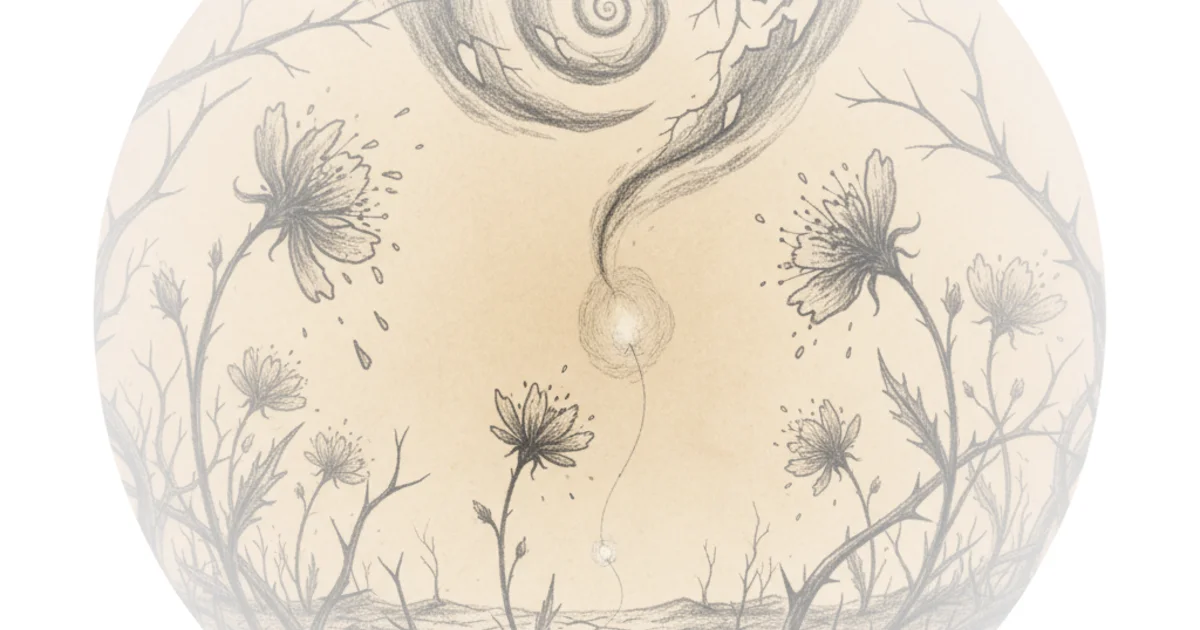
The core of De Cruz's argument rests on a powerful botanical metaphor borrowed from philosopher Amy Olberding, contrasting the "hothouse orchid" with the "tough wildflower." She argues that traditional notions of goodness, often associated with Aristotle, view flourishing as delicate, requiring optimal conditions like health and wealth to bloom. "Maybe goodness is like a delicate flower, an orchid in a hothouse, something beautiful but fragile that requires optimal conditions to flourish," she writes. However, she aligns herself with Plato and Spinoza, who saw goodness as resilient. "Or maybe goodness is like a tough wildflower: we can have it even if we lack, e.g., health or wealth. We can seek it because it is not entirely found in worldly goods." This framing is particularly potent when she connects it to her own identity as a first-generation college student from a working-class background. She notes that while the academic world prefers the "orchid," those who must grow in the "manure pile on the roadside" can still achieve excellence, though at a steep cost. "To fully realize yourself as a wildflower means making significant sacrifices," she observes, echoing Jennifer Morton's work on the burdens placed on strivers from disadvantaged milieus. This is not just a personal reflection; it is a critique of an ecosystem that rewards privilege while punishing resilience.
"If you weren't born as a privileged orchid in one of the nation's finest hothouses, you may yet thrive as a wildflower. But that has costs."
De Cruz grounds this philosophical stance in the historical rigor of Spinoza's Ethics. She references the philosopher's final lines, noting that the path to salvation or goodness is "very hard" precisely because it is rare. "All things excellent are as difficult as they are rare," she quotes, using Spinoza to validate the struggle of those without a safety net. This connection adds a layer of intellectual depth to her personal narrative, suggesting that her struggle is not a failure of character but a feature of a system where excellence requires navigating obstacles that others never face. Critics might argue that this romanticization of struggle places too much burden on the individual to overcome systemic barriers, potentially absolving society of its duty to create better conditions. Yet, De Cruz anticipates this, insisting that while individuals can be wildflowers, society must still strive to reduce the thorns.
The Politics of the Infusion Center
The essay's most searing critique emerges when De Cruz shifts from philosophy to the immediate political reality of her treatment. She recounts a conversation with Sue, a 75-year-old woman from rural Missouri who has survived terminal cancer for eight years against the odds. Their dialogue reveals a shared frustration with a healthcare system that sidelines the vulnerable. "We also talked about how improvements in health care and insurance were not even seriously on the table this past election," De Cruz writes, highlighting the political neglect of immunocompromised patients. She points out the hypocrisy of political posturing, noting that while one candidate mocked the other's lack of a plan to replace the Affordable Care Act, neither offered a transformative solution. "Harris laughed at Trump for having concepts of a plan to replace Obamacare, but what was her plan? Nothing much, just some improvements on the edges," she argues. This observation cuts through the partisan noise to expose a deeper failure: the system is designed to protect shareholders rather than patients. She notes the deep anger surrounding the murder of a healthcare executive, suggesting it reflects a public fury at a system that prioritizes profit over life.
The human cost of this neglect is palpable in her description of the daily battles against insurance providers. "Both Sue and I have battled our insurance providers for denials of necessary care, offered surprise bills etc. It's a lot on top of being so illl," she writes. This is where the essay transcends personal memoir to become a call for structural change. She hopes that political leaders will "put the interests of millions of people whose flourishing is fragile above the interests of a few CEOs and shareholders." The reference to the murder of Brian Thompson serves as a grim reminder of the stakes, though the article focuses on the systemic anger rather than the violence itself. The argument here is that while individuals can cultivate goodness in the face of illness, a just society must ensure that the conditions for that goodness are not so hostile that they require superhuman effort to survive.
Bottom Line
De Cruz's most compelling contribution is her refusal to separate the personal tragedy of illness from the political tragedy of a broken healthcare system, arguing that true resilience is possible but should not be a prerequisite for survival. The piece's greatest strength lies in its synthesis of ancient philosophy and modern policy, using Spinoza and Olberding to frame a critique that is both intellectually rigorous and emotionally devastating. Its vulnerability, however, is the inherent difficulty of translating this philosophical resilience into political action when the system seems designed to resist change. Readers should watch for how this narrative of the "wildflower" influences the broader discourse on healthcare reform, as the demand for a system that supports rather than hinders human flourishing becomes increasingly urgent.