Dan Perry arrives in Kosovo not merely as a tourist, but as a philosopher probing the very definition of statehood on a patch of land where every village contains an argument with the past. His central claim is striking: that Kosovo functions as a sovereign nation in practice while remaining a legal fiction to half the world, exposing the arbitrary and often hypocritical nature of international recognition. This is essential listening for anyone trying to understand why modern borders are less about geography and more about power, memory, and who gets to decide what a "country" actually is.
The Paradox of Existence
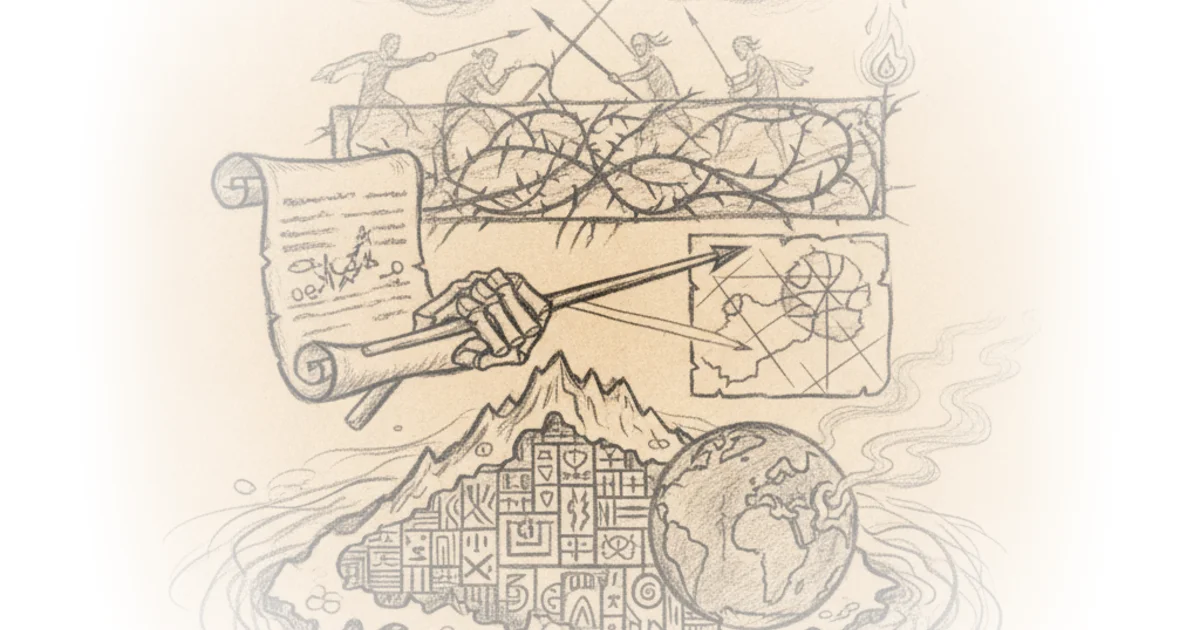
Perry frames Kosovo as the ultimate test case for the concept of self-determination. He notes that while the territory possesses all the trappings of independence—passports, police, elections, and even a national football team—it remains unrecognized by Serbia, Russia, China, and five members of the European Union. "Kosovo is a perfect illustration for the idea that there is no universally accepted formula for what makes a country," Perry writes. He argues that this limbo state forces Kosovars to justify their existence in ways most nations never have to, creating a unique psychological tension between the desire for external validation and the defiant assertion of "hell with the world."
The author's observation on the local reception of American influence is particularly vivid. In Pristina, he finds an adulation for Bill Clinton that borders on the religious, complete with statues and boulevards named after him. Perry notes, "Rarely have I sensed such appreciation for my American accent," highlighting how the 1999 NATO intervention is viewed not as a geopolitical maneuver but as a liberation event. This framing effectively captures the emotional debt many Kosovars feel toward the West, even as he subtly critiques the transactional nature of that gratitude.
"The map of the world is a compromise and a happenstance, and the Balkans expose this perhaps more clearly than anywhere else."
However, Perry does not shy away from the complexity of this history. He points to the unfinished Church of Christ the Saviour in Pristina as a potent symbol of the region's fractured identity. Built under Slobodan Milošević and left as a shell after the war, it stands as "part church, part monument, part provocation." To Serbs, it represents continuity; to Albanians, it is a symbol of imposed domination. Perry uses this physical structure to argue that in the Balkans, meaning often derives from the state of being unfinished, mirroring the political status of Kosovo itself.
The Weight of History and Memory
The commentary shifts to the human cost of the region's violent fragmentation. Perry reminds readers that "Balkanization" entered the global vocabulary as a fear of endless division, yet the region once produced Yugoslavia, a surprisingly functional multinational state under Marshal Tito. He contrasts the relative stability of the 1990s with the catastrophic collapse that followed, where nationalist leaders discovered that ethnic agitation was more effective than socialist ideology.
Perry brings in the perspective of Jeta Xharra, co-founder of the Exodus 99 museum, to ground the geopolitical analysis in personal trauma. "Some of us were teenagers and journalists in 1999 and have avoided talking about this for 30 years," Xharra tells him. "Now we are a bit more of a normal country, enough time has passed for us not to be scared that we will be wiped off and expelled again." This quote is crucial; it underscores that while the state-building project may be underway, the collective soul of the nation remains unhealed. Perry wisely notes that despite the return of displaced persons after NATO's intervention, the trauma of the exodus—where over one million people were driven from their homes—is still a living memory for many.
Critics might argue that focusing too heavily on the "unfinished" nature of Kosovo risks undermining the legitimacy of its current institutions. Yet Perry balances this by highlighting the vibrant, secular, and European-oriented culture of modern Pristina, which defies the stereotypical "Islamic" or "tribal" assumptions often projected onto it from abroad. He observes that visible religious conservatism is rare and that the political atmosphere feels unmistakably post-communist Europe rather than a site of religious revivalism.
The Politics of Recognition and Reconciliation
The piece explores the internal political dynamics, noting a surprising lack of ideological polarization among Kosovo's major parties. Perry writes, "On the largest questions — Europe, relations with the United States, eventual EU membership... there is remarkably little real disagreement between the main parties." Instead, divisions are personal and transactional. He interviews former foreign minister Petrit Selimi, who dismisses the idea of unification with Albania as unrealistic but suggests that full European Union integration would render such borders irrelevant anyway.
Perry also tackles the difficult issue of post-conflict justice, specifically the trial of Hashim Thaçi, a former president and KLA leader accused of war crimes. "Many want to see it ended," Perry notes regarding the domestic reaction, framing the trial as a deep fault line where supporters view it as an attack on the liberation struggle itself. This tension highlights the difficulty of applying international legal standards to national liberation movements without alienating the very people who built the state.
"We did not struggle for our independence all these years merely in order to hand it over to Albania."
This sentiment, expressed by publisher and diplomat Veton Surroi, encapsulates the pragmatic nationalism that defines Kosovo's leadership. Perry contrasts this with his own observations of population decline in neighboring Albania, suggesting that demographic realities make a "Greater Albania" scenario less likely than external observers might fear. The author's ability to weave these demographic facts into the political narrative adds significant depth to his analysis of regional stability.
Bottom Line
Dan Perry succeeds in moving beyond the standard geopolitical checklist to reveal Kosovo as a living laboratory for the contradictions of modern statehood. His strongest asset is the refusal to treat recognition as the only metric of success, instead focusing on the internal cohesion and cultural identity of a people who have built a nation despite being denied its legal title. The piece's vulnerability lies in its reliance on elite interviews, which may understate the daily frustrations of ordinary citizens facing economic stagnation and corruption, but the human cost of the past is never forgotten. Readers should watch how Kosovo navigates its stalled EU accession process, as this will likely determine whether its "contested existence" hardens into permanent isolation or evolves into a new model of European integration.