What if the most beloved childhood movie of all time is actually a catalog of felonies? Devin Stone, a practicing attorney with over a decade of experience, doesn't just spot legal errors in Willy Wonka & the Chocolate Factory; he constructs a damning indictment of the entire enterprise, arguing that the factory should be shut down immediately and its owner imprisoned. This isn't a playful trivia game; it is a rigorous application of federal labor, health, and immigration statutes to a fantasy narrative, revealing that the "magic" of the film is built on a foundation of systemic negligence and criminal liability.
The Labor and Sweepstakes Trap
Stone opens his analysis by dismantling the film's opening scenes, where the protagonist, Charlie Bucket, is depicted working a paper route. Stone points out that this is not a wholesome depiction of childhood responsibility but a clear violation of the Federal Labor Standards Act (FLSA). "Charlie is way too young to have a paper route," Stone writes, noting that the film explicitly mentions a character is twelve, placing him well below the federal minimum age of fourteen for employment. He argues that while the character Mr. Joe Peck may think he is helping, he is actually committing a federal crime.
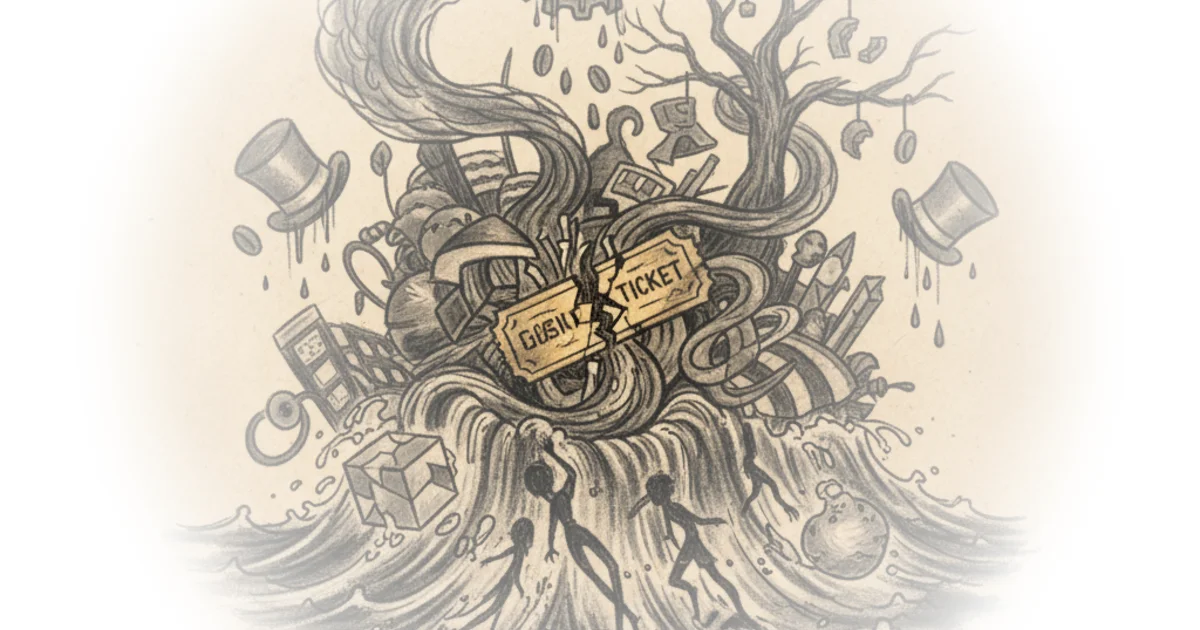
The analysis deepens when Stone turns to the golden ticket promotion itself. He identifies the requirement to purchase a candy bar as a fatal flaw in the marketing strategy. "If you require purchase you're no longer a free giveaway and a sweepstakes you are in a legal lottery," Stone explains. By mandating a purchase, the administration of the contest crosses the line from a legal promotion into an illegal lottery, a distinction that could expose the company to massive liability. Stone suggests the company would be "on the hook for the millions of dollars that people have spent buying Wonka bars," a financial reckoning that the film's whimsical tone completely obscures.
If you require purchase you're no longer a free giveaway and a sweepstakes you are in a legal lottery.
Stone also highlights the exploitation of the factory's workforce, describing a scene where employees are forced to work from dawn to dusk for five days straight without overtime pay. He characterizes this as a "clear violation" of wage and hour laws, noting that the damages in such cases "really really start to add up." The author emphasizes that the company would owe back pay, overtime, and statutory damages, potentially totaling millions. A counterargument might suggest that the Oompa-Loompas are not traditional employees but rather residents of a foreign land with a unique cultural arrangement, yet Stone rightly points out that under US law, the lack of compensation for labor remains a critical legal vulnerability.
Contractual Chaos and Immigration Violations
The commentary shifts to the legal validity of the contracts signed by the children. Stone critiques the liability waiver Wonka forces the minors to sign, describing it as "strictly for suckers" and legally unenforceable. He argues that a contract where the text is too small to read is "unconscionable," and furthermore, a contract signed by a minor is generally "voidable at the option of the minor." Stone notes that the document appears to be "complete gibberish," a string of legal-sounding words that fail to actually disclaim liability for recklessness.
Perhaps the most severe accusation Stone levels is regarding the Oompa-Loompas' presence in the factory. He interprets Wonka's admission of secretly transporting an entire population from a fictional country as a massive immigration violation. "It really does sound like he has transported these Oompa-Loompas away from a place where they were in fear of being eaten alive every day so that they could become indentured slaves to his factory," Stone writes. He connects this directly to the Thirteenth Amendment's prohibition against slavery and indentured servitude, arguing that the quid pro quo of transport for labor without pay is a constitutional violation. While the narrative frames this as a rescue mission, Stone's legal lens reveals a trafficking operation.
Health, Safety, and Permanent Disfigurement
Stone does not let the physical dangers of the factory slide, treating the chocolate river and the experimental gum as evidence of gross negligence. He points out the absence of handrails as an Occupational Safety and Health Administration (OSHA) violation and notes the lack of hairnets among the workers as a contamination risk. "There's no way this factory could possibly be sterile enough to produce a food safe product," Stone asserts, listing cross-contamination of nuts and the presence of mold as immediate grounds for an FDA shutdown.
The climax of the legal analysis focuses on Violet Beauregarde, who is transformed into a giant blueberry. Stone argues that Wonka is liable for her permanent disfigurement, drawing a parallel to a famous torts case known as the "hairy hand case." "The courts are in the position to determine what the damages are associated with being turned into a blueberry," Stone writes, suggesting that the defense of "she didn't listen" would likely fail against a claim of recklessness. He notes that while Wonka might argue the child disregarded warnings, the sheer danger of the experiment and the failure to provide adequate safety measures creates a strong case for negligence.
There's no way this factory could possibly be sterile enough to produce a food safe product.
Critics might argue that applying real-world statutes to a fantasy world with talking chocolate bars and river-transporting children is a category error, rendering the legal analysis moot. However, Stone's strength lies in his refusal to suspend disbelief; he treats the fictional world as if it were subject to the same regulatory framework as any real-world manufacturing plant, which forces the reader to confront the absurdity of the film's safety protocols.
Bottom Line
Devin Stone's commentary succeeds by stripping away the nostalgia of the film to reveal a corporate nightmare of liability, proving that the magic of Wonka's world is indistinguishable from a lawsuit waiting to happen. While the argument relies on the premise that fantasy logic must bow to federal statute, the sheer volume of violations cited—from child labor to indentured servitude—creates a compelling, if terrifying, portrait of the factory's operations. The strongest takeaway is not just that the law was broken, but that the institutional safeguards we rely on in the real world would have prevented the entire movie from ever being filmed.