Tom van der Linden and Thomas Flight argue that the gangster genre didn't die in the 2000s; it simply fractured, with American Gangster serving as the final, sweeping epic before the form migrated to television. Their analysis reveals a crucial shift: the genre moved from the mythic rise of the Italian mob to a gritty, dual-narrative examination of institutional decay and the blurry line between law enforcement and criminal enterprise.
The Fragmentation of the Mob Myth
The hosts begin by contextualizing American Gangster within a decade where the traditional "monolithic mob family" began to disintegrate. Van der Linden notes that while the 1990s saw the democratization of the genre in films like Goodfellas, the 2000s shifted focus to smaller, more fragmented criminal enterprises. He observes, "there's all these different movies that focus on smaller aspects of kind of crime within the gangster world... the gangster culture is kind of fragmenting and disintegrating a little bit."
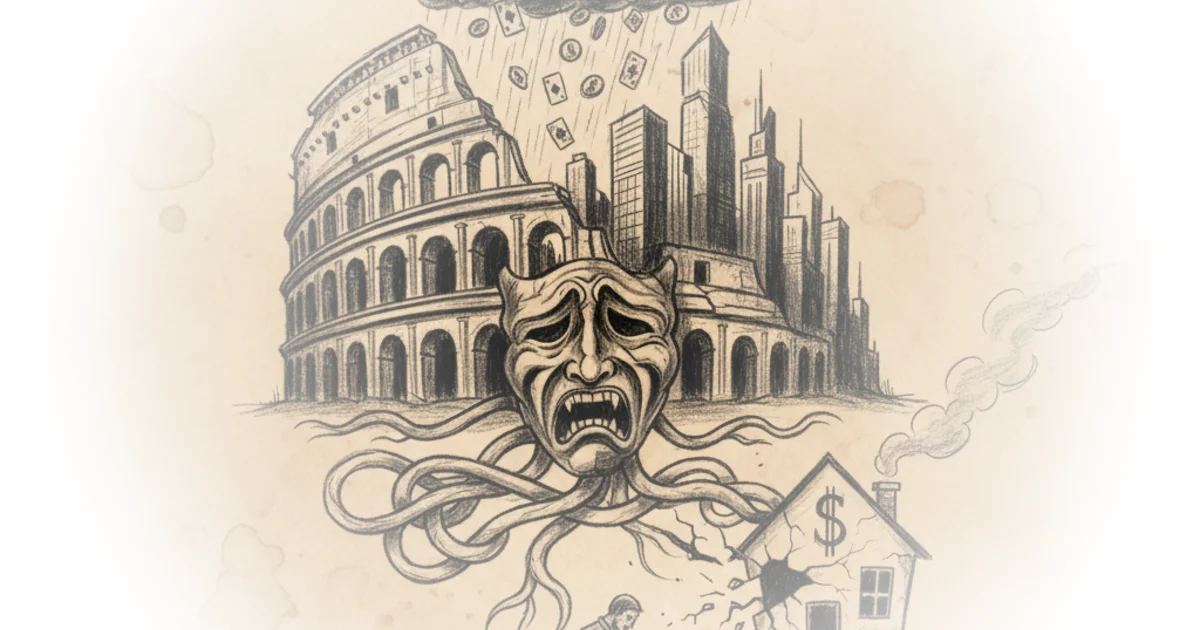
This observation is astute. By highlighting international films like City of God and A Prophet, the commentary correctly identifies that the American gangster story was losing its monopoly on the genre. The argument suggests that as real-world organized crime became less about family dynasties and more about loose, profit-driven networks, cinema had to adapt. The hosts posit that American Gangster acts as a "stepping stone," bridging the gap between the grand operas of the past and the fragmented narratives of the present.
The gangster movie at this point, or at least for this character, is just all about the business. It's not about becoming part of some family or rising to the top; it's just getting the quick buck and then getting out.
This reframing is essential. It strips away the romanticism of the "family" trope that defined The Godfather era. However, critics might note that American Gangster itself leans heavily into the family trope, contrasting Frank Lucas's devotion to his mother and children against his criminal ruthlessness. The hosts acknowledge this tension but perhaps underplay how the film uses the "family man" facade to make the protagonist more sympathetic, a classic genre device that the analysis treats as a simple character quirk rather than a structural necessity.
The Mirror of Corruption
The most compelling part of the discussion is the exploration of the film's dual protagonist structure. Unlike previous entries where the police were merely obstacles, American Gangster places a corruptible police force and a lone honest detective at the center of the narrative. Van der Linden explains that the film presents a "cat and mouse game between two rats essentially," where the lines between the hunter and the hunted are increasingly blurred.
The commentary highlights the deliberate inversion of moral virtues between the two leads. Frank Lucas is depicted as a "bad gangster who's also a great family man," while the detective, Richie Roberts, is an "incorruptible policeman" who is a "deadbeat dad" in his private life. As van der Linden puts it, "there's a stark contrast between Frank Lucas being this bad gangster who... gets up at 5am, goes to church... while on the other side doing all the bad gangster stuff."
This structural choice forces the audience to confront the hypocrisy inherent in both worlds. The film suggests that the "good" cop is socially broken, while the "bad" criminal is socially functional. The hosts argue that this dynamic reflects a broader cultural shift seen in television dramas like The Wire, where the institution itself is often the antagonist. They note, "there's a much more conscious examination of the police... in ways in which the police might be operating at like in gang-like ways."
The corrupt police never really become central characters in the story, which is kind of what we see here, but also we're seeing the one lone rogue, you know, good cop in the midst of all the corrupt guys taking them down.
This analysis holds up well against the film's text. The inclusion of the police perspective transforms the movie from a simple biopic into a systemic critique. Yet, the commentary glosses over the fact that the film ultimately resolves this tension by having the "good cop" triumph through traditional means, potentially undermining the radical critique of the institution it initially sets up. The narrative arc still relies on the individual hero saving the day, a conservative resolution to a progressive premise.
The Cost of Authenticity
Finally, the discussion touches on the tension between historical fact and genre convention. The hosts point out that while the names are real, the details are heavily fabricated to fit the "tropes of the genre." They mention that the real Frank Lucas was reportedly "much more violent and much more like crude," whereas Denzel Washington plays him with a "cool demeanor and calm stoic intelligence" reminiscent of Michael Corleone.
Van der Linden argues that there is "pressure to contort the characters so that it feels like a gangster movie." This is a vital insight into the mechanics of the genre. The audience expects a certain archetype, and the filmmakers bend reality to meet those expectations. The commentary suggests that the film is less about the man Frank Lucas was and more about the idea of the American gangster in the 21st century.
This movie is this really sort of sweeping crime saga, just as good as Goodfellas and just as The Godfather, but it also does a few things different.
The hosts conclude that American Gangster is the "last American gangster epic" because it successfully synthesizes these evolving trends before the genre's dominance shifted entirely to television. The argument is persuasive: the film captures the end of an era where a single movie could encapsulate the entire mythology of American crime.
The gangster movie at this point is just all about the business. It's not about becoming part of some family or rising to the top; it's just getting the quick buck and then getting out.
Bottom Line
Van der Linden and Flight offer a sophisticated reading of American Gangster as the genre's final, grand synthesis before its migration to the small screen. Their strongest point is the identification of the film's dual-narrative structure as a reflection of institutional decay, where the police and the criminals are mirror images of one another. The analysis is slightly weakened by its tendency to accept the film's historical distortions as mere genre requirements without fully interrogating the ethical implications of sanitizing a violent criminal into a stoic anti-hero. For the busy reader, this commentary clarifies why American Gangster remains a pivotal text: it is the moment the genre looked in the mirror and saw the police staring back.