In a cultural landscape often paralyzed by the paralysis of the future, Gillian Deacon of The Walrus makes a startling pivot: she argues that the ultimate coping mechanism for our era isn't certainty, but a radical, practiced intimacy with the unknown. While most self-help literature promises to eliminate risk, Deacon suggests that the most profound safety lies in the very thing we flee—the terrifying, unscripted nature of being alive. This is not a call to recklessness, but a sophisticated re-examination of how human beings process dread, using the extreme physical theater of David Blaine not as a spectacle of ego, but as a masterclass in psychological resilience.
The Architecture of Fear
Deacon begins by dismantling the assumption that magic is merely deception. She posits that the true power of the illusion lies in the physiological reaction it triggers. "Watching something that defies gravity, odds, and the basic principles of physics and mathematics happen before our very eyes gives us an infusion of awe that feels incredible," The Walrus writes. This observation is crucial because it reframes the audience's role; we are not passive observers of a trick, but active participants in a controlled confrontation with the impossible. The author notes that even when we know the mechanics, the "flat-out betrayal of expectations" raises our heart rate, creating a rush of astonishment that titillates the mind without actual cost.
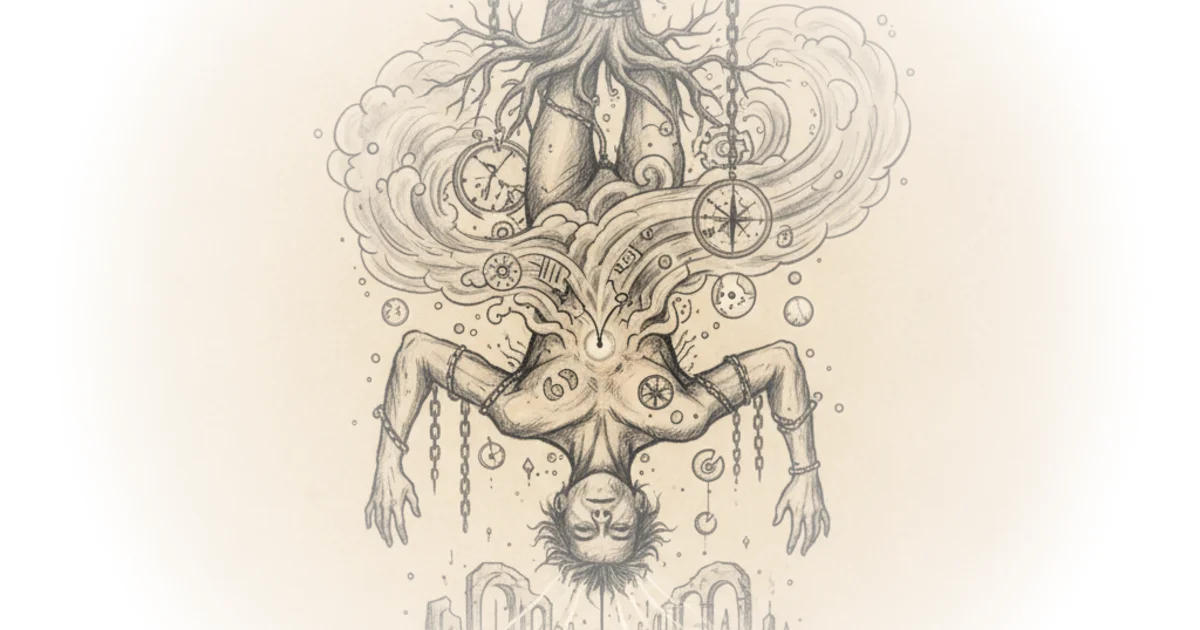
The piece draws a sharp line between the historical roots of illusion and Blaine's modern iteration. Deacon reminds us that Blaine was just a four-year-old on a Brooklyn subway platform when he first felt that spark, a far cry from the man who would later stand on a fifty-five-centimetre pillar thirty metres in the air. This trajectory mirrors the evolution of Harry Houdini, who transformed from a carnival escape artist into a symbol of human endurance against the elements. Yet, Deacon argues that Blaine's specific contribution is the mental architecture behind the stunt. "Few people have as deep an understanding of fear as Blaine—a knowledge he has acquired by facing down those feelings of dread and carrying out a deep investigation of what they're made of," she explains. This is the article's first major insight: fear is not a monster to be slain, but a data set to be studied.
Critics might argue that equating a professional stuntman's survival training with the average person's daily anxiety is a category error. The stakes for Blaine are literal life and death, whereas for most, the "unknown" involves career shifts or relationship uncertainties. However, Deacon anticipates this by focusing on the mechanism of response rather than the magnitude of the threat. She suggests that the mental shift required to stand on a pillar is the same one needed to navigate a volatile economy or a shifting political landscape.
"The best way to combat fear is with knowledge, making a conscious effort to understand the information at hand. You don't jump into the unknown, you do it step by step."
Reframing the Unknown
The commentary then shifts to a broader philosophical inquiry, questioning why society treats the future with such dread. Deacon points out the linguistic contradiction in how we speak of death as the "Great Unknown" while simultaneously fearing the uncertainty of our current lives. "But isn't this —all that we are alive for right now—in fact the Great Unknown?" The Walrus asks. This rhetorical pivot is the article's emotional core. It challenges the reader to recognize that the unpredictability of the next hour, the next year, is not a bug in the system of life, but the feature that makes it vibrant.
Deacon illustrates this by contrasting the anxiety of the unknown with the thrill of other uncertain experiences. She notes that we willingly subject ourselves to the unpredictability of roller coasters, backcountry ski tours, and even the cliffhangers of binge-watched series. "If you knew, there would be almost no point in watching," she observes. The argument here is that we have already mastered the art of enjoying uncertainty in low-stakes environments; the failure lies in our inability to transfer that comfort to high-stakes reality. The author suggests that the fear we feel regarding environmental disasters or political turmoil stems from a perceived threat to our fundamental survival, echoing H.P. Lovecraft's 1927 assertion that "the oldest and strongest kind of fear is fear of the unknown."
However, Deacon offers a counter-narrative to Lovecraft's gloom. She cites brain-imaging studies showing that experiencing fear in a safe context—like watching a horror film—activates the endocrine system and can lead to a "horror-flick high." This biological reality suggests that our bodies are equipped to handle the adrenaline of fear, provided we have the cognitive framework to interpret it as a challenge rather than a catastrophe. The author argues that we often recoil from real-life fear because we try to bypass the feeling entirely, seeking a "fake-it-till-you-make-it" confidence that ignores the underlying emotion.
The Two-Step Process of Courage
The most actionable part of Deacon's analysis is her critique of the popular mantra "feel the fear and do it anyway." She admits to a lifelong misinterpretation of this phrase, focusing exclusively on the action while neglecting the feeling. "In my haste to move impulsively into the action that I feared... I was racing past the first half of that boldness directive, the part that matters most: feel the fear," she confesses. This distinction is vital. The author argues that true courage is not the absence of fear, nor the blind suppression of it, but the deliberate act of sitting with the sensation, tracing its path through the body, and honoring it before moving forward.
Deacon uses Blaine's preparation rituals as the ultimate example of this process. Before his famous jump from a twenty-four-metre platform, he didn't just leap; he spent weeks standing on a flowerpot on a balcony, sleeping in a plastic coffin, and jumping from progressively higher heights. "By gradually acclimating his body to the physical challenges involved in each stunt, he was able to manage what might otherwise have seemed unmanageable," The Walrus writes. This methodical approach transforms the unknown into a series of known variables. It is a lesson in breaking down monolithic fears into manageable data points, a strategy applicable to everything from learning a new skill to navigating institutional change.
The article also touches on the generational transmission of this mindset, noting that Blaine has taught his daughter to turn the shower water to cold for the last minute, training her to face discomfort slowly. This reinforces the idea that the relationship with fear is a learned behavior, not an innate trait. "We can handle more than we think," Blaine's mantra suggests, and Deacon extends this to the reader: we are capable of enduring the uncertainty of our times if we stop trying to predict the future and start preparing to meet it.
"Feeling the fear, getting close to it, sitting with it, identifying it, naming it, honouring it, tracing its energetic path through your body—that is the part that makes you strong."
Bottom Line
Gillian Deacon's piece succeeds by refusing to offer a sterile, clinical solution to anxiety, instead offering a visceral, embodied philosophy of resilience. The strongest element of the argument is its redefinition of courage as a two-step process of feeling and acting, a nuance often lost in modern self-help discourse. The article's vulnerability lies in its reliance on an extreme example; while Blaine's feats are undeniably instructive, the leap from a professional stuntman's training to the average person's daily life requires a significant amount of personal translation. Ultimately, the reader is left with a powerful imperative: stop trying to eliminate the unknown, and start learning how to dance with it.
The Lesson of the Unknown
The Walrus concludes that the path forward in these uncertain times is not to seek a false sense of security, but to cultivate a deep, practiced relationship with the fear itself. By studying the mechanics of our dread, as Blaine studies his illusions, we can transform the paralyzing unknown into a source of energy and life. The article serves as a reminder that the only way to truly master the future is to stop fearing the present moment of not knowing.