James Maynard makes a startling claim: that the chaotic geopolitical shifts of August were not merely political miscalculations, but the inevitable result of a specific, fleeting astrological configuration. For readers tracking the high-stakes drama of international diplomacy, this piece offers a unique lens, suggesting that the collapse of peace talks and the sudden imposition of trade tariffs were written in the stars long before the headlines broke.
The Illusion of Harmony
Maynard opens by challenging the assumption that planetary alignment guarantees positive outcomes. He writes, "So-called 'harmonious' constellations often promise more than they can deliver." This sets the stage for a critique of the August events, where a "spectacular harmony" of outer planets coincided with a high-profile diplomatic meeting intended to position the US executive branch as a global peacemaker. The author argues that the meeting's subsequent failure was not a surprise to those reading the celestial charts, noting that the "hopes that were attached to this meeting... soon collapsed like a house of cards."
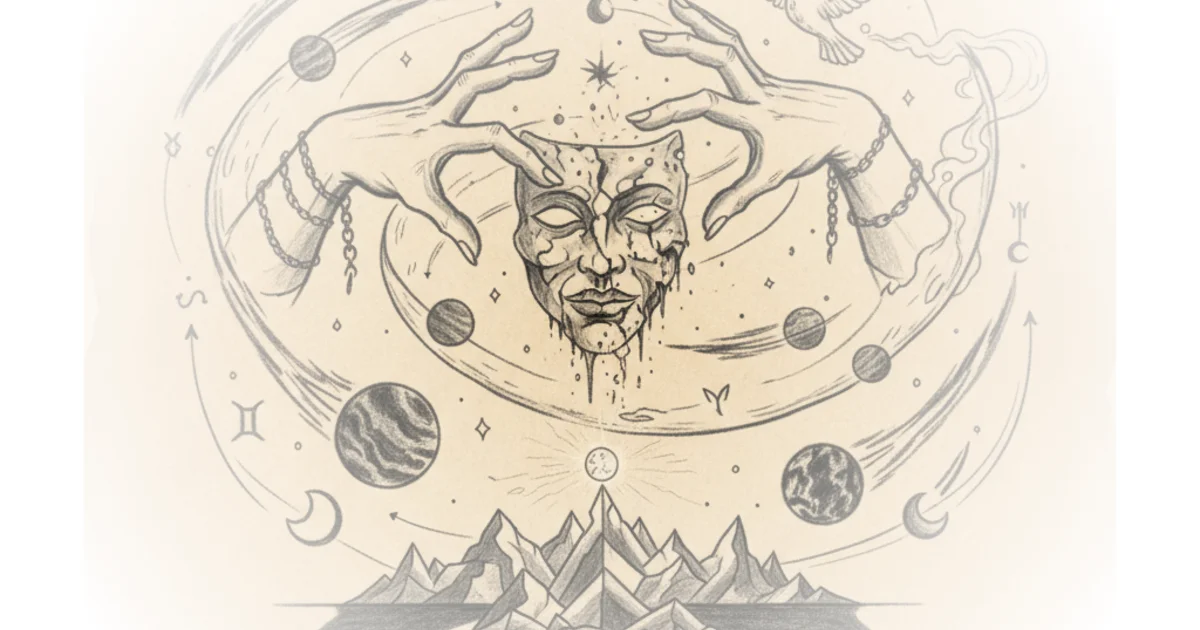
This framing is provocative because it attributes the failure of diplomacy to the "fleeting character of the elements of fire and air" rather than policy flaws or leadership decisions. While this offers a cohesive narrative for the sudden shift in tone, critics might note that attributing complex geopolitical failures to elemental transits risks oversimplifying the very real human and strategic errors involved in international negotiations.
The hopes that were attached to this meeting of Trump and Putin soon collapsed like a house of cards, mirroring the fleeting character of the elements of fire and air that were exclusively involved in this planetary configuration.
Tariffs as Cosmic Reactions
The article then pivots to a specific case study: the sudden imposition of heavy tariffs on Swiss exports. Maynard connects this economic shock to the "natal chart" of Switzerland, specifically its Mars placement in Libra. He posits that when the transiting Mars hit Switzerland's natal Mars, the administration "played his bully-card and imposed a whopping 39 % tariff." The author suggests this was not random aggression but a cosmic trigger, stating, "When transiting Saturn is making an opposition to our natal Mars we often find ourselves in situations that hardly leave us any wiggle-room."
This interpretation reframes a trade dispute as a destined confrontation. Maynard argues that the Swiss government's attempt to "negotiate and schmooze" was a natural reaction of a "Libra-Mars under pressure," but that the lack of fairness in the tariff decision forced a shift from diplomacy to defiance. He warns that if the sense of fairness is ignored, the nation "can either turn ice-cold or into a surprisingly fierce and cruel enemy."
While the astrological logic is internally consistent, it bypasses the economic data and strategic rationale that typically drive tariff policies. A counterargument worth considering is that trade wars are often calculated moves to gain leverage, regardless of planetary positions, and that the "bully-card" was a strategic choice, not a celestial compulsion.
The Retrograde Retreat
Looking ahead to September, Maynard identifies a shift in the collective mood as outer planets begin their backward motion. He writes, "Starting on September 5th, all of the outer planets will be in backward motion, indicating that we're headed back to familiar territory." This period, he suggests, is a time for the world to "integrate some of the lessons we've learned during the summer" and deal with "unfinished business."
The author breaks down the month week by week, predicting that the first week will be high-energy but potentially overwhelming, while the final week will bring a "sudden shift in mood" as Mars enters Scorpio. He cautions that this energy could lead to "power struggles in which neither side wants to give in," urging readers to channel this intensity into "tenacity and determination for completing an arduous task."
With squares, something's got to give and a decision has to be made.
This section effectively captures the anxiety of the current political climate, translating it into a narrative of cosmic pressure and inevitable release. However, the reliance on specific degrees of zodiac signs to predict global events remains a speculative leap that lacks empirical grounding in traditional political science.
Bottom Line
Maynard's strongest asset is his ability to weave disparate global events into a single, coherent narrative of cosmic cause and effect, providing a sense of order to chaotic times. However, the argument's biggest vulnerability is its exclusion of human agency and policy analysis, treating complex geopolitical decisions as mere reflections of celestial mechanics. Readers should watch for how the predicted "power struggles" of late September manifest in real-world diplomacy, keeping in mind that the stars may suggest a mood, but they do not dictate policy.