Steve Vladeck identifies a legal paradox that could upend the global economy: the Supreme Court is about to decide whether a statute designed for emergencies grants the President the power to rewrite the rules of international trade. The most striking claim in this preview is not that the tariffs are controversial, but that the administration rushed these cases to the Court specifically to test whether the judiciary will apply its own "major questions doctrine" to national security contexts—a move that defies the usual deference given to the executive branch in foreign policy.
The Statutory Gamble
Vladeck frames the core legal battle as a collision between a 48-year-old statute and a modern judicial philosophy. He notes that the administration is relying on the International Emergency Economic Powers Act of 1977 (IEEPA), a law that has never before been used to impose tariffs. "In its 48-year history, IEEPA has never been used as a basis for any tariffs," Vladeck writes, highlighting the unprecedented nature of the executive's legal theory. The text of the law allows the President to regulate transactions involving foreign property during a declared emergency, but Vladeck points out that stretching this to cover broad tariffs requires a significant interpretive leap.
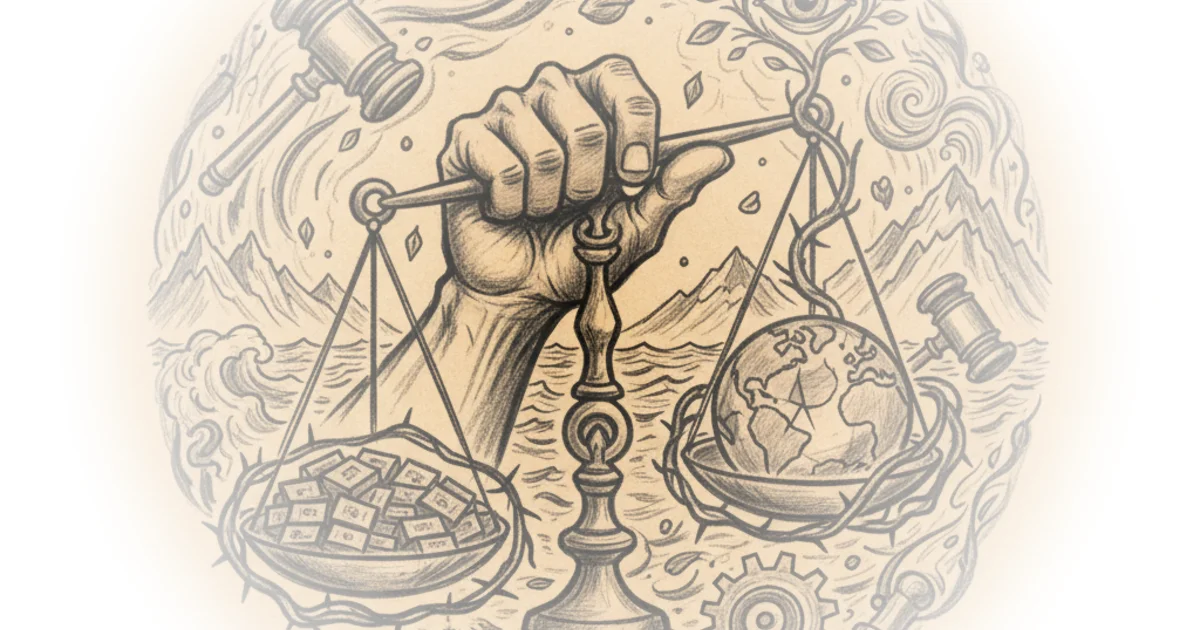
The administration's strategy hinges on declaring a "national emergency" based on trade deficits and fentanyl flows. Vladeck observes that while the text of the act is "somewhat capacious," the argument that it authorizes tariffs is a "shoehorn" effort. He explains that the Solicitor General's rush to get these cases heard suggests a recognition that the legal footing is shaky, yet the administration believes the Court's skepticism of executive overreach might be suspended for foreign policy. This creates a high-stakes tension: if the Court applies the "major questions doctrine"—which requires clear congressional authorization for actions of vast economic significance—the tariffs fall. If the Court accepts the administration's view that national security contexts demand deference, the precedent for unlimited executive trade power expands.
"Even if a statute can plausibly be read to support the program—indeed, even if the better reading of the statute supports the program—that's not enough. Absent clear statutory support, the program is unlawful."
The Doctrine of Consistency
The piece pivots to the Court's internal logic, specifically the "major questions doctrine" established in recent years. Vladeck argues that the Court has been inconsistent, applying this strict scrutiny to domestic policies like student loan forgiveness while hesitating to apply it to foreign affairs. He draws a sharp parallel to the 2023 ruling in Biden v. Nebraska, where the Court rejected the argument that the HEROES Act authorized debt forgiveness during a national emergency. "If the broad but open-ended delegation of power in the HEROES Act was insufficient, it sure seems like IEEPA isn't any clearer," Vladeck asserts, suggesting that the legal principles should apply equally regardless of the policy area.
However, Vladeck identifies a potential roadblock: Justice Kavanaugh's view that the Court should grant the President "substantial authority and flexibility" in national security domains. This creates a fork in the road for the justices. If they follow Kavanaugh's logic, the tariffs survive despite the lack of explicit statutory language. If they follow the major questions doctrine, the tariffs are illegal. Vladeck notes that the administration likely hoped to exploit this split, rushing the cases to the Court before the justices could fully reconcile these conflicting impulses. Critics might note that the Court has historically been reluctant to second-guess the President on national security, potentially making the major questions doctrine a weak shield against executive power in this specific context.
The Jurisdictional Maze
Beyond the substantive law, Vladeck highlights the procedural oddities that brought these cases to the Supreme Court. The administration bypassed normal appellate timelines, seeking expedited review to ensure a decision within the current term. "The Solicitor General didn't wait even close to that long; on September 3 (six days after the decision), the Trump administration filed for certiorari," Vladeck writes. This urgency underscores the administration's fear that a delay would allow the lower courts to solidify the ruling against them. The consolidation of cases from the Court of International Trade and the D.C. District Court adds another layer of complexity, as the Court must first decide which lower court even had the authority to hear the challenge.
"These cases ought to be easy ones. But the same could've been said about many of the Trump administration's emergency applications over the past 9.5 months, and yet here we are."
Vladeck's commentary on the procedural rush reveals a deeper anxiety: the administration knows the legal arguments are weak but is betting on judicial deference to save them. The fact that the Court agreed to hear the case so quickly suggests the justices recognize the magnitude of the issue, which affects every business and consumer in the country. The stakes are not just about tariffs; they are about the balance of power between the branches of government during times of declared emergency.
Bottom Line
Vladeck's analysis is strongest in exposing the contradiction between the Court's recent strictness on executive power and its potential deference to national security claims. The argument that IEEPA authorizes tariffs is legally tenuous, yet the outcome hinges less on statutory text and more on whether the justices will apply their own "major questions doctrine" consistently. The biggest vulnerability in the administration's position is the sheer scale of the economic disruption, which fits the definition of a "major question" perfectly, making it difficult for the Court to ignore without undermining its own recent precedents.