In a landscape where Hollywood pundits are desperate to pick a side, Freddie deBoer delivers a jarring truth: the choice between a Paramount-Skydance merger and a Netflix takeover isn't a choice between good and evil, but between two distinct flavors of industry destruction. While the public fixates on the political leanings of the bidders, deBoer argues that the tech giant's economic model poses a far greater existential threat to the art form itself than the new money of the Ellison family. This is a necessary correction to a debate that has become too emotional to see the structural rot beneath the surface.
The Monopoly Myth
The immediate reaction to the Paramount-Skydance bid has been one of political alarm, largely because David Ellison's father, Larry, is a major donor to the current administration. DeBoer acknowledges the validity of these fears, noting that the family's "coziness with the current administration has been offered - by the Ellisons themselves! - as a reason to expect an easy regulatory path." He concedes that a merger of this scale would likely lead to the "mass layoffs, shelved and buried projects, finished films written off for tax purposes and never released," a fate already suffered by projects like Batgirl, which was completed but buried for tax write-offs.
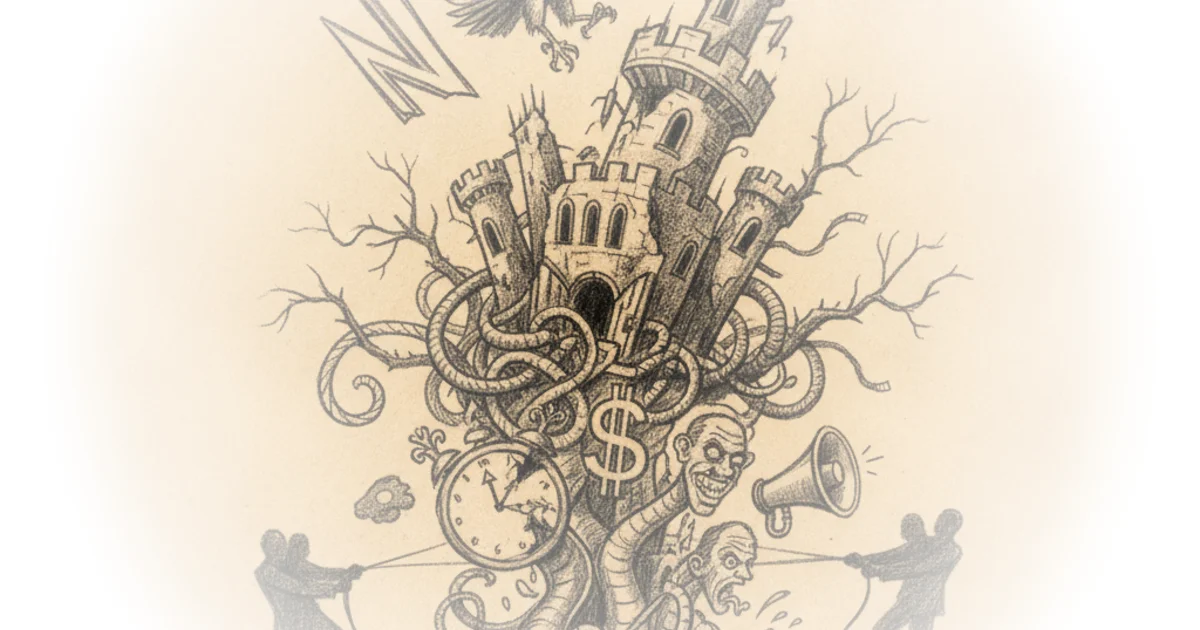
However, deBoer pivots sharply to challenge the assumption that Netflix represents a safer harbor. "Netflix is if anything a greater monopoly threat than Skydance," he writes, dismantling the idea that the streaming service is merely another competitor. The author points out that Netflix is not just a player but the "dominant longform video subscription platform on earth," with over 300 million subscribers. A union with Warner Bros would give the incumbent control of roughly a third of the streaming market, a concentration that would likely "tend to create a monopoly."
The argument here is compelling because it shifts the metric from political alignment to market dominance. DeBoer writes, "Handing that to the market leader doesn't just make a big company bigger; it gives the incumbent, the industry powerhouse, the ability to wall its rivals off from content they currently license to survive - the textbook definition of foreclosure." Critics might argue that a fragmented market with no dominant player is impossible in the streaming era, but deBoer's point is that a Netflix-Warner combination removes the only plausible "number two" that could challenge the status quo. As he puts it, "a Paramount-Warner combination at least builds a plausible number two streamer that can push back against Netflix, whereas a Netflix-Warner combination just crowns the king, probably for good."
Cheering for the company that inflicted it is such a strange thing for people who love Hollywood to do.
The Death of the Middle Class
Perhaps the most devastating part of deBoer's analysis is his dissection of how the streaming model has fundamentally broken the financial engine that once sustained the industry. He argues that the industry's obsession with avoiding a Trump-aligned owner has blinded it to the fact that Netflix "killed the old way of doing business." The traditional model relied on theatrical windows, physical media sales, and syndication, creating a system where residuals allowed working actors and writers to build a middle-class life. "Law & Order by itself is well known for having put a lot of kids of actors through college thanks to its constant syndication," deBoer notes, illustrating the tangible human cost of the shift.
In contrast, the "cost-plus model" employed by Netflix pays a rich fee upfront but buys out the back end, meaning creators receive "little or nothing in the way of residuals, and little or nothing in the way of profit participation." This isn't just a corporate accounting trick; it is a structural change that strips labor of its long-term value. DeBoer writes, "Netflix changed Hollywood into a machine for producing disposable, work-for-hire content that Netflix owns outright and discards at will." The 2023 strikes by the Screen Actors Guild and the Writers Guild of America were essentially a desperate attempt to claw back a fraction of this lost value, yet the damage is largely irreversible.
The author's framing is sharp: the industry is mourning the loss of a system that created wealth for the many, while cheering for the entity that destroyed it. "The 2023 strikes SAG and WGA strikes were fundamentally an attempt to claw back a sliver of what Netflix had taken," he observes, but the financial revaluation of the industry has already happened. The danger is that by focusing on the political identity of the buyer, the industry ignores the economic identity of the buyer, which is far more destructive to the livelihoods of its workers.
The Aesthetic of Efficiency
Beyond the economics, deBoer tackles the creative degradation that comes with the Netflix model, a point often overlooked in the rush to condemn the Ellisons. He argues that the "Netflix look" is not an accident but a direct result of an economic philosophy that prioritizes standardization over artistry. "Visual sameness isn't a failure of the Netflix system, visual sameness is the system," he writes, describing a style that is "flat, over-lit, over-saturated" and stripped of the lighting and craft budgets that give films their texture.
This homogenization is driven by a desire to "fix it in post," allowing executives to manipulate the final product with maximum flexibility. DeBoer points to the visual decay of long-running hits like Stranger Things as evidence of this trend, where the show's aesthetic deteriorated as the production machinery prioritized speed and consistency over artistic vision. "It's all about homogenization as key to consistent financial performance, the better to maximize shareholder value," he concludes.
This is a bold claim that challenges the romanticized view of tech disruptors. While some might argue that streaming has democratized content creation, deBoer suggests it has instead industrialized it to the point of sterility. "You can remove David Ellison from his perch, but you can't put the cost-plus model genie back into the bottle," he warns, suggesting that the financial damage is the deeper story, one that will haunt the industry regardless of who owns the studio.
Bottom Line
Freddie deBoer's most powerful contribution is his refusal to let political optics distract from the structural rot of the streaming economy. His argument that Netflix is a greater threat to the creative and financial health of Hollywood than the Ellison family is difficult to refute, even if it is politically inconvenient. The piece's greatest vulnerability is that it offers no easy solution; if both options are destructive, the reader is left with a bleak prognosis for the future of cinema. Yet, this clarity is exactly what the industry needs: a recognition that the enemy isn't just one family or one party, but a business model that has turned art into a disposable commodity.