In a future where the world's two superpowers are navigating a fragile truce amidst active warfare elsewhere, the most striking claim from this analysis is not that a grand bargain was struck, but that the very definition of their relationship has shifted from ideological confrontation to cold, transactional risk management. Kaiser Kuo curates a collection of assessments from Johns Hopkins SAIS experts that reveals a disturbing new normal: Taiwan is no longer just a moral imperative or a democratic beacon, but a geopolitical variable to be managed like a volatile stock. This matters now because the stakes involve not just trade, but the potential for catastrophic miscalculation in a world already on fire.
The Illusion of Stability
The piece opens with a sobering reality check from Carla Freeman, who notes that the summit occurred while "the US-China relationship is high-risk enough that any summit matters, but this one carried particular urgency, with multiple clocks running simultaneously." The context here is critical; the meeting was delayed by a U.S. war with Iran, and the administration arrived in Beijing with a weakened domestic standing and a need for quick wins before midterms. Freeman argues that despite the pressure, both leaders signaled a desire for a new footing, with Xi proposing a framework for a "constructive China-U.S. relationship of strategic stability" to guide the next three years.
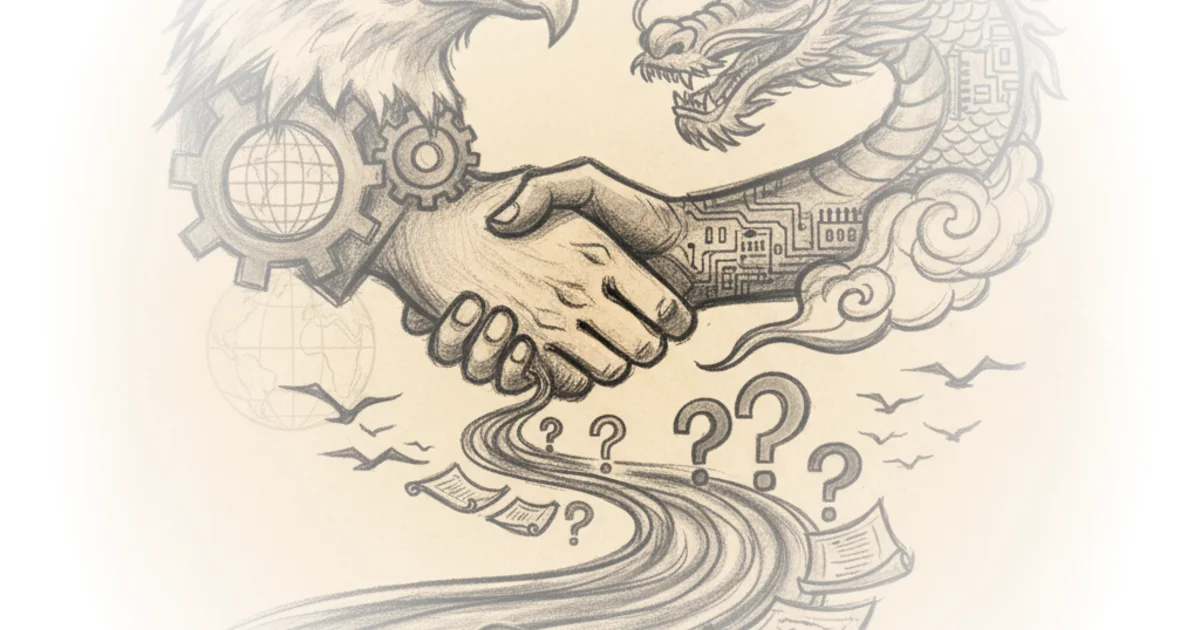
This framing is seductive but dangerous. By accepting the language of "strategic stability," the U.S. side may be inadvertently ceding the initiative to Beijing's long-term planning cycles. As David M. Lampton observes, while the meeting avoided disaster, "Avoiding the worse, however welcome, is a low bar." The experts suggest that the administration, desperate for a win, may have stumbled into Xi's conceptual trap. Lampton highlights the blunt warning from Xi: "Never mess it up," and the specific caution that mishandling the Taiwan issue could lead to clashes. The administration's readout notably omitted Taiwan, a silence that analysts interpret not as a diplomatic victory, but as a concession.
"Xi raised the conflict risks over Taiwan early and publicly. The US readout on the visit did not mention Taiwan. What Xi and Trump and he said about Taiwan privately is a question worth asking."
Critics might argue that omitting Taiwan from the public readout was a necessary tactical move to prevent immediate escalation, but the experts in this collection suggest it signals a deeper shift in how Washington views the island. The administration seems to be trading principle for predictability, a move that could erode long-term alliances even if it buys short-term calm.
The Technology and Taiwan Pivot
The analysis of the technology sector reveals a similar pattern of ambiguity. Jack Shanahan points out that while there was talk of allowing Chinese firms to purchase Nvidia H200 chips, "we still have not seen concrete evidence that any sales or deliveries have actually occurred." The real story, Shanahan suggests, is the elevation of AI from a secondary concern to a central strategic issue, driven by fears that advanced models could fall into the hands of "nefarious non-state actors."
However, the most contentious element of the summit remains the handling of Taiwan. Andrew Mertha argues that the old dynamic of China trading substance for symbolism has been reversed: "President Trump feasting on symbolism while seeming unconcerned about countering Beijing's initial gambits." Mertha notes that Trump's willingness to discuss arms sales to Taiwan directly with Xi appears to be a violation of the Six Assurances, a cornerstone of U.S. policy that has historically maintained ambiguity to deter both Beijing and Taipei.
Jason Hsu takes this further, suggesting that Taiwan is being folded into a broader "stabilization framework" where the conversation shifts from defending the island on principle to "managing Taiwan as a geopolitical risk variable." This is a profound change in the underlying logic of U.S. foreign policy. If Taiwan becomes a bargaining chip in a broader stability deal, the island's security becomes contingent on the whims of great power negotiations rather than its own democratic will.
"The deeper question nobody is asking yet is this: if Taiwan becomes too strategically indispensable to both powers, does that increase deterrence — or make Taiwan an even bigger bargaining chip during future crises?"
A counterargument worth considering is that this transactional approach is the only way to prevent a hot war in the short term. If the alternative is a catastrophic clash, perhaps managing the risk is the best the administration can do. Yet, as Ho-fung Hung warns, relying on Beijing's pledges regarding Iran or other global issues is risky. "Beijing can say these things and allow various Chinese entities to continue aiding Iran's war efforts financially and logistically in many clandestine ways," Hung writes, noting that China's policy will always be driven by its own self-interest in energy security.
The Asymmetry of Power
Perhaps the most chilling observation comes from John Yasuda, who describes the body language of the summit as signaling that Xi appeared "entirely in command" while Trump seemed like a "supplicant." Yasuda notes that Xi's "unhurried stroll through Zhongnanhai" and reserved composure projected the image of a "wise king dealing with a supplicant rather than two equals meeting as peers."
This visual narrative underscores the core argument of the collection: the United States is currently operating from a position of weakness, driven by domestic inflation and the distractions of war, while China is executing a long-term strategy of "constructive strategic stability" to protect its slowing economy. Ling Chen summarizes this dynamic perfectly: "China plays this card well because it knows Trump's preference for short-term deals. But China also fundamentally seeks to achieve long-term 'constructive strategic stability,' which lays a more favorable foundation for its domestic and international development."
The experts agree that the summit did not alter the fundamental equilibrium of the relationship. Dan Taylor notes that the outcomes were merely a "continuation of the discussions in Busan last year aimed at reducing tensions." The real danger lies in the assumption that these transactional deals will hold. As Chen points out, "if short-term, incremental deals cannot ultimately change the U.S. positioning of China as its adversary, then the value of these deals would be greatly discounted."
"The entire summit seemed to signal that if the United States is willing to return to a more transactional basis for its dealings with China, Beijing is content to let tensions ease. Indeed, the one thing Xi needs is a less confrontational America while he tends to serious challenges at home."
Bottom Line
The strongest part of this analysis is its unflinching exposure of how the Taiwan issue is being quietly repurposed from a moral commitment into a geopolitical lever, a shift that could have devastating consequences for the island's future. The argument's biggest vulnerability is its reliance on the assumption that the administration's transactional approach is a temporary necessity rather than a permanent strategic error that undermines U.S. credibility globally. Readers should watch closely for the next round of arms sales to Taiwan and whether the administration's silence on the issue in public readouts becomes a permanent feature of its China policy.