What if everything you believed about economic growth was wrong? What if the numbers you've been told don't match what you actually feel living in this economy?
Wes Cecil argues that both liberal and conservative politicians operate from a fundamental misunderstanding of how economies actually work—and it's trapping governments in an impossible position.
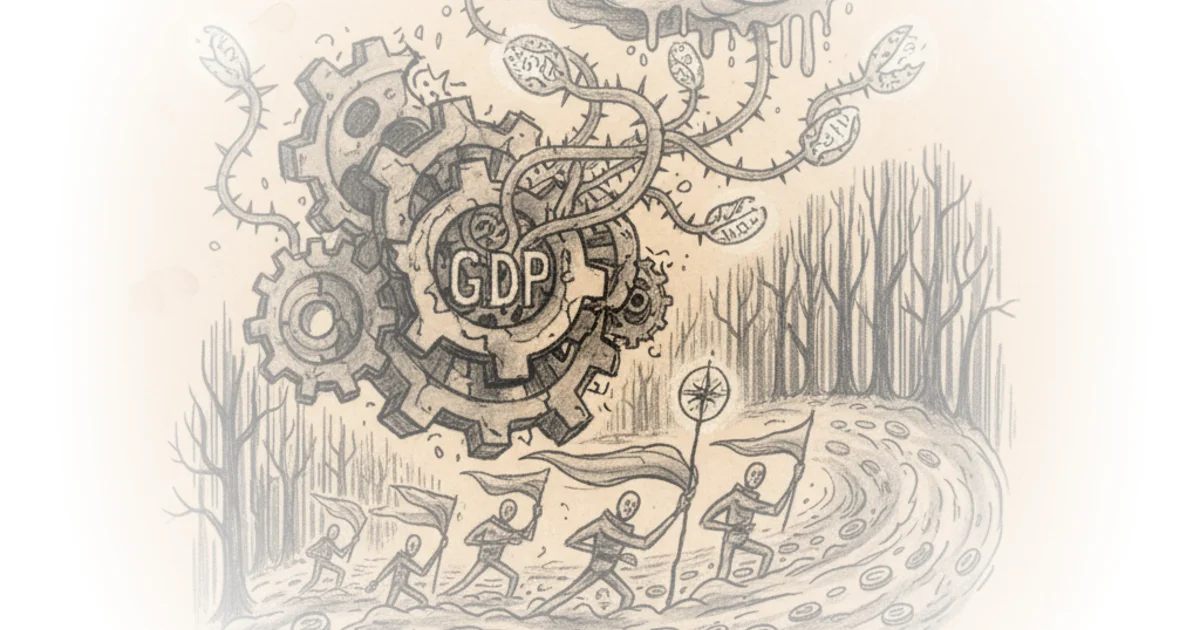
The Productivity Paradox
The left argues that productivity gains over the past 50 years have been stolen by wealthy classes, leaving workers exploited. The right counters that rewarding investors is essential for economic growth. But here's the problem: there hasn't been that much productivity gain to steal. The sectors employing most workers have seen minimal or even declining productivity growth. So what hasn't been produced can't be taken.
The notion that this growth rewards the wealthy obscures where money actually comes from—financialization, not genuine productive output.
The GDP Illusion
When you look at raw US GDP numbers since 1990, you'll see roughly 300% growth. But adjust for inflation and population? That drops to about 60%. Over 40 years, that's barely more than sub-1% annual growth—nowhere near impressive enough to cover rising costs of retirement benefits, healthcare, or expanding populations needing services.
But it gets worse. Two sectors have driven much of this apparent GDP growth: healthcare and real estate. When you break your arm in 1992 and pay $3,000, versus paying $30,000 in 2021—same service, but vastly more "economic activity" recorded. This isn't prosperity. It's impoverishment disguised as growth.
Deflate those healthcare and real estate costs to normal inflation levels, and actual GDP growth drops to the low 30s or even high 20s over four decades. That's under 0.5% per year in some years.
The Transatlantic Consensus
Europe looks at America and worries about falling behind—insufficient GDP growth means insufficient resources for social services. America looks at Europe and thinks they can't afford similar programs because it would drag down their own GDP growth. Both sides agree on something that isn't true.
European left-wing parties argue they need to adopt American-style policies to grow faster. European conservatives want to cut social services to match US growth rates. Americans insist they must avoid European-style systems because it would slow productivity. Everyone agrees the problem is growth rates. The numbers don't support any of them.
They consistently have to run massive deficits, increase taxes, or cut spending on programs people love—year after year after year—and still people don't feel wealthier.
The Real Numbers
Manufacturing has seen real productivity boom—but converted it into firing workers rather than shared prosperity. Agriculture saw productivity gains thatEurope used to provide cheap, high-quality food for citizens. America? Grocery store prices tell a different story. Those sectors with the most actual productivity growth remain small parts of economies while everyone focuses on tech, which has its own complications.
Bottom Line
Cecil's strongest insight is how thoroughly the GDP mythology blinds both sides to what's actually happening—governments are trapped in a logic that doesn't match lived experience. The argument isn't between left and right on policy; it's between two groups agreeing on numbers that don't exist when you adjust for what actually matters: healthcare costs, real estate inflation, and population growth.
The vulnerability? This requires significant economic literacy to verify independently. Readers must already be skeptical of mainstream economic narratives to engage with the core claim. But if you've ever felt like the economy should feel better than the numbers suggest—you're not wrong.