Packy McCormick makes a claim that cuts against decades of environmental orthodoxy: the ocean isn't just something to protect — it's a frontier we abandoned, and that abandonment has consequences. The piece resurrects a forgotten chapter of American ambition, one where underwater habitats dotted the seabed like forts across the West, and where the ocean stood alongside the Moon as coequal national priorities.
The Frontier That Died
McCormick opens with a death that killed a dream. "Berry Cannon was dead. And with him died America's plans to conquer the ocean." Cannon died in 1969 at 610 feet below the Pacific surface, breathing helium that stripped heat from his body six times faster than air. His rebreather's CO₂ scrubber was empty of Baralyme. Nobody knew. Five months later, Neil Armstrong walked on the Moon. We remember Armstrong. Cannon vanished.
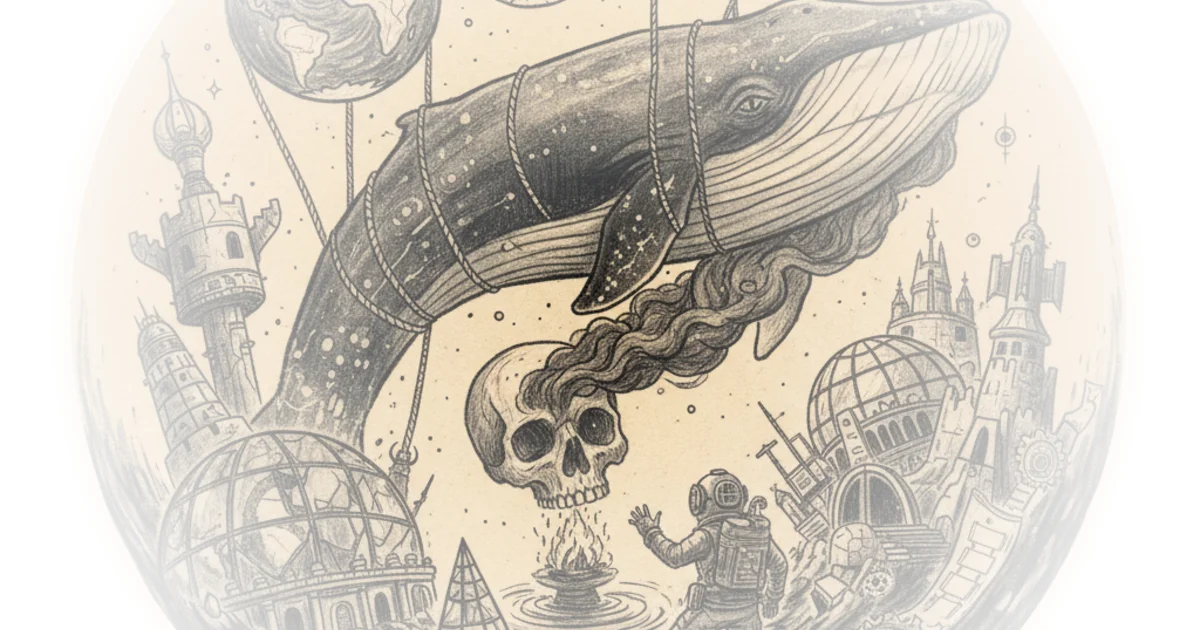
This is the piece's central tragedy: one frontier succeeded, the other died with a man nobody remembers. McCormick writes, "Within a generation, any proposal for persistent ocean activity faced a default presumption of harm." The shift wasn't accidental. Jacques Cousteau — the man who had done more than anyone to prove humans could live underwater — pivoted from exploration to activism in 1973. When Cousteau said "protect," oceanic policy fell in line. The Marine Mammal Protection Act, UNCLOS, the whaling moratorium, the High Seas Treaty: individually important, cumulatively transformative. Exploration became exploitation. Settlement became harm.
The SEALAB program deserves the historical weight McCormick gives it. SEALAB II hosted Scott Carpenter — one of the original Mercury Seven astronauts — for 30 consecutive days underwater, making him the only astronaut-aquanaut in history. By the late 1960s, more than 60 underwater habitats existed: Hydrolab, Helgoland, Tektite, Aquabulle, Hippocampe. Kids wanted to be aquanauts the way they wanted to be astronauts. Then it all stopped.
We gave up on settling the ocean altogether. But we are going back to the Moon, this time to settle it.
The Economic Argument
McCormick's co-author Will O'Brien — co-founder and President of The Ocean Company, which raised $46M from a16z American Dynamism — argues the ocean is "the last great frontier and one of the greatest economic opportunities available to humanity." McCormick writes, "I've found that the ocean economy is something like a sunken treasure that's been waiting on the bottom of the sea for anyone intrepid enough to go grab it." Ulysses plans to build infrastructure treating the ocean as "a permanent fixture of the economy, and potentially even as a new home for humanity." The way our grandparents and JFK thought we would.
The piece's strongest move is reframing ocean abandonment as active harm, not passive preservation. McCormick illustrates this with ghost boats: "In 2015, a wooden fishing boat washed ashore on the coast of Japan carrying the skeletal remains of its crew. Then another arrived. And another." Hundreds of ghost boats drifted onto Japanese beaches. Investigators found 900 Chinese distant-water fishing vessels had moved into North Korean waters, strip-fishing stocks and pushing local fishermen offshore in boats not built for open ocean. "Nobody stopped the Chinese fleet, and nobody rescued the fishermen, because there was nobody out there to stop or rescue."
A lawless frontier harms everyone — even those who wanted it protected.
The Counterargument
Critics might note that McCormick's framing risks romanticizing a frontier conquest model that caused real ecological damage. The regulations that followed Cousteau's pivot responded to genuine crises: overfishing, habitat destruction, species collapse. The piece acknowledges this — "their cumulative effect, compounded by Cousteau's cultural reframing, led to a collective shift" — but doesn't fully reconcile how settlement and protection might coexist. The ghost boats prove abandonment harms humans. They don't prove settlement won't harm ecosystems.
A second vulnerability: the piece assumes commercial space progress will translate to ocean progress. "Just this month, the Artemis II astronauts orbited the Moon for the first time since 1972." NASA plans a permanent base by 2028. McCormick writes, "We are going to be an interplanetary species! The Moon should be a state." But ocean settlement faces different physics, different economics, different politics. Helium strips heat six times faster. Matches won't light under pressure. Fried food is forbidden because greasy fumes can't be scrubbed. The technical barriers aren't inspirational — they're material.
What This Coverage Does Well
McCormick resurrects cultural history most readers won't know. The 1964 World's Fair Futurama II ride carried 26 million visitors past ocean-floor oil rigs, submarine trains, Hotel Atlantis. Cousteau's Conshelf II was an underwater village: starfish-shaped, 33 feet deep, bedrooms, kitchen, hot showers, television. A parrot named Claude served as carbon dioxide detector. If Claude fell off his perch, the air was bad. World Without Sun won the Academy Award. The Undersea World of Jacques Cousteau ran prime-time 1966 to 1976.
This isn't niche trivia. It's evidence that ocean settlement was mainstream culture, not fringe speculation. McCormick's use of this history makes the abandonment feel like loss, not progress.
The piece also centers human cost without breathlessness. Cannon's death isn't glorified. It's presented as the moment a dream died. The ghost boats aren't used as rhetorical weapons — they're presented as what happens when nobody governs a frontier. This restraint makes the argument stronger.
Bottom Line
McCormick's core argument holds: the ocean was once a coequal frontier to space, and its abandonment created a lawless domain that harms both humans and ecosystems. The historical evidence is strong, the ghost boats illustration is effective, and the reframing of protection-as-abandonment is provocative. The biggest vulnerability is strategic: the piece doesn't fully resolve how settlement and ecological protection coexist, or why commercial space success translates to ocean success. Readers should watch whether Ulysses's $46M translates to actual infrastructure, or whether this remains another frontier dream that dies with someone nobody remembers.