This piece cuts through the noise of generic dating advice to expose a quiet crisis: an entire generation is losing the ability to form relationships, not because they lack desire, but because they lack the social muscles to exercise it. The Pillar goes beyond the usual complaints about apps to document how the pandemic, combined with a culture of vague commitment, has left young Catholics—and their secular peers—paralyzed by the very act of asking someone out. It is a sobering look at how digital convenience and post-traumatic social withdrawal have converged to make romance feel like a high-stakes gamble rather than a natural human connection.
The Atrophy of Social Muscle
The article's most compelling argument is that the decline in dating is not merely a cultural shift but a physiological one, driven by the loss of in-person practice. The Pillar reports that "Human interaction is fairly low amongst this group that is much more comfortable communicating via device than in person, especially when it comes to having uncomfortable conversations," a sentiment echoed by Dr. Timothy O'Malley of Notre Dame. This observation lands with particular weight when considering the historical context of the last few years; just as the 2020 pandemic forced a sudden, global shift to remote interaction, the subsequent normalization of delivery services and Zoom meetings has created a permanent barrier to the friction required for intimacy. The piece notes that "The post-Covid world has become so digitalized and remote that there's just so little need for human interaction anymore," suggesting that the problem is structural, not just psychological.
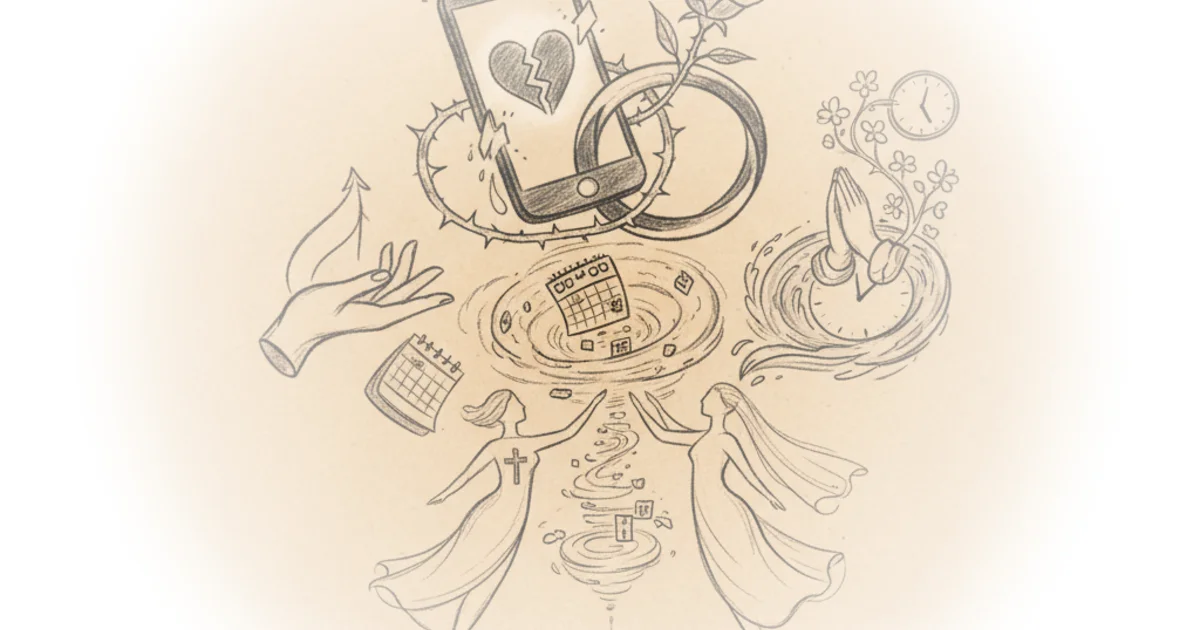
Critics might argue that this view romanticizes pre-pandemic social norms, ignoring that many young people were already disengaged before the virus. However, the evidence presented regarding the specific loss of "social muscles" offers a nuanced middle ground: the pandemic didn't create the isolation, but it accelerated a trend where the cost of in-person failure became too high to risk. As one software engineer in the piece notes, "Our social circles become so small because there's no real, in-person interaction happening."
The Language of Avoidance
The coverage then pivots to the linguistic fog that now surrounds modern romance, arguing that vague terminology serves as a shield against vulnerability. The Pillar highlights how terms like "talking" or "situationship" have replaced clear definitions, allowing young people to avoid the terror of rejection or the pressure of commitment. Dr. Anna Moreland, who teaches a course on adulting at Villanova, observes that "The language is intentionally vague," noting that this ambiguity is a form of self-protection. This framing is effective because it identifies a specific mechanism of avoidance: by refusing to name the relationship, one cannot be said to have failed at it.
"Their romantic muscles now are much weaker than they were when I arrived at college as a student, when dating was still alive in high school culture."
The piece illustrates this with the story of Nathan Henshaw, who describes the dating culture as "pretty terrible" because "Everyone is super kind until you get to that commitment phase and then everyone just flutters out." This behavior creates a feedback loop where the fear of the "soft no"—often disguised as a need to "pray and reflect on that"—prevents anyone from ever making a move. The argument suggests that the very tools young people use to protect themselves are the ones preventing them from finding the connection they seek.
The Catholic Paradox: Pressure vs. Permissiveness
Where the article offers its most distinctive insight is in its analysis of the specific pressures facing Catholic young adults. The Pillar argues that while secular dating suffers from a lack of commitment, Catholic dating often suffers from an excess of it, creating a "ring by spring" mentality that is just as paralyzing. Christine Emba, a fellow at the American Enterprise Institute, points out that for many Catholics, "if I ask this person on a date, it means something really serious," leading to a hesitancy to even begin. This creates a unique tension: a culture that simultaneously fears the casual nature of hookup culture and fears the weight of a potential marriage proposal.
The piece also touches on the growing political and gender divide within the Church, noting how the rise of the "tradwife" phenomenon on social media has complicated the landscape. Emba describes this trend as "objectifying" and "controlling," noting that "There are more young men who profess to be really trad or have adopted politically right wing postures where they are only looking for submissive women." This adds a layer of political friction to the dating pool, where the desire for a traditional lifestyle can clash with the modern reality of women seeking partnership rather than subordination.
The Digital Double-Edged Sword
Finally, the coverage examines the role of technology, arguing that even faith-based apps often replicate the dehumanizing mechanics of their secular counterparts. The Pillar reports that "Dating apps have made us see each other as a commodity," a sentiment shared by Taylor O'Brien, co-founder of the Catholic site Candid. The solution proposed by some, like O'Brien, is to remove the swipe feature entirely, forcing users into virtual or in-person speed dating events to restore the "dignity" of the encounter. This approach challenges the prevailing assumption that convenience is the highest good in modern dating.
"In an hour, I can like 40 to 50 girls on an app and you're almost devaluing the experience of meeting someone in person."
However, a counterargument worth considering is whether these curated events can scale to meet the needs of a generation that has grown accustomed to the infinite choice of the swipe. While Father Charles Gallagher's parish in Washington D.C. has found success with smaller, intentional gatherings, the piece acknowledges that "Gen Z, they want the apps, they want that convenience." The tension between the human need for friction and the digital demand for ease remains unresolved.
Bottom Line
The Pillar's most successful move is reframing the dating crisis not as a moral failing of young people, but as a structural collapse of the social infrastructure required to build relationships. The strongest part of this argument is its focus on the "atrophy" of social skills, a tangible consequence of the pandemic and digital saturation that demands a practical, not just spiritual, solution. Its biggest vulnerability lies in the difficulty of reversing these trends without a broader cultural shift away from digital isolation. The reader should watch for how religious institutions adapt their social programming to bridge this gap, as the success of these small-scale interventions may determine the future of community life for the next generation.