Nate Silver delivers a counterintuitive finding that upends the conventional wisdom about the modern Republican coalition: the very voters who claimed to want an end to "forever wars" are currently the most enthusiastic supporters of a new conflict in the Middle East. In an era where political analysis often gets lost in personality cults, Silver cuts through the noise with hard polling data to reveal a startling disconnect between elite isolationist rhetoric and the mass base's behavior. This is not just a story about foreign policy; it is a forensic look at how political identity can override ideological consistency, offering a rare glimpse into the future of American conservatism.
The Great Reversal
Silver begins by contrasting the campaign promises of the current administration with its actions, noting that while the candidate once mused that invading Iraq "may have been the worst decision" in presidential history, the executive branch has now initiated a war with Iran. The author points out that the party has shifted from a fringe anti-interventionist stance to a mainstream MAGA-style isolationism, yet the reality on the ground tells a different story. "Trump, who is much less ideologically consistent than the true interventionist or anti-interventionist members of the GOP, has the final say in these disputes at the moment," Silver writes, highlighting the centralization of power that allows policy to swing wildly based on the leader's whim rather than party doctrine.
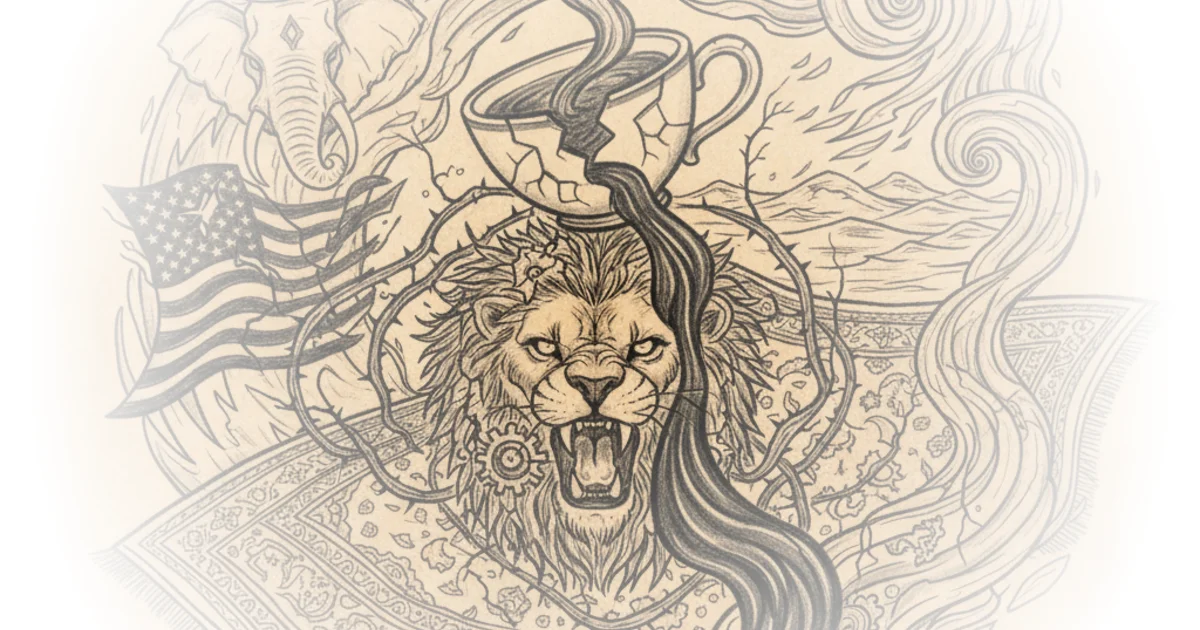
The data reveals a paradox that defies easy categorization. While pundits like Tucker Carlson have condemned the strikes as "absolutely disgusting and evil," the voters who identify most strongly with the movement are rallying behind the president. "Republicans who identify with the MAGA movement are much more supportive of the war than Republicans in general," Silver observes, citing polling that shows a +75 margin of support among "Trump-policy voters" compared to just +35 among traditional conservatives. This suggests that for a significant portion of the base, loyalty to the leader has superseded the policy of non-intervention.
The real question is whether you see more Republican defections on Iran than you do on other salient topics that don't touch on the isolationism question.
This finding is crucial because it challenges the assumption that the "MAGA" label is a coherent ideological package. Instead, it functions more as a brand of personal allegiance. Critics might note that Silver's reliance on self-identification polls could conflate genuine ideological isolationists with those who simply vote for the person, but the consistency across different polling firms suggests a deeper structural shift. The base is not breaking; they are doubling down, driven by a perception that the administration's actions are a necessary defense rather than an unnecessary entanglement.
The Elite-Mass Gap
The commentary then shifts to the friction between the party's intellectual vanguard and its grassroots. Silver notes that while figures like JD Vance and Tucker Carlson have built careers on warning against foreign entanglements, the base remains unmoved. "It's easy enough to imagine a world where the more isolationist members of Trump's MAGA base oppose the foreign military action, while it's supported by older, more traditional members of the GOP," Silver writes, only to immediately dismantle that expectation with the data. The isolationist turn among policymakers is described as a relatively recent phenomenon that has not yet filtered down to the voters.
Silver draws a compelling parallel to the Democratic Party's evolution on Israel, noting that just as progressive skepticism of Israel moved from the fringe to the mainstream over time, the Republican base could eventually shift. "The equilibrium could change as Trump looks more like a lame duck," he argues, suggesting that the current unity is fragile and tied to the tenure of the current leader. He references the 2008 transition, where John McCain repudiated George W. Bush's handling of Iraq, to illustrate how a new generation of leaders might eventually repudiate the current war.
In 2008, with Bush deeply into lame-duck territory, eventual nominee John McCain repudiated Bush's handling of Iraq but stopped short of conceding that the original idea to go to war had been a bad one.
This historical context adds necessary depth, reminding the reader that political realignments often lag behind policy changes. The article implies that the current support for the Iran War is a temporary anomaly, sustained only by the unique gravitational pull of the president. As the administration's power wanes, the underlying isolationist instincts of the party may re-emerge, potentially creating a new fault line for the 2028 election cycle.
Bottom Line
Silver's strongest contribution is his empirical dismantling of the idea that the MAGA base is currently an isolationist force; the data proves that for now, it is a loyalist force that prioritizes the leader's will over the party's stated principles. The argument's greatest vulnerability lies in its assumption that this loyalty is permanent, ignoring the possibility that rising gas prices or American casualties could rapidly fracture the coalition. Readers should watch for the 2026 midterms, where the tension between elite isolationist rhetoric and base loyalty will likely reach a breaking point.