What if you could recognize your favorite guitarist by hearing just one note? That's the premise of Rick Beato's ear-training challenge: isolating single notes from 20 legendary guitar solos and asking listeners to identify who played them. The results reveal something fascinating about how deeply our ears are tuned to these players' signatures.
The Challenge
Beato isolated individual notes from famous guitar solos, removing most of the musical context. Some notes include bends and vibrato; others are plain sustained notes. The goal: see if fans can identify the player based solely on tone and attack characteristics.
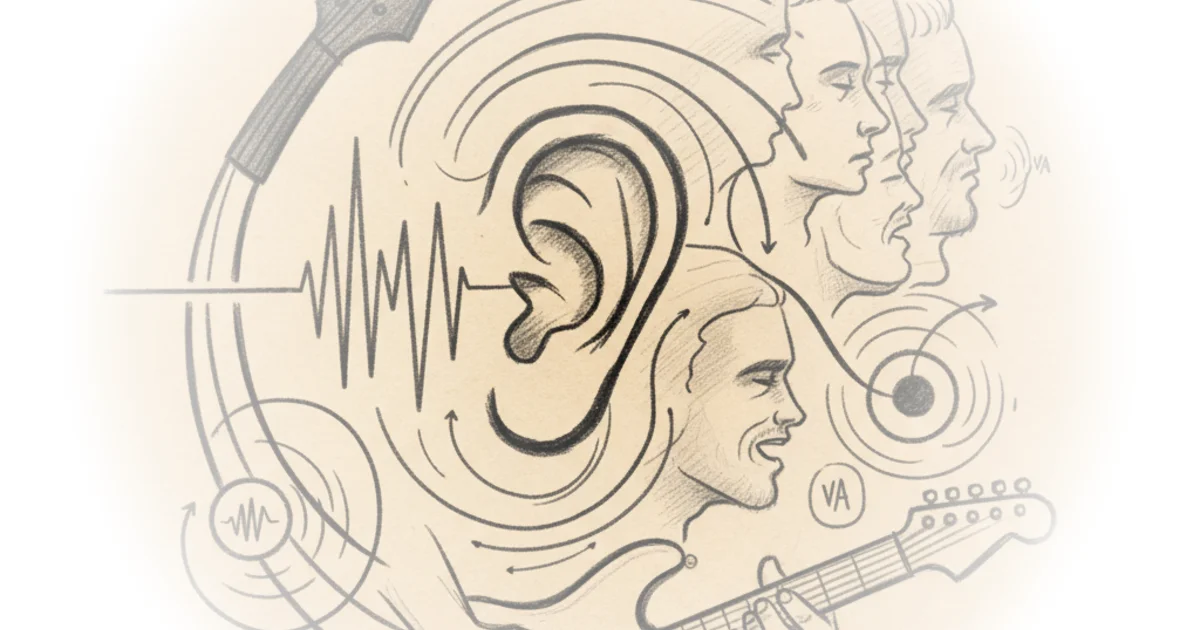
Some notes were strategically chosen near the end of iconic solos, making them easier to guess. Others were pulled from the middle of passages where the full song context would make identification obvious.
The Easiest Notes
The first two notes should be immediately recognizable to most listeners. Note one is David Gilmour's bend from Pink Floyd—"unmistakable," according to Beato. The second is Mark Knofler playing "Sults of Swing"—two notes that even casual fans would get right.
The sixth note presents a different challenge: Eddie Van Halen's signature sound on "Ice Cream Man" includes the distinctive attack of Alex Van Hal's snare, which gives away the player immediately once heard in context.
The Hardest Notes
Several notes proved nearly impossible to identify without additional context. Note nine comes from Eric Johnson's "Cliffs of Doubt"—his tone is so unique that one isolated note could belong to several players.
Note nineteen presents a particular puzzle: Jimmy Page's first note from "Whole Lotta Love" sounds nothing like his opening note from "Stairway to Heaven." Any single note pulled from Stairway would be instantly recognizable, but taken out of context, it becomes nearly impossible.
The final note belongs to George Harrison from The Beatles—placed at the end because it's obvious once you hear it.
What This Reveals
A single bend or vibrato pattern can be enough to identify a legendary guitarist—but only if their style is distinctive enough.
Critics might note that this test favors guitarists with immediately recognizable tones over those who are more subtle. Players like Allan Holdsworth, whose playing is technically demanding but tonally less iconic, suffer in such isolation tests.
Bottom Line
The most interesting discovery isn't whether people can identify these players—it's what makes them identifiable. The notes that work best are those where the guitarist's personality bleeds into every parameter: choice of guitar, pedal effects, and physical technique combine to create a fingerprint. For players with more conservative tones—like Holdsworth or Page—even two notes weren't enough. But for Gilmour, Van Halen, and Knofler, one note is all it takes.