Matt Stoller identifies a seismic shift in American corporate governance: the unexpected emergence of state attorneys general as the primary bulwark against media consolidation. While the federal government appears paralyzed by political alignment with the dealmakers, Stoller argues that California and other states are preparing a legal assault that could redefine the boundaries of corporate power. This is not merely a story about a merger; it is a test of whether the rule of law can withstand the fusion of billionaire wealth and executive branch influence.
The Rise of State Enforcers
The most surprising element of Stoller's coverage is the pivot away from Washington. He notes that for years, states were ignored in antitrust matters, yet the landscape has changed dramatically. "But what few expected, except BIG readers, is that a different set of enforcers, state attorneys general, might intervene," Stoller writes. He points to recent victories where state officials blocked the NextStar-TEGNA merger and challenged Ticketmaster, proving they are no longer passive observers.
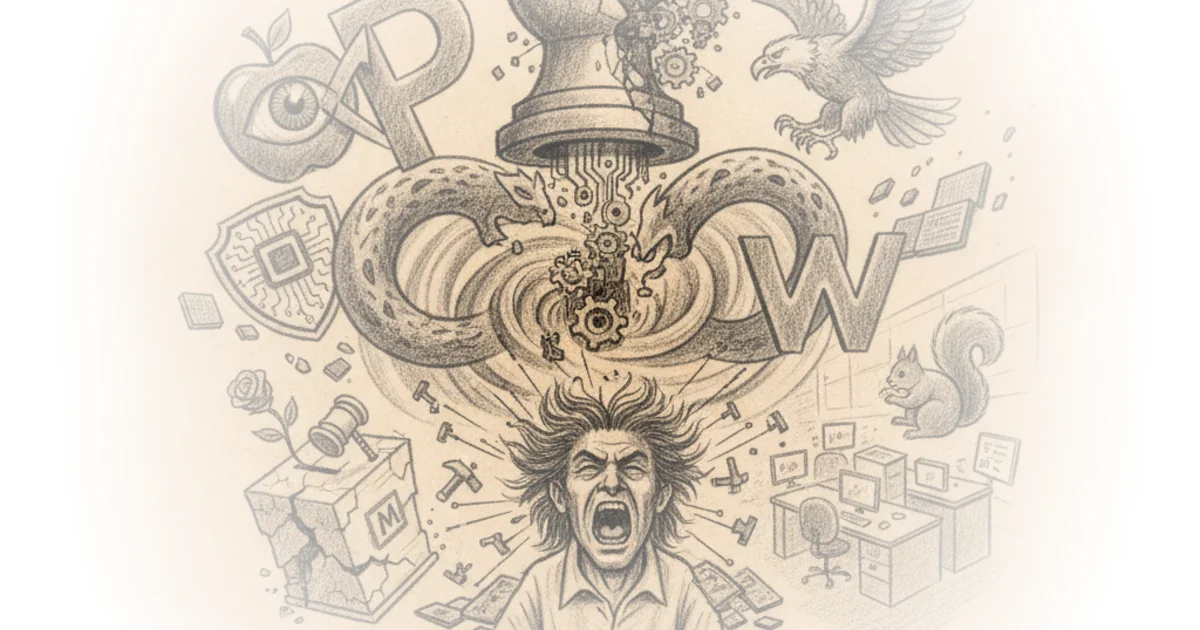
This framing is crucial because it highlights a structural weakness in the federal approach. The federal Antitrust Division, under the current administration, has not only failed to block the Paramount-Warner deal but has actively endorsed it. Stoller reveals the mechanics of this failure, noting that career staff were overruled by political appointees. "The Wall Street Journal reported that antitrust staffers wanted to block the deal, but were overruled by Trump officials," he explains. This suggests that the legal review process has been compromised by political donations and backroom promises, specifically the Ellison family's reported $45 million contribution to a political group and their pledge to reorient CNN.
Critics might argue that state-led litigation creates a patchwork of regulations that hinders national business planning. However, Stoller's evidence suggests that when federal oversight is captured by the very entities it is meant to regulate, state intervention becomes the only remaining check on power.
The Stakes: Debt, Jobs, and Democracy
The human and economic cost of this potential merger is staggering. Stoller dissects the financial structure of the deal, revealing a company burdened by debt that dwarfs its earnings. "In total, Paramount/Warner will have around $90 billion in debt, which is roughly seven times what it will earn," he calculates. The inevitable solution for such a balance sheet is not innovation, but mass layoffs. Stoller estimates that up to 20,000 jobs could vanish, describing the outcome as "significant bloodletting."
The only way to cut that debt is cost cuts. And sure enough, the Ellison family is projecting $6-9 billion in 'synergies,' which is to say layoffs.
Beyond the economics, Stoller raises a profound concern about the concentration of political power. The merger would unite CBS, CNN, and HBO under a single ownership that already controls TikTok, creating an unprecedented media monopoly. He warns that the administration expects this new entity to shift news coverage to be more aligned with its political agenda. "Pairing CBS, CNN, and HBO with the Ellison family's ownership of TikTok will give this family outsized political control of the American tech and media ecosystem," Stoller argues. This moves the conversation from market share to the fundamental health of the information ecosystem.
The Strategy of Intimidation
Perhaps the most disturbing aspect of Stoller's analysis is the reaction from the Ellison camp. Rather than engaging with the legal merits, the strategy appears to be one of political warfare and personal intimidation. Stoller details how the company is leveraging a smear campaign, with leaks suggesting opponents are driven by "antisemitism and socialism." He highlights the aggressive tactics of Makan Delrahim, a former Trump official now representing the Ellison family, who has taken to LinkedIn to attack critics personally.
Delrahim's threats extend beyond personal insults to the integrity of the legal system itself. Stoller quotes Delrahim's warning that he is prepared to take any adverse ruling to the Supreme Court to overturn the "Philadelphia National Bank" precedent, a decades-old rule that presumes mergers with high market share are illegal. "Remember the 1960's Supreme Court decision Philadelphia National Bank's 'presumption' isn't in the statutory text and I would bet at least 7 votes, maybe 8 or 9, at the Supreme Court who would overturn it today," Delrahim allegedly wrote. Stoller interprets this as a direct threat to dismantle the legal framework of antitrust enforcement.
This escalation reveals the fragility of the current legal order. If the argument against the merger is met with a threat to overturn the very laws governing it, the dispute transcends business and enters the realm of constitutional crisis.
Bottom Line
Stoller's piece is a powerful indictment of a system where corporate power has successfully captured federal regulators, forcing a desperate reliance on state-level opposition. The strongest part of his argument is the detailed exposure of the political quid pro quo that cleared the deal at the federal level. Its biggest vulnerability lies in the uncertainty of the courts; if the Supreme Court does indeed overturn the 30% market share presumption as threatened, the legal battle could be lost before it truly begins. Readers must watch whether the state attorneys general can withstand the political pressure and legal threats to stop this consolidation.