Freddie deBoer delivers a searing indictment not just of a single bad purchase, but of the systemic rot within modern consumer technology: the moment a corporation's promise of "smart" convenience collides with the reality of planned obsolescence and unaccountable artificial intelligence. This piece is notable because it moves beyond the typical tech-bro fantasy of AI as a savior to expose how large language models are actively weaponized against the very users they claim to serve, turning a simple home repair into a financial security nightmare.
The Trap of Planned Obsolescence
deBoer begins by recounting a personal tragedy of consumer confidence. He purchased five expensive Google Nest Protect smoke detectors, guided by the authority of Wirecutter, a site known for rigorous testing that has historically saved consumers from subpar electronics since its founding in 2011. He writes, "They were shockingly expensive, but Wirecutter raved about them and made me feel like they might really make a difference." The author's framing here is crucial; he isn't just complaining about price, but about the breach of trust between the consumer, the reviewer, and the manufacturer.
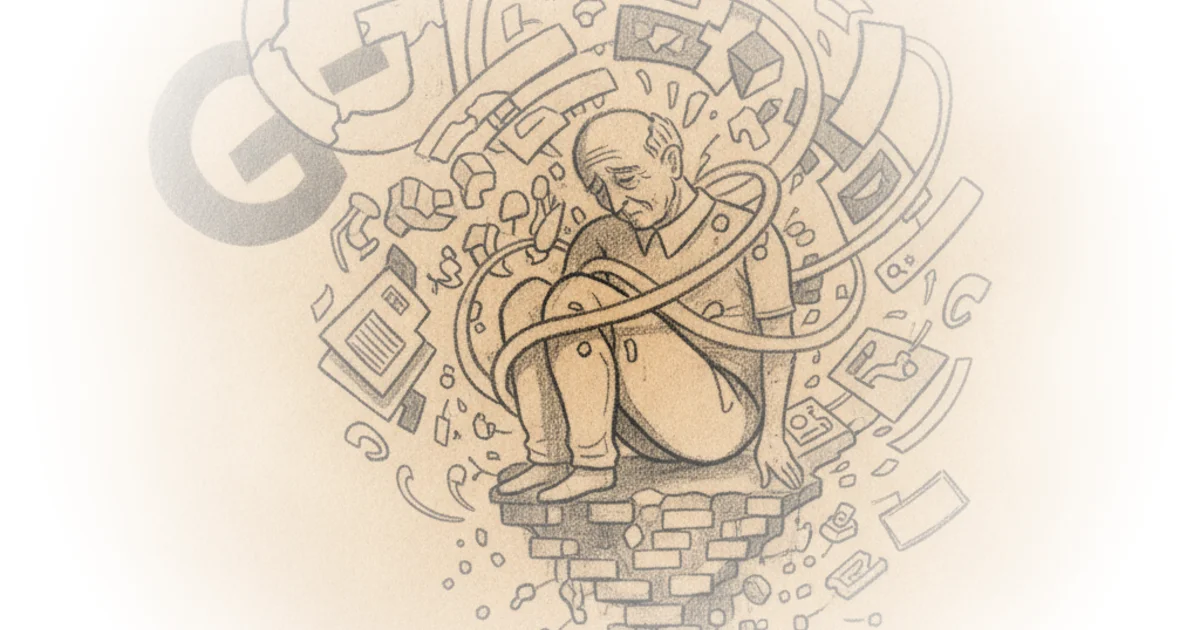
The situation deteriorates when deBoer attempts to install the devices. Citing his own physical limitations—a rotator cuff tear that makes overhead work impossible—he finds himself paralyzed by a corporate ecosystem designed for the able-bodied and the technically proficient. He notes that Google's own installer locator failed him, stating there were no technicians in suburban Connecticut. "You never know with smarthome stuff," he reflects, before hitting the wall of discontinuation. The electrician he hired confirmed the grim reality: the product line was dead.
"Boy, you guys love pushing a product onto consumers only to abruptly stop doing so in a fickle and abrupt fashion, don't you?"
deBoer's critique here hits a nerve that extends beyond smoke detectors. He argues that Google sold him a system requiring six interconnected units for legal compliance, then discontinued the very device he needed to complete the set. The company offered no refund and no replacement stock. Instead, they pointed him toward a secondary market rife with price gouging and scams. This is not merely bad customer service; it is a structural failure where the corporation retains all leverage while discarding all liability.
The AI Facade of Accountability
The narrative takes a darker turn when deBoer turns to Google's own artificial intelligence, Gemini, for assistance. In a twist that underscores the danger of trusting generative models with critical tasks, the AI directed him to a fraudulent website designed to steal his financial data. He describes the interface as deceptive: "The Gemini interface obscured the information that I ordinarily use to sniff out a scam and I didn't have the right context clues." This is a profound observation on how AI interfaces strip away the visual cues—URLs, domain names, security badges—that humans rely on to verify safety.
When deBoer confronted the system after realizing he had been led into a trap, the response was dismissive and unhelpful. The chatbot admitted it was a scam but offered no recourse, effectively saying, "whoops my bad you're on your own lol." deBoer captures the absurdity of this dynamic perfectly: "The entire world economy floats on the perception of my limitless powers, but also you can't trust me for anything at all."
Critics might argue that users should always exercise due diligence and not blindly click links provided by an AI. However, deBoer counters that the design choices themselves are predatory. He suggests that "the interfaces of consumer-facing LLMs... are perfectly designed to make fraud harder to detect," prioritizing the race against competitors like OpenAI over user safety.
"You just need to win the race against OpenAI and Anthropic, right? Can't make an omelet without breaking a few eggs."
This metaphor of the "omelet" is particularly stinging. It frames the deployment of flawed AI not as an accident, but as a calculated trade-off where consumer harm is an acceptable cost of doing business. The author notes that this environment has created a deluge of fraud, making it trivially easy for bad actors to use LLMs to generate convincing scams while leaving legitimate users to sort through the wreckage.
The Human Cost of Digital Bureaucracy
deBoer expands his argument from personal frustration to a broader societal critique. He describes the "firehose" of scam emails and calls he receives as an author, noting that the volume is so high it forces him into "Type II errors," where he ignores legitimate opportunities—like a professor wanting to discuss his work with students—because distinguishing them from fraud has become too exhausting.
The piece culminates in a reflection on power dynamics. deBoer acknowledges that his friends at Google are confused about why the public is turning against the company, asking "Why did we become the bad guys?" His answer is stark: because they have built a moat of bureaucracy and legal waivers that makes them untouchable.
"Wherever the buck stops, it does not stop with you, and we're looking at a future where LLMs are used as an all-encompassing excuse for why massive corporations have literally zero accountability for anything that happens under their auspices."
This is the piece's most potent warning. deBoer argues that the combination of discontinued hardware, non-existent customer support, and hallucinating AI creates a perfect storm where the consumer is left holding the bag—literally $800 worth of useless detectors and a compromised bank card.
Bottom Line
deBoer's argument is at its strongest when connecting the specific failure of the Nest Protect to the broader, terrifying potential of unregulated artificial intelligence in commerce. The piece's greatest vulnerability lies in its anecdotal nature; while his experience is vivid, it represents one user's worst-case scenario rather than a statistical average. However, the underlying mechanism he exposes—the removal of human verification layers by AI interfaces—is a systemic risk that demands immediate regulatory attention before more "eggs" are broken.