Cory Doctorow delivers a scathing, evidence-backed takedown of the corporate AI narrative, arguing that the current mania is not a technological revolution but a coordinated lie driven by executive ego and fear. While the world watches trillions flow into data centers, Doctorow reveals that the actual utility of these systems in the enterprise is near zero, creating a dangerous feedback loop of dishonesty that threatens to bankrupt the very companies shouting the loudest. This is not a story about code; it is a story about how powerful people are being humored all the way into financial ruin.
The Coordination Problem of Lies
Doctorow anchors his argument in the work of Nikhil Suresh, a consultant who has interviewed hundreds of executives and found a universal pattern of deception. The core thesis is that corporate leadership operates under a false premise: that AI must be transformative, so they work backward to fabricate evidence of success. Doctorow writes, "Corporate leadership is starting from the premise that AI has (or will) radically change the business, and they're working backwards from that premise to find the evidence to support this article of faith."
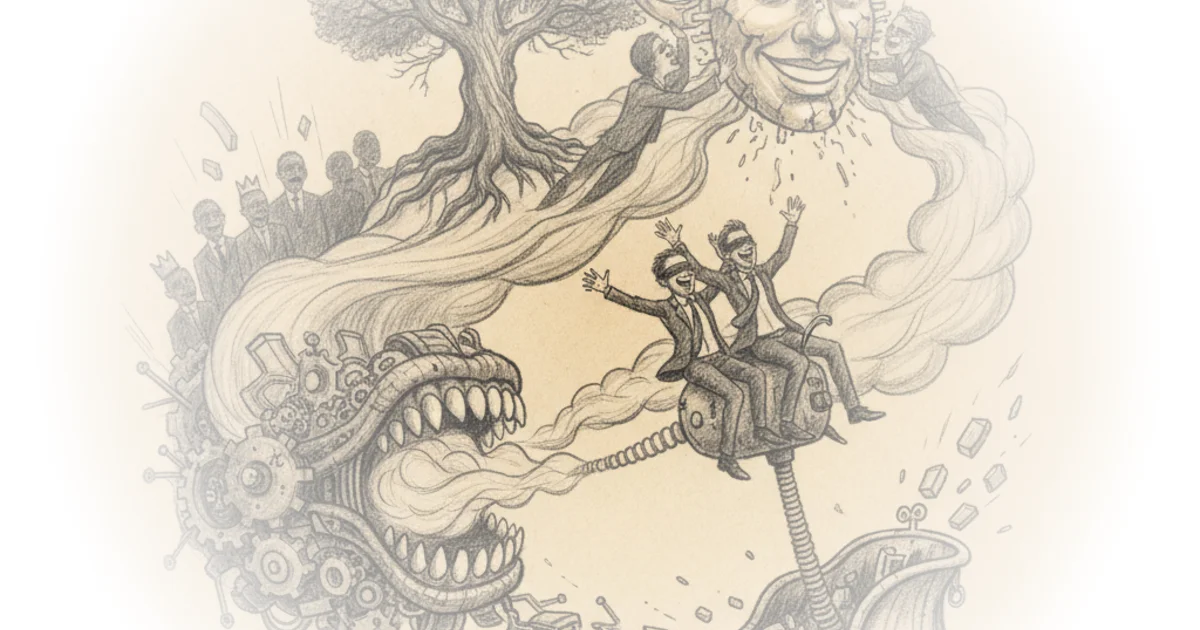
This framing is devastating because it shifts the blame from the technology itself to the incentives of the C-suite. Doctorow explains that this is a classic coordination problem where no single executive can admit failure without being fired by peers who have implicitly called them liars. He notes that in the companies Suresh studied, the only people promoted were those who made "religious declarations of faith" about AI, while honest skeptics were targeted for layoffs. This creates a systemic inability to speak the truth. As Doctorow puts it, "If they could all admit the truth at once there might be some hope, but there is no way to coordinate that event."
The evidence provided is stark. Suresh claims to have seen zero successful enterprise AI projects in a year and a half. Doctorow highlights the absurdity of this by noting that not a single client would face a business challenge if a major provider like OpenAI went out of business tomorrow. The problem, he argues, is that companies are "terminally bad at running software projects effectively," and adding AI only introduces new ways to fail. This is a crucial distinction: the failure isn't just that the AI is bad; it's that the organizations are incapable of managing the complexity they are forcing upon themselves.
Every single one – we have seen 0% success in a year and a half.
The Hypnotic Power of the Demo
Why do rational business leaders fall for this? Doctorow points to the "hypnotizing, mesmerizing power of the AI demo." He recounts how sales teams at companies like Snowflake can sell expensive, unreliable add-ons like "Cortex" simply by showing a conversational interface that does something marginally useful. The spectacle of the demo overrides the logic of the business case. Doctorow describes the reaction of executives who were lukewarm on a database migration but went "red-hot" after seeing an AI tool that was explicitly described as unsuitable for their needs.
This dynamic mirrors the concept of "Goodhart's law," where a measure becomes a target and ceases to be a good measure. In this case, the metric is "AI usage," and companies are gaming it by creating circular processes where one chatbot prompts another just to consume tokens and score high on corporate leaderboards. Doctorow writes, "They just do the work, the same way they have for decades, and say Claude did it." This "AI washing" is not just a waste of money; it delays real work until it can be dressed up with buzzwords.
Critics might argue that early adoption of any disruptive technology is messy and that current failures are just growing pains. However, Doctorow counters this by pointing out that the scale of the deception is unprecedented. He notes that executives are crafting strategies for billion-dollar businesses despite never having used the tools themselves. The gap between the rhetoric and reality is so wide that it becomes a form of collective delusion. As he observes, "The true believers are in charge," and you cannot reason with a true believer.
The Ego of the Executive
The deepest insight in the piece is Doctorow's psychological explanation for this behavior. He suggests that the most uncomfortable feeling for a powerful person is having a subordinate explain why their idea is impossible. AI offers a way to bypass the need for technical expertise. Doctorow writes, "The most important discomfort that powerful people experience is having ego-shattering conflicts with subordinates who know how to do things they do not know how to do."
By adopting AI, executives can pretend to control complex systems without understanding them. It allows them to demand specific procedures from skilled professionals without needing to agree with the professionals on the methods. This echoes the historical tension seen during the dotcom era, but with a twist: instead of workers demanding the right to use the web, they are being forced to use AI. Doctorow notes that this creates a situation where "business leaders will confidently demand that the skilled professionals who perform the business's core functions use AI, even if those professionals don't think it will help."
The result is a market dominated by "froth, lies and mutual destruction pacts." Vendors feel compelled to claim 100x productivity gains because their customers are making the same claims. To admit otherwise is to risk losing contracts. Doctorow captures this trap perfectly: "getting enterprise contracts cancelled because you wanted to opine on something that doesn't really matter to your organisation's mission is a great way to get fired."
Bottom Line
Doctorow's argument is strongest in its exposure of the coordination failure that keeps the AI bubble inflated; the evidence from the field suggests that the technology is not yet ready for the enterprise, but the political economy of the boardroom demands it anyway. Its biggest vulnerability is that it relies heavily on anonymous anecdotes, which, while compelling, lack the hard financial data of a formal audit. Readers should watch for the moment when the market finally forces a reckoning, likely when the first major corporation admits its AI strategy was a failure and the resulting collapse of stock prices triggers a new wave of honesty.
The spectacle of AI that does something galvanizes corporate leaders who feel like they're the only bosses who can't find a revolutionary use for AI in their businesses.