This piece cuts through the noise of modern productivity advice by returning to a timeless, counterintuitive truth: the barrier to action is rarely the task itself, but the fear of the task. Ryan Holiday, writing for The Daily Stoic, reframes the common experience of procrastination not as a lack of discipline, but as a self-inflicted psychological distortion. For the busy professional drowning in a sea of "urgent" demands, this distinction is not just philosophical—it is a practical tool for reclaiming agency.
The Architecture of Fear
Holiday begins by anchoring the discussion in ancient wisdom, specifically a maxim from the Roman philosopher Seneca. He writes, "不是因為事情難做,我們才不敢做;是因為我們不敢做,事情才變得難做。" (It is not because things are difficult that we do not dare; it is because we do not dare that they are difficult.) This translation of the Latin original serves as the article's thesis, shifting the locus of control from the external world to the internal mind.
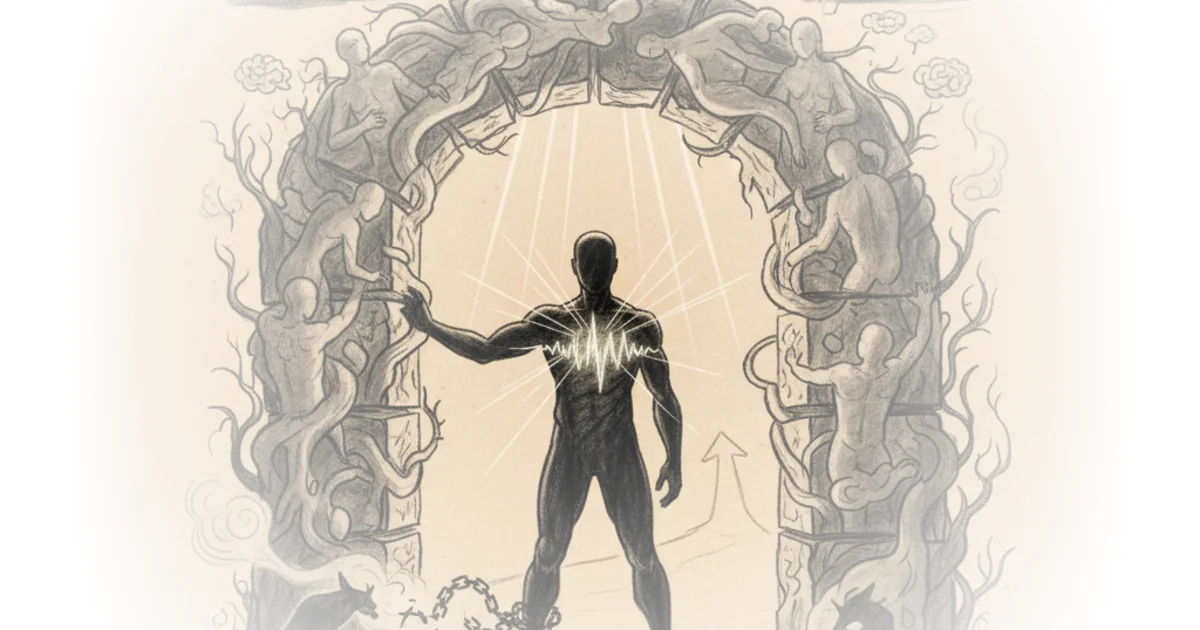
The author argues that human misery often stems from "對事物的誤解和不正確的價值判斷" (misunderstandings of things and incorrect value judgments). By focusing on this, Holiday suggests that our hesitation creates a feedback loop where the perceived difficulty of a challenge balloons out of proportion to its reality. He notes that when we face a challenge, "這種恐懼創造了一個心理障礙,使得任務變得看似不可能完成" (this fear creates a psychological barrier, making the task seem impossible to complete).
This framing is particularly potent because it challenges the modern obsession with external optimization. We spend billions on better software, faster workflows, and more efficient tools, yet Holiday points out that the primary bottleneck is often internal. "這個「不可能」實際上是我們自己創造的" (This "impossibility" is actually created by ourselves), he writes, because we fixate on potential failure rather than the probability of success.
真正阻止我們達成目標和克服困難的往往是我們自己的心理障礙,而不是任何實際的、外部的障礙。
Critics might argue that this perspective risks dismissing genuine structural barriers. Not every difficulty is a product of fear; some tasks are objectively complex, and some systems are genuinely rigged against the individual. However, Holiday's point remains valid as a starting mechanism: even in the face of real obstacles, the paralysis of fear often precedes and exacerbates the actual work required.
Reframing Through Perspective
The article moves beyond mere diagnosis to offer a Stoic remedy: cognitive restructuring. Holiday suggests that "透過自我反思和認知重組,我們可以學習如何正確地看待和評價外界事件" (through self-reflection and cognitive restructuring, we can learn to correctly view and evaluate external events). This is not about toxic positivity or ignoring reality, but about recalibrating how we assign value to potential outcomes.
He acknowledges that human rationality is fragile. "當然,有些時候人會有一些先天的思維局限,或者受到當下情緒及其他內外的因素所影響,讓你失去理性的判斷能力" (Of course, sometimes people have innate cognitive limitations, or are affected by current emotions and other internal and external factors, causing you to lose rational judgment). Here, Holiday wisely pivots from solitary introspection to communal wisdom, advising that "多找其他人聊聊(ex.導師、教練)" (talk to others, e.g., mentors, coaches) is one of the fastest ways to break the cycle.
This advice to seek external perspective is a crucial nuance. It prevents the Stoic practice from becoming an isolated, self-referential loop. By bringing in a mentor or coach, one can "立即轉換視角" (immediately shift perspective), seeing the "impossible" task through a lens that is unclouded by personal anxiety.
The Social Dimension of Difficulty
Perhaps the most underappreciated part of Holiday's commentary is its expansion from the individual to the collective. He posits that "社會和文化也會對我們施加壓力,讓我們覺得某些事情「太難了」或「不可能做到」" (society and culture also exert pressure on us, making us feel that certain things are "too hard" or "impossible to do").
This observation is vital for leaders and policymakers who often assume that resistance to change is purely logistical. Holiday argues that these societal barriers are often "只是一種心理障礙" (just a psychological barrier). When a culture internalizes a narrative of impossibility, it creates a self-fulfilling prophecy that stifles innovation and progress. "一旦我們能夠識破這些障礙並鼓起勇氣去挑戰它們,我們就會發現,原本看似不可能的事情其實是可以完成的" (Once we can see through these barriers and muster the courage to challenge them, we will find that things that seemed impossible are actually doable).
很多時候,社會和文化也會對我們施加壓力,讓我們覺得某些事情「太難了」或「不可能做到」。然而,這些通常也只是一種心理障礙。
This societal lens adds significant weight to the argument. It suggests that the "difficulty" of a policy change or a cultural shift is often manufactured by a collective lack of courage rather than an inherent flaw in the proposal itself.
Bottom Line
Ryan Holiday's piece succeeds by stripping away the complexity of modern anxiety to reveal a simple, actionable truth: the magnitude of a challenge is often a reflection of our fear, not the task itself. While the argument occasionally leans heavily on the assumption that all barriers are psychological, its greatest strength lies in the practical advice to seek external perspective when internal logic fails. For the busy reader, the takeaway is clear: the first step to solving a problem is often simply daring to begin.