This piece delivers a stinging diagnosis of a movement fracturing from within, arguing that the current administration's leader is too self-absorbed to steer the ship through a storm of his own making. Sarah Longwell, Tim Miller, and Bill Kristol expose a paradox: the Vice President is trying to enforce a moral line against neo-Nazis while the movement's architect remains indifferent to the very extremism he helped cultivate. For the busy observer, this is not just political gossip; it is a case study in how a coalition built on personality rather than policy inevitably collapses under the weight of its own contradictions.
The Vice President's Impossible Tightrope
The authors zero in on the dissonance of Vice President JD Vance, who recently attempted to unify a fractured right-wing base while simultaneously drawing a line in the sand against antisemitism. At the Turning Point USA conference, Vance urged unity, telling the crowd, "When I say that I'm going to fight alongside of you, I mean all of you. Each and every one." He framed this inclusivity as a rejection of "self-defeating purity tests," a direct nod to the administration's preference for loyalty over ideological consistency. However, the commentary highlights how this stance crumbles when Vance later declared in an interview that "Antisemitism and all forms of ethnic hatred have no place in the conservative movement."
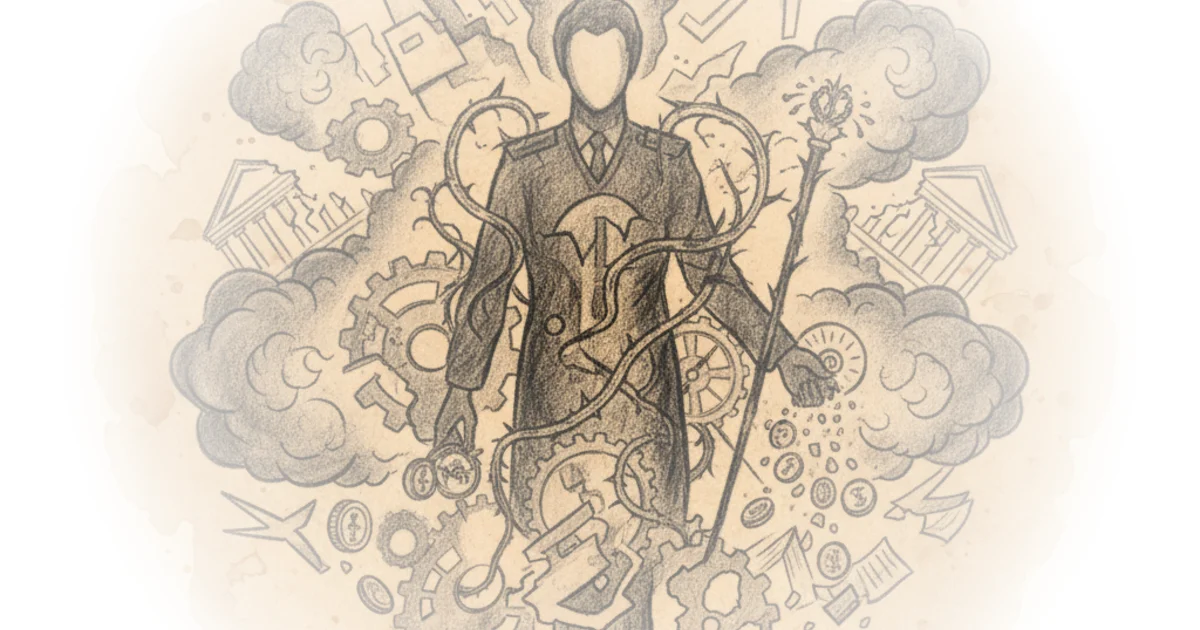
Longwell, Miller, and Kristol argue that this position is logically unsustainable. If the movement refuses to self-deport extremists, the only way to remove them is through the very "purity tests" Vance claims to despise. The authors point out a glaring hypocrisy: the White House continues to employ Paul Ingrassia, a figure described as having a "Nazi streak," even as the Vice President denounces ethnic hatred. This suggests that the administration's moral boundaries are porous, defined more by personal slights than by principle. As the authors note, Vance's policy seems to be that anyone attacking his wife can "eat shit," while the broader movement remains a "leaderless cult" where figures like Ben Shapiro are called "cancer" by allies like Steve Bannon.
The differences they're trying to paper over are foundational and ever-present.
Critics might argue that political coalitions are inherently messy and that demanding absolute ideological purity is a recipe for irrelevance. Yet, the authors counter that the issue here isn't just messiness; it is the presence of actors who believe Jewish people are the root of all political problems. How can a coalition function when half its members view the other half as existential enemies? The historical parallel to the America First Committee is instructive; just as that pre-WWII group fractured over the extent of its antisemitism, the current movement is tearing itself apart over whether to embrace or reject the fringe. The administration's refusal to take a hard stance leaves the base in a state of chaotic infighting, with the Vice President's exhortations falling on deaf ears.
The Architect's Indifference
The most damning section of the piece focuses on the President's complete disinterest in the soul of his own movement. While the Vice President struggles to manage the fallout, the President remains "completely incurious about the fight for the soul of the movement he built." When asked about the rising influence of neo-Nazis, the President's response was not about ideology or safety, but about vanity. He noted of a controversial interviewer, "Well, I found him to be good... he said good things about me over the years."
Longwell, Miller, and Kristol describe this as a "monomania" that has granted the President unprecedented control but also left him superfluous to the future. The authors write, "The exact traits that have given Trump such historic control over the movement's present are also now leaving Trump superfluous to the movement's future." Because the President cares only about loyalty to himself, he cannot grasp the concept of an "after" or the need for a sustainable ideology. He famously stated, "MAGA was my idea. MAGA was nobody else's idea," revealing a worldview where the movement is an extension of his ego rather than a political entity with its own life.
This dynamic mirrors the Führerprinzip, a principle where authority flows solely from the leader's will, leaving no room for institutional norms or future planning. The authors suggest that this lack of a standard beyond "are they with Trump or not?" has created a vacuum where extremism can fester unchecked. The President's inability to address the movement's descent into conspiracy theories is not a strategic choice but a cognitive limitation; he simply does not see the problem because it does not reflect poorly on him personally.
The Epstein Files and the Cover-Up
Shifting to the release of documents related to Jeffrey Epstein, the commentary takes a sharp turn toward the administration's handling of the scandal. The authors note the President's annoyance at the release of files, complaining, "I thought this was finished," and expressing concern for "innocent people" like bankers and lawyers whose reputations might be tarnished. What is striking, according to Longwell, Miller, and Kristol, is the total absence of empathy for the victims. "Trump expressed not a word of sympathy for Epstein's victims. Not a word."
The piece details the shambolic nature of the document release, where files appeared on the Justice Department's website only to vanish, suggesting a clumsy attempt at a cover-up. The authors point out that the released documents only referenced memos about co-conspirators and potential charges, leaving the actual evidence hidden. "A cover-up that highlights how much important material is still being covered up isn't an effective coverup at all," they observe. This incompetence is framed not just as a failure of administration, but as a moral failing, as the President prioritizes the reputations of his wealthy friends over the justice owed to the victims of a "monster."
It's not enough, God knows, to balance the scales of justice, but it's a start.
A counterargument might suggest that the President's focus on the legal process is a defense of due process for all, regardless of their association. However, the authors dismantle this by highlighting the selective nature of his concern. He worries about the "innocent" elites but ignores the very real harm done to the young victims. The administration's attempt to frame the release as a threat to national security or privacy rings hollow when the documents themselves are being mishandled and the victims are silenced.
The Economics of Distraction
The commentary also touches on the administration's economic maneuvers, noting the irony of strong GDP growth coinciding with a rise in unemployment. But the authors are less interested in the numbers and more in the distractions. The administration's decision to halt offshore wind leases under the guise of "national security" is dismissed as a transparent pretext. The authors recall the President's long-standing personal grievances against wind power, dating back to his golf course in Scotland, noting that he "didn't mention national security issues during these tirades."
This pattern of using "national security" as a fig leaf for personal or political vendettas extends to the renaming of Navy ships. The proposal for a "Trump-class" battleship is ridiculed by experts as tactically useless and financially wasteful. The authors sarcastically note, "If Trump doesn't care about national security, what's he going after those wind farms for?" The implication is clear: the administration's policy priorities are driven by ego and retribution rather than strategic necessity or the public good.
Bottom Line
The strongest part of this argument is its unflinching portrayal of a leadership vacuum where the Vice President is forced to play a role the President refuses to fill, resulting in a movement that is increasingly hostile to its own stated values. The piece's biggest vulnerability is its reliance on the assumption that the movement will eventually self-correct or collapse; history shows that such movements can endure for a long time despite internal contradictions. Readers should watch for whether the administration's inability to define a coherent ideology leads to a more radicalized base or a total fragmentation of the coalition.
The exact traits that have given Trump such historic control over the movement's present are also now leaving Trump superfluous to the movement's future.