The audio industry has a secret weapon against AI-generated music — and it's children who are wielding it.
Rick Beato, a well-known figure in audio production circles, recently revealed something fascinating: his kids can instantly detect AI-generated music with near-perfect accuracy. They don't need sophisticated algorithms or expensive software. They just listen for a very specific auditory artifact — a buzzing sound in the reverb that betrays the artificial nature of the track.
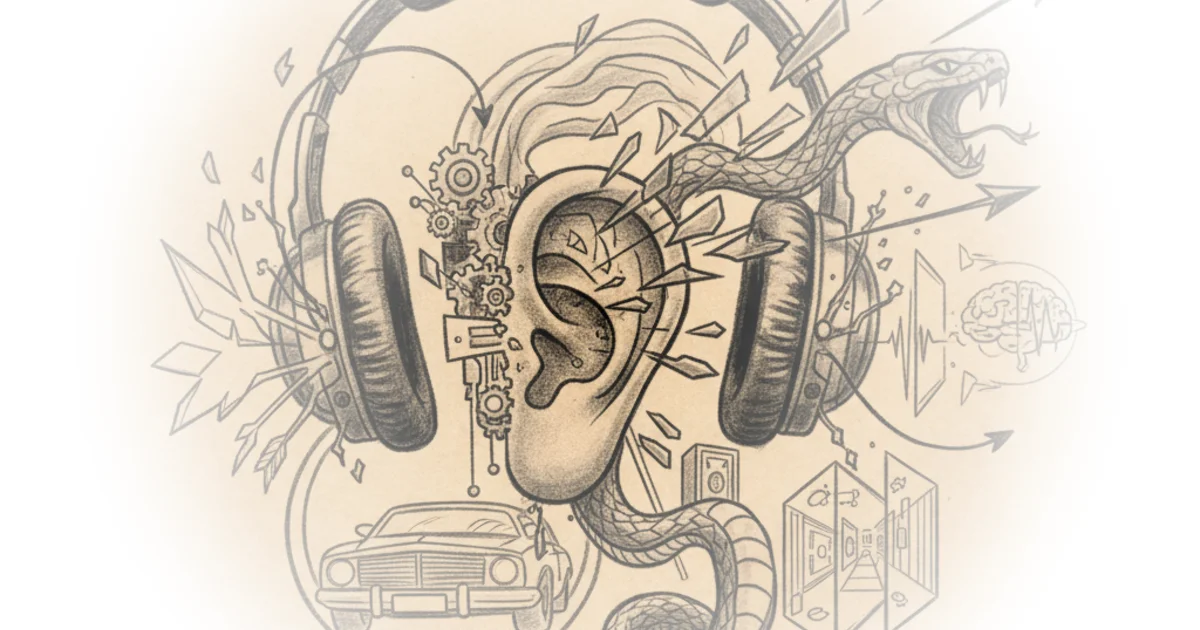
This isn't just an interesting observation. It's a window into how AI music generation actually works under the hood, and why the technology may be facing a far more fundamental problem than anyone realized.
How AI Music Actually Works
The technical process behind most modern AI music models traces back to an unexpected origin: medical imaging technology. The neural networks powering today's music generators were originally developed for analyzing microscope slides — specifically for recognizing patterns in visual data very quickly. Researchers discovered that these same architectures could be repurposed for audio by converting sound into a visual representation called a sonogram, essentially a spectrum of the audio signal.
The process works like this: AI systems take incoming audio and transform it into an image-like visualization. The models then process that visual representation and convert it back to audio on the output side. This round-trip conversion from audio-to-image-and-back-again is exactly why AI-generated music carries those distinctive artifacts — the high hats don't sound sharp or crisp like real recordings, and the entire mix has a characteristic "squeaky" quality that trained listeners immediately recognize.
The training data itself presents another problem. Base models were built using compressed audio from Spotify and YouTube — essentially the lower-quality MP3 versions of songs rather than pristine studio masters. This means the foundational technology carries all the artifacts inherent to lossy compression, which then propagate through every piece of AI-generated music.
The Headphone Debate: Open Versus Closed
Switching topics to hardware reveals another layer of nuance in audio production. When working alone in a studio environment, many professionals prefer open-ear headphones because they breathe better and allow more natural sound reproduction. Closed-ear headphones serve a different purpose — isolating sound for the listener while preventing others in the room from hearing what's being played.
The semi-open variants represent a middle ground between these two approaches. For production work, the choice often comes down to whether the engineer needs privacy or prefers a more comfortable listening experience over extended sessions.
The Business of AI Music
When Sunno, one of the leading AI music platforms, negotiated deals with major labels like Universal Music Group, the agreement reportedly allowed access to multitrack recordings for training purposes. However, users soon discovered something troubling: they couldn't save their own generated music files. This restriction signaled that the platform was prioritizing licensing negotiations over user experience.
The detection methods developed to identify AI-generated content rely heavily on these compression artifacts. Researchers found that services like Spotify compress audio for bandwidth savings using techniques called inverse cosine transform — and these same compression signatures appear in AI-generated music, making detection possible with what Beato describes as "impeccable accuracy."
But here's the catch: once training completes, retraining the entire model would require enormous investment. The business incentive is to maintain the current system rather than improve quality through cleaner data sources.
Does Anyone Need This Technology?
The core question remains unanswered: does AI music solve any actual problem?
Industry data suggests no. Approximately 100,000 songs upload to Spotify daily — an overflowing abundance that makes any shortage of music seem unlikely. The technology serves as what Beato describes as "a magic trick" — entertaining initially but quickly losing relevance once the novelty wears off.
Personal experiments bear this out. After attempting to generate hundreds of AI music tracks, only a handful were passable for actual use. The final test involved trying to create a choir singing specific words for a YouTube video template; after 25 revisions, the project was abandoned entirely because the results simply couldn't achieve the required specificity.
Bottom Line
The most compelling insight from this analysis isn't that AI music is good or bad — it's that the technology carries detectable fingerprints everywhere. From compression artifacts to characteristic audio quality, AI-generated music reveals itself through listening with trained ears. Critics might note that this detection capability doesn't address whether the technology should exist in the first place; it only confirms that we can identify when it's used.
The deeper question remains: with so much music already available and so few compelling use cases emerging, the real story may not be about AI music quality at all — it may be about why anyone is paying attention to it.