This piece from Reason cuts through the noise of pandemic-era medical censorship to expose a disturbing legal precedent: the attempt to pathologize dissent. It is not merely about a doctor's license; it is about whether a state board can declare an expert's mind "unfit" simply because her conclusions diverge from the official orthodoxy. For busy professionals tracking the erosion of due process, this case offers a chilling blueprint of how administrative power can be weaponized against independent thought.
The Weaponization of Mental Health
Reason reports that the case centers on Dr. Meryl Nass, a Maine-licensed physician since 1997 with no prior disciplinary record, who faced immediate suspension and a forced psychological evaluation. The piece argues that the Maine Board of Licensure in Medicine sought to "compel medical practitioners to toe the line in all matters related to COVID medical treatments." The board's actions were triggered not by patient harm, but by Nass's public commentary on vaccine efficacy and the use of treatments like ivermectin and hydroxychloroquine.
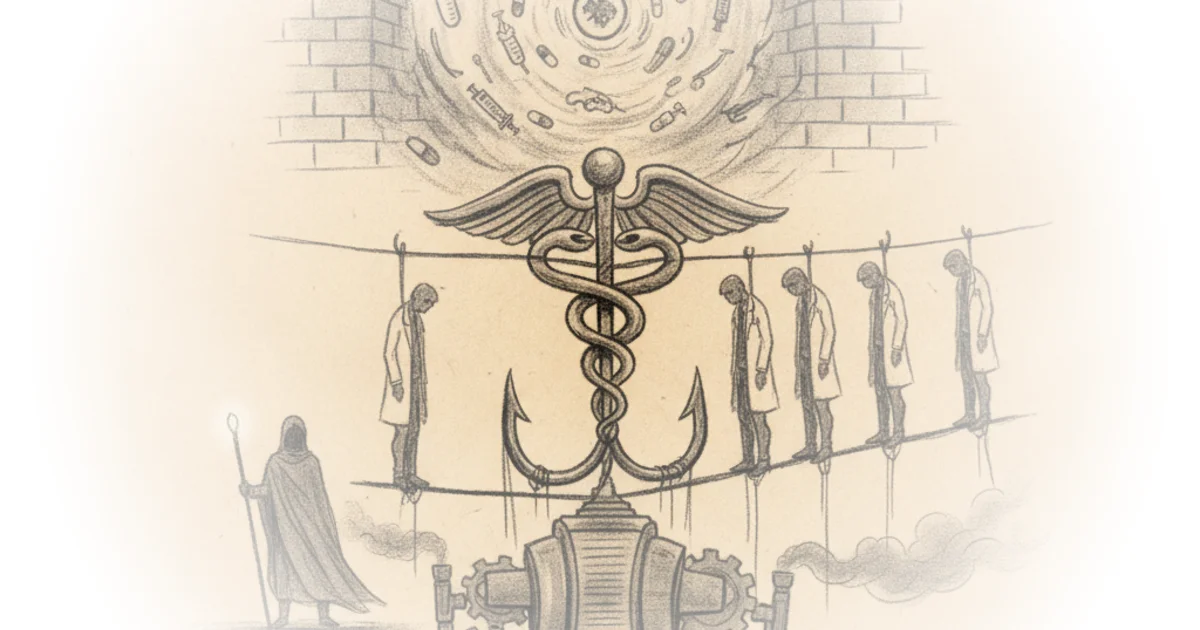
The coverage highlights a critical procedural failure. The board acted on a complaint from a stranger who admitted, "I am not her patient. I have never been treated by Meryl Nass." Yet, the board moved swiftly to silence her. As the text notes, the board's position statement warned of disciplinary action for those who "generate and spread COVID-19 vaccine misinformation." This framing is significant because it shifts the standard of care from patient safety to ideological conformity. Critics might argue that medical boards have a duty to prevent the spread of harmful misinformation, but the evidence here suggests the definition of "harmful" was expanded to include any challenge to the prevailing narrative.
"The Board was effectively acting as hybrid complainant-adjudicators misapplying their power to make ex parte adjudications based on a predetermined perspective that Dr. Nass must be of unfit mind to speak out as she did."
This observation by the judge is the linchpin of the argument. It suggests that the board bypassed the traditional safeguards of the legal system. Instead of proving Nass was incompetent, they assumed it because she disagreed. This mirrors historical tensions seen during the Ivermectin debates of 2021, where the FDA's narrative regarding poison control calls was later challenged as a "misleading media narrative" designed to frighten the public. The piece leverages this context to show that the board's actions were not based on clinical evidence, but on a desire to enforce a specific worldview.
The Illusion of Due Process
The article delves into the legal mechanics of the board's overreach, specifically the "Psychological Evaluation Order." Chief Judge Lance Walker found that this order lacked the hallmarks of judicial proceedings. The piece reports that the board "dispensed with preliminary proceedings altogether," skipping the probable cause findings that are standard in judicial settings. This is a profound departure from the norm, turning a regulatory body into an instrument of political influence.
Reason notes that the Superior Court later vacated this specific order, calling it "arbitrary and capricious." However, the court upheld the board's findings regarding patient care, creating a complex legal landscape. The piece argues that the board's conduct in ordering the evaluation was "alarmingly out of step with anything like the judicial process." This distinction is vital: while the board may have had grounds to investigate specific patient interactions, the immediate suspension and forced mental health exam were punitive measures aimed at the doctor's speech.
"Defendants were something like conductors for [political influence]. Nor was there any apparent application of 'precedent.' Nor was an adversary process employed."
This quote underscores the isolation of Dr. Nass's experience. The board did not follow precedent; they created a new rule where dissent equals mental illness. The text points out that the board itemized Nass's public statements as a cause for the evaluation, yet later dismissed charges based on those same statements when challenged on constitutional grounds. This inconsistency reveals a strategy of intimidation rather than a genuine pursuit of justice. The fact that no patients complained about her care, yet third parties initiated the investigation, further weakens the board's claim of protecting public safety.
The Limits of Immunity
The final section of the coverage tackles the doctrine of absolute immunity, which the board members claimed protected them from liability. The piece argues that this immunity should not apply when the board acts outside the scope of judicial functions. Reason reports that the judge concluded the board's conduct did not resemble that of judges or prosecutors, but rather that of "conductors for political influence."
The argument here is that immunity is designed to protect the integrity of the judicial process, not to shield agencies from the consequences of arbitrary power. The piece suggests that the board's actions were not "essential to protect the integrity" of the proceedings, but rather a violation of it. This is a crucial distinction for anyone concerned with the rule of law. If administrative bodies can act without accountability simply by labeling their opponents as mentally ill, the system of checks and balances collapses.
"The supposed 'function' at issue... does not need to be insulated from the 'harassment' of litigation because it simply ought not occur, ever."
This statement serves as a powerful indictment of the board's behavior. It implies that some actions are so fundamentally wrong that they should never be protected by legal technicalities. The piece does not shy away from the reality that the board's actions were likely driven by a desire to make an example of Dr. Nass. This aligns with broader concerns about the medical establishment's response to alternative treatments, where the pressure to conform often overrides the duty to investigate.
Bottom Line
The strongest element of this coverage is its unflinching exposure of how administrative power can be twisted to punish dissent under the guise of public health. The argument that a forced psychological evaluation was used to silence a doctor's speech is compelling and well-supported by the judge's findings. However, the piece's vulnerability lies in the fact that the Superior Court still upheld the board's findings on patient care, leaving a lingering question about the standard of care in telemedicine. Readers should watch for how this case influences future challenges to medical board authority, particularly as the line between professional oversight and political enforcement continues to blur.