The Walrus cuts through the noise of the multi-billion dollar anti-aging industry with a startling, biological truth: the key to extending healthspan may not lie in a new serum, but in the ancient, invisible ecosystems living inside us. While most coverage fixates on calorie restriction or genetic editing, this piece argues that the composition of our microbiome—the trillions of microbes we carry—is the silent architect of our decline, turning the very concept of aging into a microbial management problem.
The Microbial Clock
The authors, B. Brett Finlay and Jessica M. Finlay, immediately dismantle the fantasy of reversing time, grounding the reader in the harsh reality of biology. "From the moment we are born, we begin to die," they write, noting that while we try to "turn back the clock," the most promising frontier involves the oldest life forms on Earth. This framing is effective because it shifts the focus from a battle against time to a negotiation with our internal environment. The piece highlights that these microbes have survived for 3.5 billion years, outlasting our own species' attempts to control them.
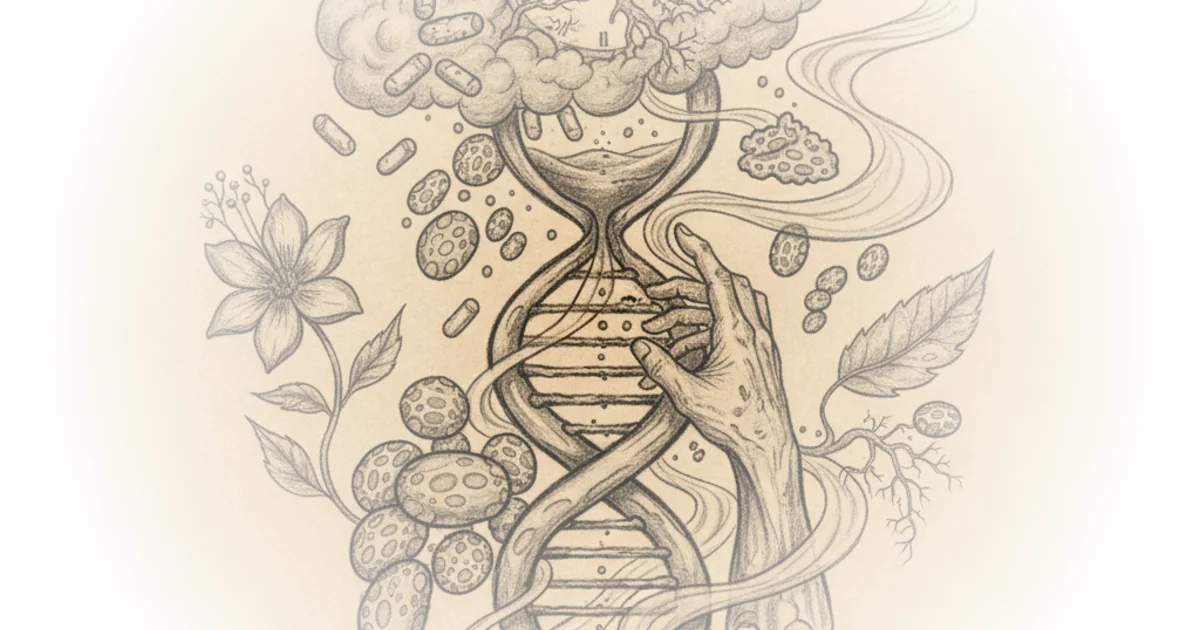
The argument gains significant weight when connecting microbial shifts to the rising tide of chronic disease. The Walrus points out that while life expectancy has skyrocketed since the early 1900s due to sanitation and antibiotics, we have traded infectious death for chronic misery. "Almost three quarters of all deaths worldwide, in 2024, were attributable to chronic diseases," the authors note, linking this surge to conditions like obesity, type 2 diabetes, and inflammatory bowel diseases. This is a crucial pivot; it suggests that our modern longevity has created a new biological mismatch where our ancient microbial partners are struggling to keep up with our modern lifestyles.
"Perhaps the microbiome plays a role—maybe to solve problems in the brain, we need to look at the gut and other areas of the body where microbes are involved."
This quote, attributed to sociologist Anne Martin-Matthews, serves as the article's intellectual anchor. It challenges the decades-long, billion-dollar fixation on the brain as the sole locus of Alzheimer's research. The Walrus uses Martin-Matthews' admission that she is "no microbe expert" to underscore how even social scientists are recognizing that the solution to neurological decay might be found in the gut. This aligns with historical context from the field of senescence, where the concept of "inflammaging"—low-grade, chronic inflammation driven by microbial imbalance—has only recently moved from the fringe to the center of gerontology. Critics might note that the gut-brain axis is still a relatively young field, and while correlations are strong, definitive causal pathways for reversing dementia remain elusive. However, the piece wisely avoids overpromising, focusing instead on the necessity of looking elsewhere.
The Sleep-Microbe Axis
The coverage then pivots to a surprisingly intimate connection: sleep. The Walrus argues that the three pillars of health—nutrition, exercise, and sleep—are not just parallel tracks but are deeply entangled with our microbial communities. The authors explain that microbes have their own circadian rhythms, which interact with our own. "Microbes produce neurotransmitters, such as serotonin and gamma-aminobutyric acid (GABA), which play a role in regulating mood and relaxation and, of course, sleep," they write. This reframes sleep not just as a passive rest state, but as an active period of microbial regulation.
The evidence presented is compelling, particularly the data on "social jet lag." The article cites a study of 934 people showing that a mere ninety-minute shift in sleep timing between weekdays and weekends was enough to alter the gut microbiome. This is a powerful, actionable insight for busy readers who might dismiss sleep hygiene as a luxury. The Walrus further strengthens the argument by detailing animal experiments where broad-spectrum antibiotics disrupted REM sleep and serotonin levels, proving that the relationship is bidirectional. Poor sleep creates a dysbiotic microbiome, which in turn degrades sleep quality, creating a vicious cycle of inflammation and cognitive decline.
"A general (and not surprising) consensus emerging among microbiologists is that poor sleepers have a dysbiotic microbiome, but this varies from person to person."
This nuance is vital. The authors resist the urge to sell a single "magic bug" for better sleep, instead emphasizing that a diverse collection of beneficial microbes is the goal. This approach is more scientifically rigorous than the typical wellness trend that promises a single probiotic strain will cure insomnia. The piece also touches on the staggering statistic that over a billion people worldwide suffer from obstructive sleep apnea, linking it directly to increased Alzheimer's risk. By weaving in the connection between sleep apnea and brain health, the article elevates the conversation from simple rest to long-term neurological preservation.
The Path Forward
The core of the Finlays' argument is that aging is not a solitary human experience but a communal one, shared with the trillions of organisms that call our bodies home. "Knowing that microbes are at the heart of general body decline is a great discovery for science—and for all of us—and highlights the critical need to maintain and enhance our microbes as we age," they conclude. This is a call to action that is both humble and urgent. It suggests that the future of longevity lies not in high-tech interventions alone, but in the strategic manipulation of our environment and diet to support our microbial allies.
The piece effectively bridges the gap between complex immunology and daily life, making the abstract concept of the microbiome tangible through the lens of sleep and chronic disease. It avoids the trap of blaming the individual for their aging process, instead pointing to systemic shifts in microbial communities that affect us all. While the science is still evolving, the direction is clear: we cannot age well without our microbes.
Bottom Line
The strongest element of this piece is its ability to reframe aging from a personal failure to a systemic microbial shift, offering a fresh perspective on why chronic diseases are surging in an aging population. Its biggest vulnerability is the inherent complexity of the gut-brain axis, where causality is often difficult to prove, but the authors navigate this by focusing on the potential for intervention rather than guaranteed cures. Readers should watch for emerging clinical trials that test whether specific microbial interventions can actually delay the onset of dementia or improve sleep quality in the elderly, as this is where the theory will meet the reality of human health.