Rick Beato sits down with the incredible fusion guitarist Jack Gardner—whose chops are equal parts phenomenal and unpredictable—and uncovers how he blends high-level fusion with real rock sensibility.
The Liverpudlian Shredder
Jack Gardner's voice carries the unmistakable accent of Liverpool—his hometown, even though he's spent recent years living in Switzerland. It's a rare thing: a Scouse guitarist who actually sounds like he grew up listening to The Beatles while simultaneously wielding the kind of technical firepower you'd expect from Japan's most ferocious shredders.
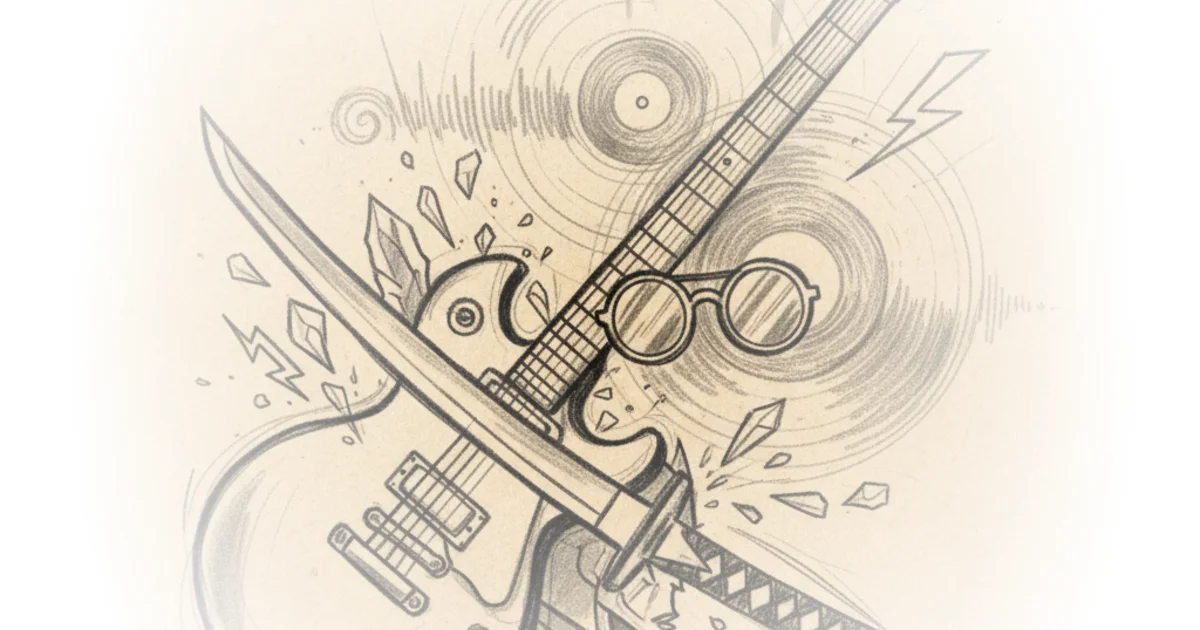
That contrast—that fusion of British rock soul and jaw-dropping technique—defines everything Gardner does.
From Poverty to Precision
Gardner grew up in Anfield, the neighborhood surrounding Liverpool Football Club. He describes his childhood as "growing up in poverty," though his parents worked hard to shield him from knowing it at the time. His father was a bass player obsessed with The Grateful Dead and Jimi Hendrix, and possessed stacks of DVDs featuring guitarists like Zappa.
But there was a problem: his dad refused to buy him a guitar.
"He had this idea that he'd wait until I was older and see if I really wanted it," Gardner explains. "He didn't know I was getting frustrated. I just wanted a guitar."
It was his aunt who finally bought him a nylon-string classical guitar at age nine. By then, his school—operating under programs for underprivileged kids—offered free guitar lessons. His teacher noticed something unusual: someone had been teaching him already.
"My dad came to the parents' evening and the teacher asked, 'Who's been teaching them at home?' My dad said, 'What, one of those?' And he was like, 'No, someone's shown him some stuff.'"
That moment changed everything. The kid who couldn't get a guitar finally got an electric one.
The Moment That Changed Everything
But it wasn't until his father brought home a DVD that would alter the course of his life: Zappa Plays Zapper. Gardner remembers putting down whatever toy he was playing with, walking over to his dad, and declaring: "I want to play guitar like that."
It was Steve Vai. And from that moment, Gardner was hooked.
"I got the Live at the Academy DVD and every night I'd watch it after school, trying to pick up things," he says. "It was before tabs—I guess there was Ultimate Guitar—but I was just watching his hands and trying to emulate what he played."
That led him down a rabbit hole. By 2006, when YouTube emerged, Gardner discovered Paul Gilbert, Ingve Malmsteen, and all the so-called shredders—those blazing fast players who seemed to have superhuman technique.
"I became obsessed," he admits. "I'd come home from school and eight hours I'd be blasting away."
But it was meeting Tom Quail—a teacher with an absolutely singular approach—that really opened things up.
The Intervalic Method
Tom Quail plays in fourths tuning, meaning his guitar is tuned like a keyboard: all strings are tuned in perfect fourth intervals. This allows for what he calls the "intervalic function system"—thinking purely in numbers rather than note names.
"Instead of thinking three notes per string and caged and all this kind of stuff," Gardner recounts, "he's literally thinking: if you take a major scale, he's thinking just the numbers. No note names. All you need to know is the root."
So instead of thinking C-D-E-F-G-A-B-C, it's root-major 2-major 3-perfect 4-perfect fifth-and so on.
This transformed Gardner's approach. He describes it as "a totally different instrument"—the guitar becomes more like a keyboard, with all these repeatable fingerings that translate everywhere.
But Gardner found a compromise: he wanted to keep the fusion elements and that essential guitaristic phrasing—something he feels gets lost in fourths tuning.
"The pentatonic vocabulary—you know, because they're going back on the frets—the fingerings are awkward for that," he explains. "It's like that's where we get all the guitaristic phrasing from, isn't it?"
He tried fourths tuning for about twenty minutes at home before getting frustrated and calling Tom.
"He was like, 'Why did you even try? It's the most stupid thing. You've been playing this way for years. Don't mess it up.'"
The Transition to Solo Artist
These days, Gardner has spent years as a side musician—playing in 80s bands from the UK, specifically Brit pop groups like China Crisis.
But he's finally releasing original music as a solo artist.
"This past year or so has been a bit intense," he says. "It's like I'm finally releasing original music as a solo artist. In the past I've always done collaborations or I've been like a side band for other bands."
The shift was scary—a transition from YouTuber into solo artist—but he's enjoying it.
"The idea is to kind of transition from this like YouTuber into a solo artist now," he says. "And that's been a bit of a scary jump, but I'm enjoying it so far, shall we say?"
He describes his recent work as exploring influences from the 80s—those Japanese shredders and guitar influencers—with an element of humor in the naming: "Shred Redemption" or "Guardian Spirit of the Quantum Multiverse." But this year was different—he wanted to present music that wasn't written for an audience but rather selfishly for himself.
"The idea is to kind of transition from this like YouTuber into a solo artist now. And that's been a bit of a scary jump, but I'm enjoying it so far."
Critics Might Note
Some players argue the intervalic approach—thinking purely in numbers rather than note names—is too mathematical and loses the emotional expressiveness that comes from understanding harmony more intuitively. Others might suggest fourths tuning, while efficient for jazz and fusion, sacrifices too much of what makes guitar playing distinct: those pentatonic root positions and open chord voicings that define rock and blues.
Bottom Line
Gardner is one of the most exciting players working today precisely because he refuses to choose between technical shredding and rock soul. He takes those blazing Japanese influences—Paul Gilbert, Malmsteen—and fuses them with genuine British rock sensibility, refusing to sacrifice either side for the other. His transition from side musician to solo artist shows he's finally ready to offer what he's got: a player who talks like a Beatle but plays like a samurai.