Matthew Clayfield transforms a simple trekking narrative into a searing indictment of how unregulated tourism and geopolitical fallout have eroded a once-sacred landscape. While the piece begins as a meditation on the physical toll of writing in the Himalayas, it quickly pivots to a darker reality: the Parvati Valley is no longer just a destination for dropouts, but a graveyard for the careless and a dumping ground for the unregulated. This is not a travel guide; it is a forensic examination of a place where the dream of escape has curdled into a hazard.
The Illusion of the Path
Clayfield opens by grounding the reader in the immediate physical struggle of the journey, noting that "the things we do for our writing" often involve "legs, particularly my knees, are on fire." He frames the trek not as a leisurely stroll but as a necessary research mission to flesh out the least developed section of his upcoming novel. The author's observation that his "observational powers haven't felt as acute" serves as a setup for the shock of the landscape itself. He expected the even terrain of a Robert Jordan novel, but instead found a "mountainside forest, in which you were, to your left, at eye-level with treetops and, to your right, at eye-level with root systems."
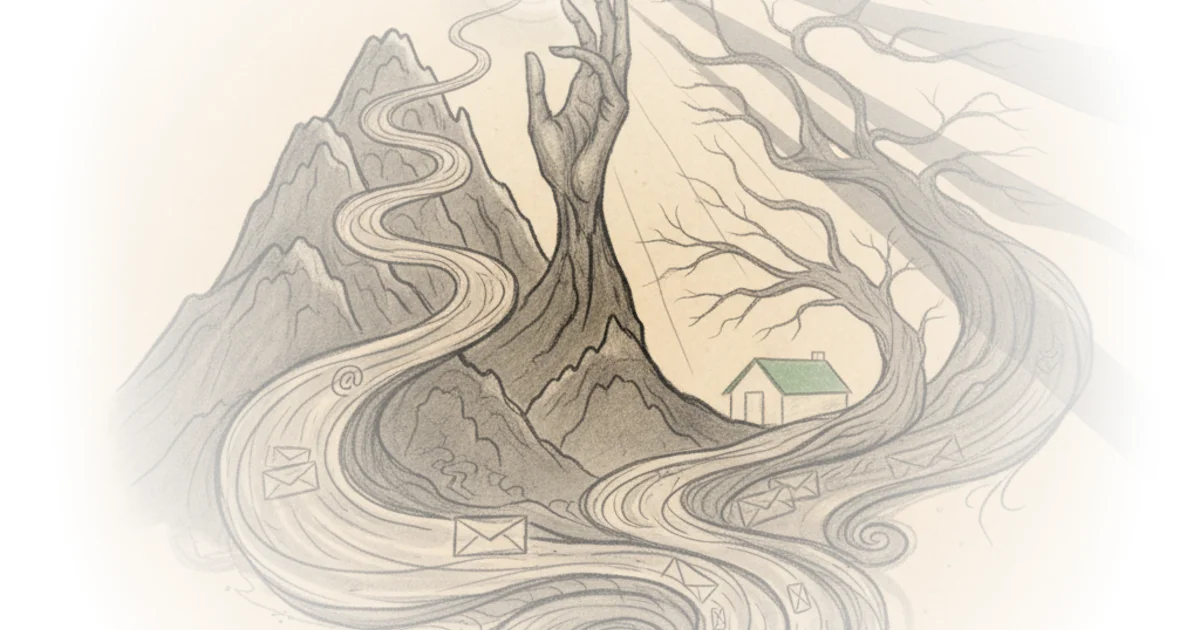
This dissonance between expectation and reality is the piece's engine. Clayfield describes the path as a "choose-your-own-adventure series of rock steps that threatened to destroy my knees," a vivid metaphor for the unpredictability of the region. The author's decision to rely on a local guide, Tanish, highlights the disconnect between the tourist and the terrain. Their communication, limited to a working vocabulary of "Good," "Okay," and "Slow," underscores the isolation of the experience. As Clayfield puts it, "He was nineteen and I was forty. He wore tennis shoes and I wore hiking boots. He was thin and full of vim. I was not entirely unconcerned." This dynamic forces the reader to confront the physical vulnerability of the outsider in a landscape that demands respect, not just a camera.
Kheerganga is a hole. Whatever it was like in its glory days, or happens to be like in the milder months now, it resembled nothing so much on my visit as an abandoned frontier outpost that has been turned into a rubbish dump.
The Shadow of Disappearance
The commentary shifts from the physical to the statistical as Clayfield introduces the grim history of the valley. He notes that prior to the rise of the hippie trail, the paths were "strictly functional in nature, not recreational," used by Gaddi shepherds and ascetic holy men. The transformation into a "hotbed of drugs, sex, and electronica" brought a dark undercurrent. The author cites a staggering statistic: "1,078 people went missing in the Parvati Valley between 2003 and 2023," with only 498 ever recovered. This data point is not merely a footnote; it is the central tension of the narrative.
Clayfield weaves in specific cases, such as the 2015 disappearance of Bruno Muschalik and the 2021 vanishing of Dhruv Aggarwal, to humanize the numbers. The presence of a makeshift memorial for Amihay Cohen, who died in 1999, serves as a haunting reminder of the cost of carelessness. The sign reads, "Here fell and died a dear man and good friend […] who wasn't careful enough taking this road," a warning that has been "vandalised to the point of unreadability." This detail suggests a community that is either overwhelmed or desensitized to the tragedy. The author's encounter with a solo traveler wearing a cannabis leaf wristband, whom he admits to hating, further illustrates the friction between the romanticized image of the valley and the dangerous reality.
Critics might argue that focusing on the missing persons statistics creates a sensationalist narrative that overshadows the resilience of the local community. However, Clayfield balances this by acknowledging the role of the chaiwallahs and the guide, Tanish, who navigates the terrain with a knowledge that the tourists lack. The danger is not inherent to the place alone but is exacerbated by the "unregulated" nature of the tourism boom, where "permanent cafés and camps went up" without oversight.
The End of the Dream
The final section of the piece delivers the emotional blow. Clayfield describes Kheerganga not as a place of cosmic discovery, but as a site of decay. The "steaming spring water" that gives the area its name now flows past "old squat toilets clogged with various grasses, and random bits of twisted metal." The author's realization that the "shacks and tents that remain are illegal" adds a layer of institutional failure to the environmental degradation. The valley, once a whisper among backpackers, has become a "Mini Israel" and "Goa with mountains," but the infrastructure cannot support the influx.
The piece concludes with a sense of unresolved tension. Clayfield admits that he would "never come to Kheerganga again" and questions whether he can write the book without the closure of reaching the destination. The journey, intended to be a source of creative fuel, has instead become a testament to the fragility of the human spirit in the face of nature's indifference and human negligence. The "riot of hues that the mountains assume in the fading light of day" is now juxtaposed against the "blue midtones" of a sinister, unregulated frontier.
Bottom Line
Matthew Clayfield's piece succeeds by stripping away the romantic veneer of the Himalayan trek to reveal a landscape scarred by unregulated tourism and geopolitical spillover. The strongest element is the juxtaposition of the author's physical struggle with the statistical reality of the missing, creating a narrative that is both intimate and terrifying. The biggest vulnerability lies in the lack of deeper exploration into the local governance failures that allow this degradation to persist, leaving the reader with a vivid picture of the problem but a foggy view of the solution. Watch for how this narrative of decay influences future travel policies in the region, as the dream of the "authentic" experience continues to collide with the harsh realities of the modern world.