Yascha Mounk makes a provocative claim that defies a decade of political prophecy: the era of authoritarian populism in the United States is not just pausing, but actively collapsing from within. While most observers are still recalibrating their models for a figure who has repeatedly outlasted predictions of his demise, Mounk argues that the specific conditions that once shielded the executive branch have evaporated. This is not a story of external defeat, but of internal decay driven by broken promises and a war of choice that has alienated the very base that once tolerated chaos.
The End of the Excuse Machine
For years, the argument went that the administration's failures were inevitable due to external sabotage. Mounk dismantles this narrative by pointing to the shift from rhetoric to results. He notes that while the administration did celebrate genuine successes, such as the rapid development of vaccines under Operation Warp Speed and the historic Abraham Accords, these were exceptions that proved the rule of unfulfilled grandeur. "The fulfillment of promises can't be deferred forever without voters starting to lose patience," Mounk writes. "And that time has now come."
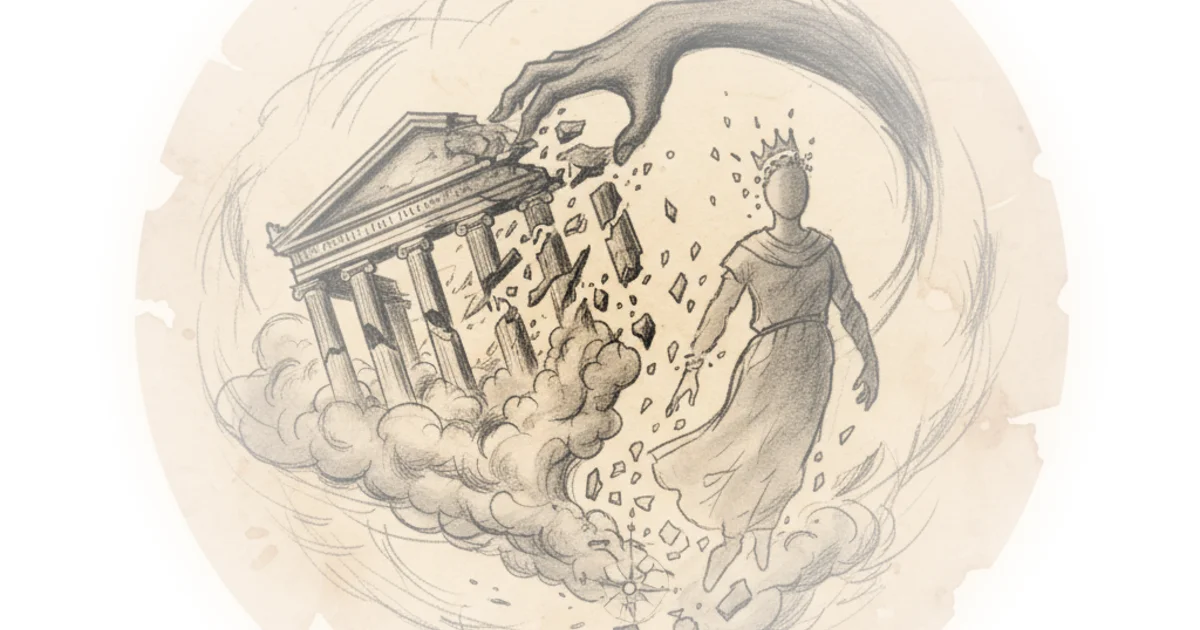
The core of Mounk's analysis is that the administration's survival mechanism—blaming the "deep state" or unforeseen global crises—has finally run out of road. He draws a sharp parallel to Viktor Orbán in Hungary, noting that leaders eventually face a reckoning where they are measured by outcomes rather than the volume of their rhetoric. This framing is effective because it strips away the personality cult to reveal the transactional nature of the support. When the economy stumbles and inflation spikes, the excuses no longer stick.
Critics might argue that political loyalty in this movement is ideological rather than transactional, and that base voters are willing to endure economic pain for cultural victories. However, the data Mounk presents suggests the coalition is more fragile than assumed, with support eroding even among those who previously looked the other way.
The War That Broke the Deal
The most striking element of Mounk's commentary is his focus on foreign policy as the catalyst for domestic collapse. He highlights a fundamental contradiction in the executive branch's second term: a persona built on avoiding "foreign entanglements" has pivoted to a "war of choice in Iran." Mounk writes, "The one major promise that Trump actually honored in his first term was that he would start no new major wars; that too now looks like empty self-promotion."
This pivot has had immediate, tangible consequences. The administration's failure to anticipate the blocking of oil tanker traffic through the Strait of Hormuz has reignited inflation, a issue that previously drove voters away from the opposition party. Mounk points out that the president's approval ratings on the cost of living have plummeted by a remarkable 40 points. This is a devastating blow to the administration's narrative of economic competence.
"The immediate reasons for Trump's travails lie in his ill-fated war with Iran."
The human cost of this strategic miscalculation is not just abstract polling data; it represents a renewed spike in global instability and domestic financial strain. Mounk's decision to center the analysis on the war rather than cultural skirmishes is a bold move that reframes the political crisis as a failure of statecraft rather than a culture war.
The Fracturing of the Base
Perhaps the most significant shift Mounk identifies is the erosion of the administration's grip on its own party. For a decade, the executive branch enjoyed an ironclad hold on the Republican base, but that unity is now cracking. Mounk observes, "Today, Trump remains toxic among liberals, has come to be viewed negatively by most independents, and is newly divisive among conservatives."
He notes that the criticism coming from the right is no longer about the administration selling out traditional conservative values, but about betraying the specific promises of the movement itself. Influencers who once amplified the administration's message, such as Candace Owens and Tucker Carlson, have begun to express regret. This internal dissent is a critical indicator of a movement losing its way. Mounk suggests that the administration is now facing the same fate as George W. Bush after the 2006 midterms: a lame-duck presidency where the power to shape the future evaporates.
A counterargument worth considering is that the administration may still retain enough leverage to manipulate the party machinery, regardless of polling numbers. Yet, Mounk's evidence of betting markets favoring a Democratic sweep in the House and Senate suggests that the political establishment is already pricing in this collapse.
The Lingering Shadow
Despite the optimism of a fading administration, Mounk refuses to offer a clean victory. He warns that the end of the person does not mean the end of the movement. He draws parallels to Brazil and Peru, where demagogues like Jair Bolsonaro and Alberto Fujimori were removed from power, yet their political families and movements persisted. "When demagogues leave office—even when they are booted from office in disgrace—it rarely spells the end of their movement," he writes.
This is a sobering reminder that the threat of authoritarian populism is structural, not just personal. The administration may be losing its grip, but the conditions that allowed it to rise—disillusionment with the alternatives, economic anxiety, and cultural fragmentation—remain largely unaddressed. Mounk concludes that while the specific era of this presidency may be ending, the broader danger of the ideology it championed is far from over.
"Trump looks likely to start fading from American politics over the coming years. But the broader threat of Trumpism may well outlast its creator."
Bottom Line
Yascha Mounk's most compelling argument is that the administration's collapse is self-inflicted, driven by the collision of a war of choice with the economic realities of inflation. His analysis is strongest when it moves beyond personality to examine the transactional failure of the executive branch's promises. However, the piece's greatest vulnerability lies in its assumption that the electorate's patience has finally run out; history suggests that populist movements can endure significant economic pain if the cultural narrative remains potent. Readers should watch for whether the internal dissent within the conservative camp solidifies into a political realignment or merely a temporary fracture before the next election cycle.