In an era where digital content is increasingly optimized for speed and algorithmic retention, Jeannine Ouellette makes a radical counter-claim: that true creativity requires the deliberate, uncomfortable embrace of uncertainty. She argues that writing is not merely a tool for self-expression or information transfer, but a vital practice for navigating an "intricately entangled, increasingly unstable world." This is not a standard guide to craft; it is a philosophical manifesto on the necessity of dwelling in the unknown.
The Philosophy of Becoming
Ouellette frames her entire approach around a specific ontological shift. She writes, "My philosophy of writing, and life, is that we are human beings, not human beens. We are always becoming, and writing in the dark invites the fullness of our unfolding." This distinction is the cornerstone of her argument. By rejecting the static notion of a fixed identity, she posits that the act of writing is the mechanism by which we remain fluid and alive. The argument lands with particular force because it reframes the anxiety of not knowing one's path not as a failure, but as the necessary condition for growth.
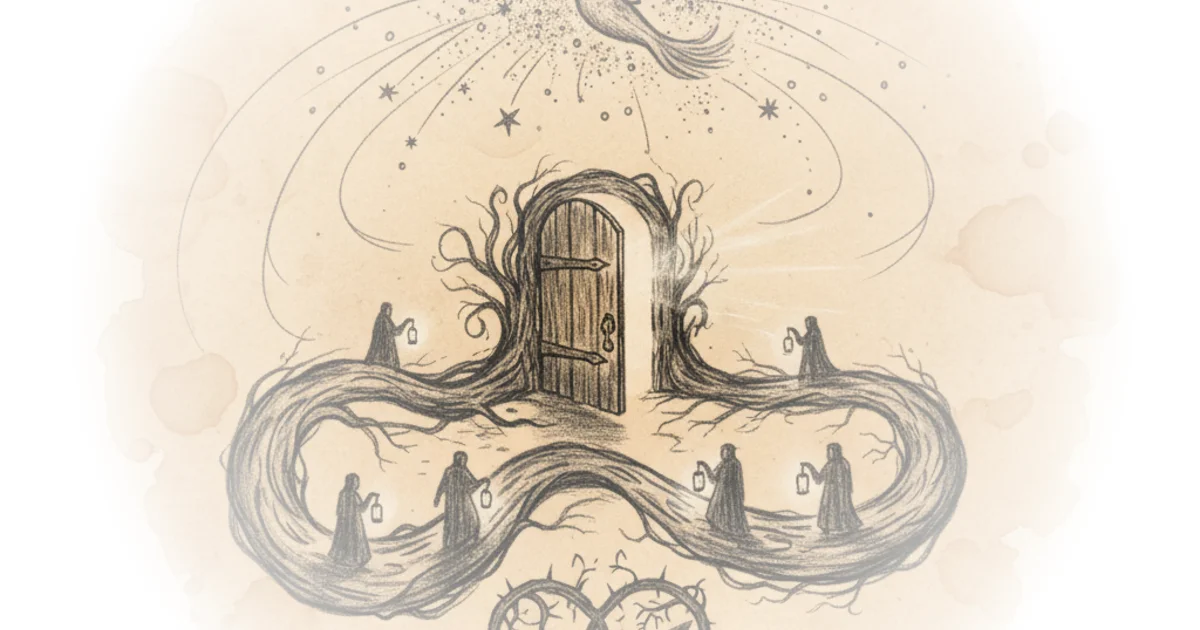
She draws on the Romantic poet John Keats to ground this philosophy in literary history, invoking the concept of "negative capability," which she defines as "being able to dwell in uncertainty and see beyond what you think you know." This is not a passive state; Ouellette insists it is an active discipline. As she puts it, "Writing in the dark means wanting to wake language up and make it capable of telling the truth again, make it capable of holding beauty again, make it capable of being surprising, real, and free, so that we can be, too." The editorial strength here is the refusal to separate the craft from the life of the writer. The text suggests that the quality of one's prose is inextricably linked to one's capacity to tolerate ambiguity.
We are always becoming, and writing in the dark invites the fullness of our unfolding.
Critics might note that this high-concept approach risks alienating readers seeking practical, step-by-step instruction on plot structure or grammar. However, Ouellette anticipates this by emphasizing that her exercises are "integrated with close readings of published work" and are often "embodied," suggesting a rigorous methodology beneath the philosophical veneer. The connection to the historical jeu-parti—a 12th-century troubadour game of divided questions—further anchors her modern practice in a long tradition of intellectual risk-taking. She notes that from this game comes the word "jeopardy," reminding us that "in the midst of our word play we might be confronted unexpectedly by a real question so that our whole being stands before a creative risk."
The Mechanics of a Slow-Language Movement
Beyond the philosophy, Ouellette outlines a specific operational model that rejects the frenetic pace of modern media. She describes her publication as piloting a "slow-language" movement, explicitly stating, "The whole 'too long for email' warning? We're not worried about it." This stance is a direct rebuke to the attention economy. The argument is that depth requires time, and that the "curriculum" of writing cannot be rushed. She emphasizes that there is "no beginning, middle, or end" to the learning process, offering an asynchronous model that respects the reader's time rather than demanding their immediate attention.
The piece also highlights the communal aspect of this work, noting that the comment threads are often "300+" strong and that the space is designed to be a "profoundly beautiful creative community." Ouellette writes, "People tell me a lot of stuff. I am an easy person to confide in, it turns out." This admission of vulnerability is strategic; it humanizes the editorial voice and suggests that the safety of the community is built on mutual trust rather than performative expertise. The inclusion of her child, Billie Oh, as a co-creator and illustrator further destabilizes the traditional hierarchy of the editor-subscriber relationship, presenting the project as a living, evolving family enterprise rather than a corporate product.
The exercises will for sure change your life if you do them regularly—I know this because I hear it all the time.
While the claim that the exercises are "transformational" is bold, Ouellette supports it with the specific mechanism of "constraints." She explains that her prompts are not standard lessons but are designed to "elicit work that surprises the writers," forcing them out of the "safe lane" where they "already know how to write." This focus on breaking habitual patterns is a well-documented technique in creative theory, lending credibility to her claims. However, the argument relies heavily on anecdotal evidence—"people keep telling us"—which, while emotionally resonant, lacks the empirical rigor of a controlled study. Yet, in the realm of creative practice, such testimonials often carry more weight than data.
Navigating Uncertainty in a Volatile World
The context of the piece becomes particularly poignant when Ouellette addresses the external pressures facing the community. She notes that "when Trump took over again, my University job was eliminated along with the jobs (and big chunks of savings) for so many people." Rather than dwelling on the political figure, she pivots immediately to the institutional and economic fallout, explaining how this instability necessitated a shift in their funding model. "Everyone needs each other more than ever right now," she writes, leading to a decision to make previously exclusive benefits available to all paid subscribers. This reframing turns a moment of personal and professional crisis into a demonstration of community resilience and mutual aid.
She acknowledges the precariousness of their position, stating, "We're building this ship as we sail it—so there's a lot of hammering and sawing going on as we scramble to manifest the true vastness of our vision." This metaphor of construction and improvisation mirrors the core theme of the piece: that stability is an illusion, and the only reliable path forward is through active, creative engagement with the chaos. The argument is that the act of writing itself is a form of survival, a way to "discover more truth and beauty in the world and in your life" when external structures fail.
We're building this ship as we sail it—so there's a lot of hammering and sawing going on as we scramble to manifest the true vastness of our vision.
A counterargument worth considering is whether this model of "slow-language" can truly sustain itself in an economy that rewards speed and volume. Ouellette admits that "most of your posts are paywalled," yet she insists that free subscribers receive "rich" previews with "huge value." This tension between accessibility and sustainability is a constant challenge for independent publishers. However, her commitment to paying contributors—"$50 for these" submissions—signals a serious investment in the labor of writing, distinguishing her from many platforms that rely on unpaid content.
Bottom Line
Jeannine Ouellette's piece succeeds by refusing to treat writing as a mere skill to be mastered, instead presenting it as a vital, life-sustaining practice for navigating an unstable world. Its greatest strength lies in its synthesis of high-concept philosophy with tangible, community-driven practice, though its reliance on anecdotal evidence for its transformative claims leaves room for skepticism. Readers should watch for how this "slow-language" model evolves as the community grows, particularly in its ability to maintain depth and vulnerability in the face of increasing scale.