Natalie Wexler enters a crowded conversation not to rehash the panic, but to pinpoint a specific, terrifying pivot: we are not becoming illiterate, but "postliterate." Her commentary on Rose Horowitch's viral Atlantic cover story reframes the crisis from a loss of ability to a loss of capacity for deep thought, suggesting that the rise of artificial intelligence might ironically make the "niche hobby" of reading the most valuable economic asset of the coming century.
The Postliterate Shift
Wexler begins by contextualizing Horowitch's reporting, which she describes as a "tsunami of discussion" built on solid, if familiar, ground. The core of the argument rests on a distinction that is easy to miss but critical to understand: Americans are reading more than ever, but the content has shifted from complex narratives to fragmented snippets. "The shift away from reading started decades ago, with the advent of TV, but the internet, digital devices, and generative AI have put it on steroids," Wexler explains. This acceleration is not merely a change in medium; it is a fundamental alteration of how the brain processes information. The evidence suggests that without sustained attention, we lose the ability to think logically and analytically.
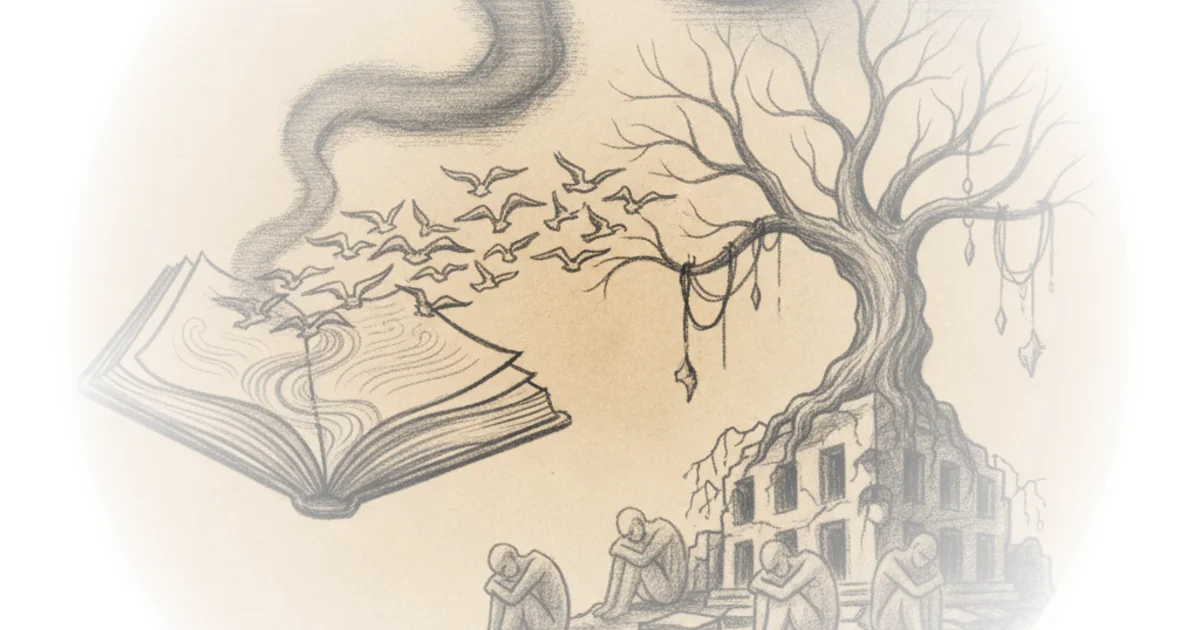
Wexler draws a striking historical parallel to the oral traditions of the past. She notes that as we retreat from text, we risk re-entering a culture where information is absorbed through listening, favoring "epithets, repetition, and descriptions of violence" while ignoring self-contradiction because the listener cannot recall what was said moments before. This framing is potent because it connects modern digital behavior to ancient cognitive patterns, suggesting that the "end of reading" is not a new phenomenon but a regression. As Wexler puts it, "Those who absorb information through listening rather than reading... are not bothered by self-contradiction because they can't remember what the speaker said before."
"The people who are reading hard books and are still writing have built these brain circuits, and they're comfortable with cognitive strain. These are the people with real value if everyone else has fried their brains."
This observation, attributed to computer science professor Cal Newport, serves as the article's pivot point. Wexler uses it to challenge the prevailing narrative that the humanities are dying. Instead, she argues that as AI automates coding and routine tasks, the ability to engage with complex, non-linear texts may become the primary differentiator in the labor market. Critics might argue that this view is overly optimistic about the scalability of deep reading, or that it assumes AI cannot eventually replicate the nuance of human analysis. However, the immediate economic signal is clear: enrollment in computer science at Stanford has declined, while AI firms are actively recruiting philosophy majors.
The Education Gap and Inequity
The commentary then turns to the institutional failure that allowed this shift to take root. Wexler is sharp in her critique of the K-12 system, noting that schools have not resisted the impulse toward shorter passages but have "spurred it on." Driven by the pressure to raise standardized test scores, educators have mimicked test formats, prioritizing short excerpts over whole texts. This is a systemic issue that predates recent federal mandates like the No Child Left Behind Act. Wexler points out that the identification of reading comprehension as a set of abstract skills, rather than a function of background knowledge, has deeply entrenched this approach.
The human cost of this pedagogical failure is unevenly distributed. Wexler highlights a 2025 RAND study revealing that middle and high school English teachers assigned, on average, zero to four books during the school year. More disturbingly, she notes that "teachers in schools serving students from low-income families and historically disadvantaged minorities generally assigned fewer books and were far more likely to assign no full books." This creates a cascading disadvantage: if a student is expected to read a book in college, it helps to have read one in high school, and so on. "Those book assignment inequities start in elementary school," Wexler writes, underscoring that the divide is not just about access to technology, but access to the cognitive training that comes with deep reading.
A Path Forward
Despite the bleak diagnosis, Wexler refuses to accept the apocalypse. She points to emerging counter-movements in education, such as literacy curricula that incorporate whole books and build the knowledge necessary for comprehension. She highlights a course at the University of Pennsylvania called "Existential Despair," which requires students to surrender their phones for extended periods to read and discuss entire novels. The demand for such experiences is staggering: "Last year, 400 students applied for the course and only 41 got in." This suggests that the desire for deep engagement is not dead; it is merely suppressed by the environment.
Wexler argues that the solution lies in schools, which are in a unique position to act against the "postliterate" tide. "If the cognitive abilities of the American electorate decline on a large scale, we all suffer, and it's not an exaggeration to say that the 'end of reading' could mean the end of democracy as we know it," she warns. This is the piece's most urgent claim: the health of our democracy is inextricably linked to the cognitive habits of its citizens. In a world where unfounded rumors spread instantly, the ability to verify, contextualize, and think deeply is no longer a luxury; it is a civic necessity.
Bottom Line
Wexler's strongest contribution is reframing the "end of reading" not as a cultural tragedy but as a political and economic vulnerability that disproportionately affects the most vulnerable. Her biggest challenge remains the entrenched educational infrastructure that prioritizes testing over deep engagement. The path forward requires a radical shift in how we teach reading, moving from skills-based drills to knowledge-rich, whole-text immersion before the digital noise becomes too loud to ignore.