Freddie deBoer cuts through the noise of modern cultural criticism by challenging a deeply ingrained assumption: that newness is inherently synonymous with progress. While many writers reflexively defend the latest digital trends as inevitable evolution, deBoer argues that this stance is often less about genuine belief in technology and more about a psychological terror of appearing irrelevant. This piece is essential listening for anyone tired of the automatic dismissal of legitimate concerns regarding attention, mental health, and social fragmentation.
The Digital Immune System
DeBoer identifies a pervasive defensive mechanism in modern discourse, which he terms the "digital immune system." He observes that whenever someone raises concerns about the deleterious effects of technology, they are met with a "kneejerk defense" that demands impossible levels of proof while dismissing the critic as a luddite. "It's the impulse to dismiss any critique of the new, any hesitation toward the latest technology, any skepticism toward the modern turn, any wistfulness for the past, as the cranky mutterings of the old," deBoer writes. This framing is powerful because it shifts the focus from the technology itself to the social dynamics of those defending it. The argument suggests that the refusal to acknowledge potential harms is a form of social posturing rather than intellectual rigor.
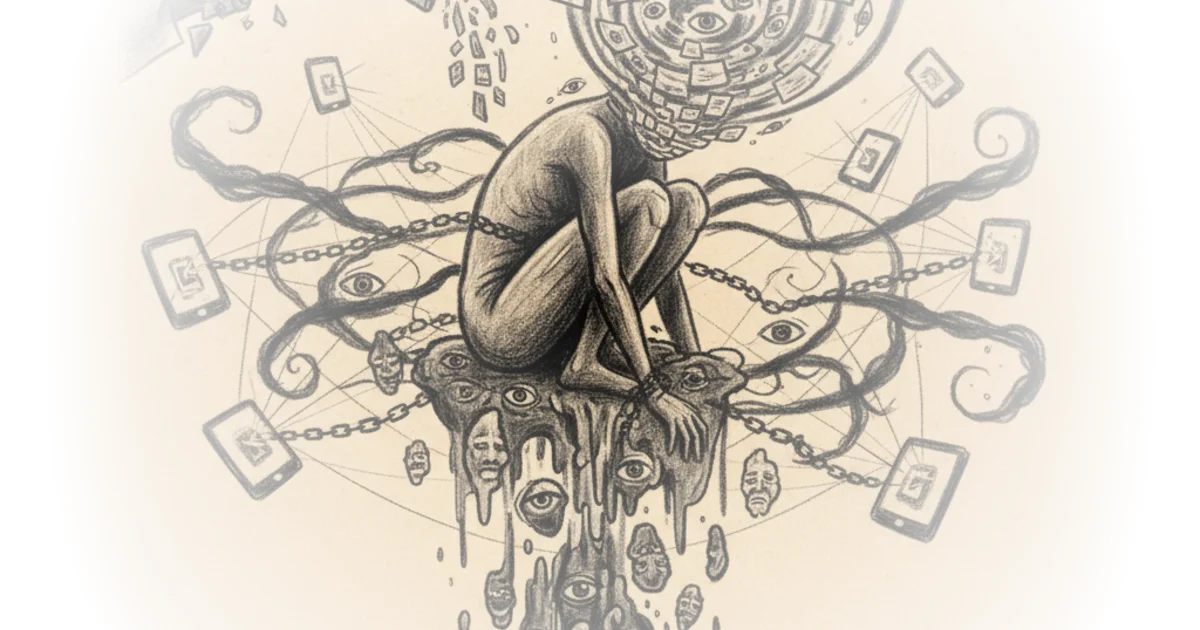
The author contends that this reflex is not driven by a love for innovation, but by a fear of aging. "To show my cards here, I suspect that this tendency isn't even actually about defending progress, but rather about defending the self," deBoer posits. He argues that educated elites are terrified of being seen as the "old guy who doesn't get it," leading them to embrace every new fad to maintain their status in the cultural hierarchy. This psychological insight offers a compelling explanation for why so many commentators defend platforms that clearly erode attention spans and deepen isolation. It reframes the debate from a technical discussion to a human one about insecurity and status.
The notion that the mere fact of something being new gives it moral authority is one of the dumbest ideas human beings have ever come up with.
Critics might argue that deBoer underestimates the genuine benefits of connectivity and information access that modern technology provides, potentially swinging the pendulum too far toward skepticism. However, his point is not that technology is evil, but that the automatic assumption of its superiority is intellectually lazy. He notes that this defense often relies on a false binary between political poles, where the left is assumed to be the natural defender of the new. "The notion that the political left is the natural defender of everything new while the right is the reflexive guardian of the old is one of the most tedious and intellectually bankrupt clichés in our discourse," he writes. By dismantling this cliché, deBoer opens space for a more nuanced political critique that can question technological progress without being labeled conservative.
The Cost of Unthinking Progress
DeBoer pushes further, arguing that we must accept the possibility that some changes are regressions. He points out that while we readily acknowledge that older conditions were better in areas like college tuition or environmental quality, we apply a blind spot to culture and technology. "Sometimes older technologies, older social arrangements, older expectations produced richer, healthier, more human conditions than what replaced them," he asserts. This is a crucial distinction. It allows for a critical evaluation of the present without falling into the trap of toxic nostalgia. He reminds readers that the twentieth century was full of "advances that turned out to be nightmares," from forced sterilizations to car culture that disfigured cities.
The author suggests that labeling legitimate concerns as "nostalgia" is a rhetorical tactic to avoid engaging with the substance of the criticism. "To call such objections nostalgic is to dodge the question entirely," deBoer writes. He highlights specific, tangible costs of our current condition, including the "digitization of everything, the destruction of attention spans, the commercialization of private life, the constant ambient surveillance, the relentless degradation of the environment, the death of human connection." These are not abstract fears but concrete realities that affect how we live and relate to one another. By listing them plainly, he forces the reader to confront the trade-offs we have made in the name of progress.
History gives us no reason to accept that dogma. The twentieth century alone offers countless examples of advances that turned out to be nightmares.
The piece also addresses the specific case of social media and short-form video, referencing the work of Matt Yglesias and former Meta employee Sarah Wynn-Williams. DeBoer notes that these platforms are not social in the traditional sense but are rather media engines designed to manipulate behavior for profit. "These companies invest a lot of effort and expertise in fine-tuning this process so that users find it enjoyable on a moment-to-moment basis and spend a lot of time watching these videos," he paraphrases. The distinction here is vital: the problem isn't just that people are watching videos, but that the systems are engineered to be addictive and reactive in ways older media like television never were. This individualized manipulation represents a qualitative shift that demands a new kind of scrutiny.
Bottom Line
DeBoer's strongest contribution is his psychological dissection of the "digital immune system," exposing the fear of irrelevance that drives the uncritical defense of new technology. The argument's vulnerability lies in its broad stroke against intellectuals, which may overlook those who genuinely believe in the transformative potential of digital tools despite the risks. Readers should watch for how this critique of "progress" influences future debates on regulation, as it provides a robust framework for challenging the status quo without retreating into reactionary nostalgia.