In an era where food media often fetishizes celebrity chefs and high-end dining, Michelle Aronson offers a refreshing, grounded alternative: a detailed chronicle of the grueling, transformative, and deeply human experience of learning to cook from the ground up. This piece is notable not for its culinary secrets, but for its radical honesty about the gap between growing food and preparing it, framing the kitchen as a place of equal parts intellectual rigor and physical exhaustion. For the busy professional seeking a reset, Aronson's account suggests that the most profound connection to our food system happens not in the field, but in the messy, disciplined chaos of the kitchen.
The Myth of the Natural Cook
Aronson opens by dismantling the romantic notion that farming knowledge automatically translates to culinary skill. She writes, "Until about the age of 24, I could barely boil water, let alone confidently cook a multi-course meal... I was truly, embarrassingly clueless." This admission is crucial; it reframes the narrative of the "farm-to-table" movement, which often assumes a seamless pipeline from soil to plate. Aronson argues that understanding the origin of an ingredient is distinct from the technical mastery required to transform it. By admitting her initial incompetence, she establishes credibility with readers who may feel intimidated by the culinary arts, suggesting that expertise is a learned discipline, not an innate talent.
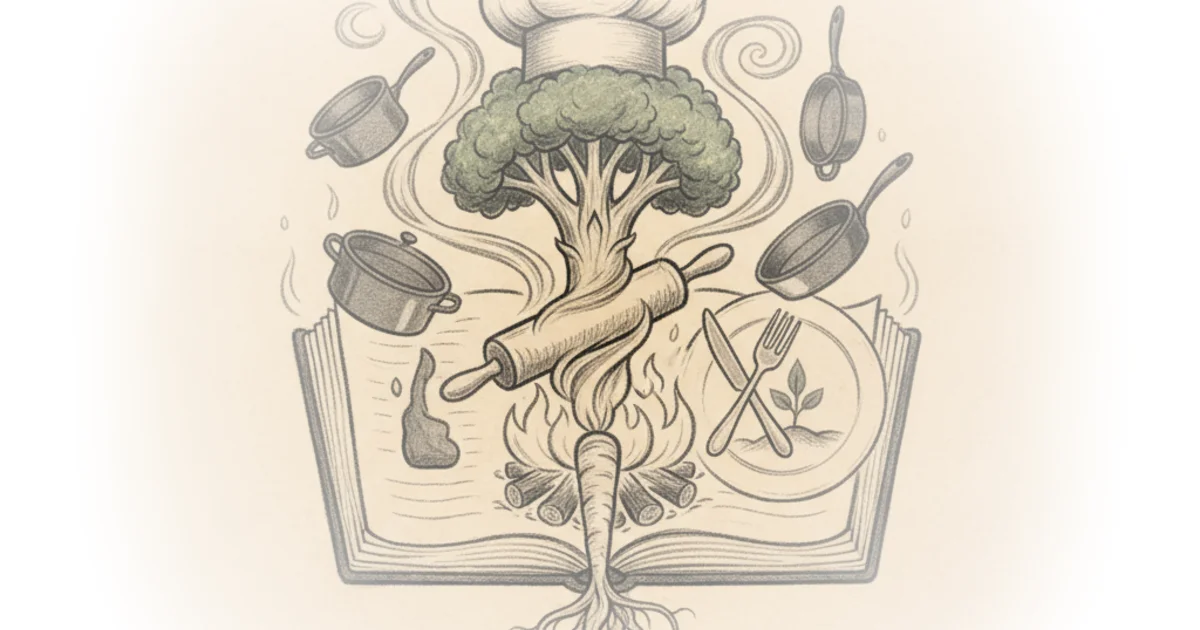
The piece centers on Ballymaloe, a 100-acre organic farm and cooking school in County Cork, Ireland, run by the legendary Darina Allen. Aronson describes the ethos simply: "when you start with good, seasonal, locally-sourced ingredients – cooking delicious food doesn't have to be complicated." This philosophy challenges the modern trend of over-engineering cuisine. However, the author is careful to distinguish between the school's output and professional status. She notes, "I do not consider myself a chef... I use the term chef solely for people who manage a professional kitchen." This distinction is vital; it protects the integrity of the culinary profession while validating the educational journey of the amateur. Critics might argue that this rigid definition of "chef" excludes talented private cooks or food entrepreneurs, but for the purpose of this narrative, it serves to lower the stakes for the reader, focusing on skill acquisition rather than career validation.
"It was the best decision I ever made, and the best money I've ever spent."
The Architecture of a Day
The core of Aronson's argument lies in the minute-by-minute breakdown of the 12-week course, which she presents as a model of intentional living. The day begins at 6:15 am, not with a leisurely brunch, but with the immediate assumption of a uniform: "I pulled on my wildly unflattering chef pants, buttoned up my chef coat, and slipped into my Dansko clogs." This imagery strips away the glamour often associated with cooking shows, replacing it with the reality of physical labor. The schedule is relentless, moving from early prep to a four-hour morning session where students must manage multiple recipes simultaneously.
Aronson highlights the pedagogical method of the "order of work," a timeline students must create to coordinate their cooking. She admits, "Many of my classmates found this process of creating a daily order of work to be super annoying, but I personally found it to be an incredibly helpful exercise." This detail reveals the true lesson of the school: it is not just about flavor, but about logistics, time management, and mental organization. The school's environment is described as "kind and supportive, not at all like a cut throat restaurant kitchen," yet the standards remain high. Teachers rate dishes on a scale of 1 to 10, providing "fair but helpful feedback." This balance of high expectations and psychological safety is a rare and valuable dynamic in professional training environments.
The afternoon is dedicated to a three-and-a-half-hour demonstration where instructors prepare over 20 recipes. Aronson, self-described as a "stereotypical straight-A / type-A person," sat in the front row, "taking copious notes." She describes the experience as being "like a transfixed sponge, soaking up every morsel." This intense absorption of information is followed by a communal tasting and then a mandatory decompression period. The author emphasizes the importance of the evening walk: "Looking back now, I know these walks were key for maintaining my mental (and physical) health during this intense season of life." This inclusion of physical movement and nature as a counterbalance to mental strain is a powerful counter-narrative to the sedentary, screen-dominated lives many of her readers lead.
The Discipline of Reflection
What sets this account apart from a typical travelogue is the emphasis on post-day reflection. At 9 pm, after dinner and socializing, the work is not done. Aronson writes, "The sheer amount of information you absorb in ONE day at Ballymaloe is frankly mind-boggling, so it takes some real effort to organize your notes and recipes." She details her nightly ritual of typing up notes on what went wrong and what went well, and drafting the next day's order of work. This systematic approach to learning transforms the experience from a series of events into a coherent curriculum. It suggests that mastery requires not just doing, but reviewing and planning.
The piece concludes with a sense of profound satisfaction derived from tangible accomplishment. "It was actually an incredible feeling to fall asleep knowing that I'd genuinely accomplished so. many. things. with my hands and my brain." This sentiment resonates deeply in a digital age where work is often abstract and results are delayed. The physicality of the work—the standing, the chopping, the tasting—provides a feedback loop that is immediate and undeniable. While the piece is undeniably positive, it does not shy away from the exhaustion involved. The "wildly unflattering" clothes, the "big mess to clean up," and the mental fatigue of the day are all present, grounding the romanticism in reality.
"The sheer amount of information you absorb in ONE day at Ballymaloe is frankly mind-boggling."
Bottom Line
Michelle Aronson's piece succeeds by reframing cooking not as a hobby, but as a rigorous discipline that demands physical endurance, intellectual organization, and emotional resilience. Its greatest strength is the honest depiction of the learning curve, stripping away the myth of natural talent to reveal the hard work underneath. The biggest vulnerability is its reliance on the specific, idyllic setting of an Irish farm, which may feel inaccessible to readers without the time or means to travel. However, the underlying lesson—that intentional practice, structured reflection, and a connection to ingredients can transform one's relationship with food—remains universally applicable and deeply compelling.