Freddie deBoer identifies a cultural rot that goes beyond the usual complaints about lazy reboots: the suffocating weight of reverence itself. He argues that modern franchise filmmaking has stopped trying to be fun or scary and has instead become a devotional practice, treating beloved intellectual property as scripture rather than clay. This is a crucial distinction for anyone trying to understand why so many recent blockbusters feel technically competent yet emotionally inert.
The Death of Play
DeBoer opens with a personal confession about the latest installment in the Scream franchise, noting that while the original film helped shape his teenage identity, the new entry feels like a "tired, jumbled mess." But he quickly pivots from a simple review to a broader critique of the industry's mindset. "One of the most obvious problems with reboot/remake/\u201crequel\u201d culture is also one of the least remarked upon: these movies are so often suffocatingly, self-consciously reverent toward the very texts they\u2019re supposedly revivifying," he writes. The author suggests that studios have decided the safest way to monetize nostalgia is to worship the past, a strategy that ironically kills the very energy that made the originals work.
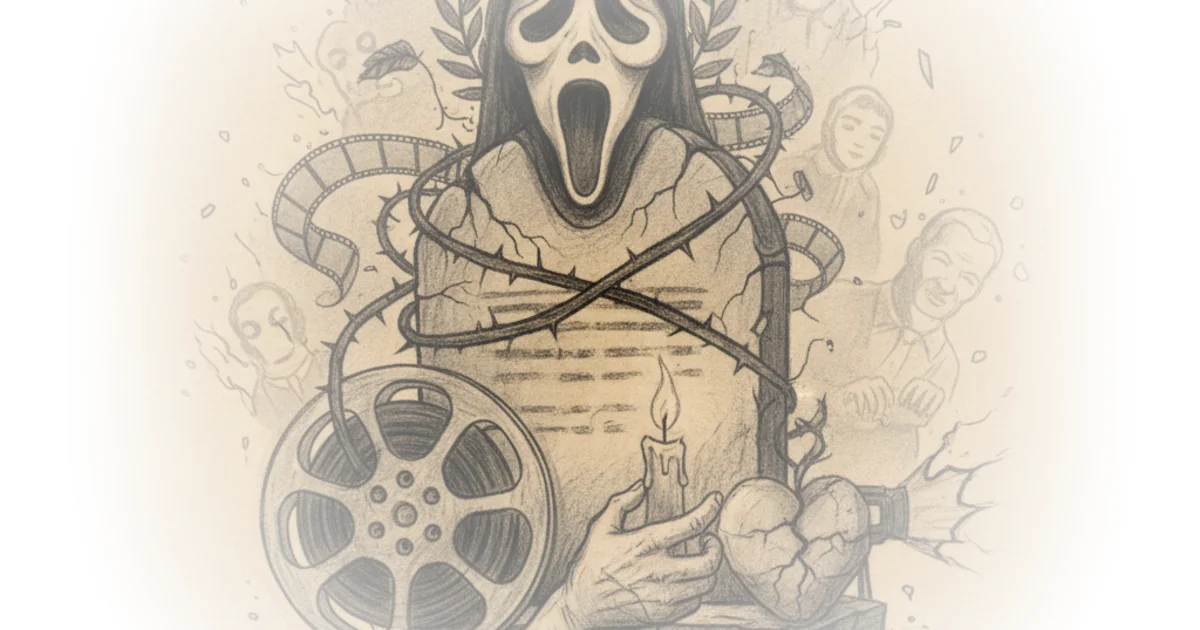
This argument lands because it exposes the contradiction at the heart of the Scream franchise. The original 1996 film, directed by Wes Craven, was a masterpiece of irreverence. It celebrated the slasher genre while simultaneously mocking its tropes. DeBoer points out that the new films have lost this edge, noting that "Scream knew the difference between taking slasher movies seriously and taking itself seriously; these newer films don\u2019t." The shift from playful subversion to solemn preservation turns a genre built on chaos into a museum exhibit.
Reverence, whatever its virtues in a cathedral, is usually aesthetic poison in a multiplex.
Critics might argue that honoring legacy characters is simply good stewardship of a brand, ensuring that long-time fans feel seen. However, deBoer counters that this approach treats the audience like children who need reassurance rather than adults who crave surprise. By insisting on the "canonical significance of earlier killers," the new films fold inward, becoming a commentary on their own past commentary rather than a story about the present.
The Star Wars Shrine
The author expands his critique to the broader landscape of "legacy sequels," using Star Wars: The Force Awakens as a prime example of this cautionary approach. He describes the film not as a new chapter, but as a "shrine, carefully dusted, reverently lit." DeBoer argues that the film meticulously replayed the narrative beats of the original because the "overriding imperative was reassurance rather than invention." The result was a movie that felt less like storytelling and more like a "wax paper rubbing of a tombstone."
This observation is particularly sharp because it identifies the emotional engine of these films: fear. The studio logic is driven by a desire to avoid the backlash that greeted the prequels, leading to a creative paralysis where "nothing will violate your memories" and "nothing will complicate your preexisting feelings." DeBoer writes, "In Disney\u2019s anxiety to protect the past, they keep the future at arm\u2019s length." The film becomes a series of "OMG" moments designed to trigger recognition rather than genuine engagement.
The movies prove that Lucasfilm still know what Star Wars is supposed to feel like to its acolytes, but they never risk discovering what a fundamentally new Star Wars might feel like.
A counterargument worth considering is that these films are massive financial successes, suggesting that the audience does want this comfort. Yet, as deBoer notes, the overall effect is "fundamentally inert." The movies are polished and competent, but they lack the spark of risk. They are designed to please a specific demographic of forty-year-old fans, but in doing so, they alienate the possibility of new growth. The "surprise," which is the "animating force of most genre movies," is hard to find.
From Farce to Pilgrimage
DeBoer takes his analysis to the Ghostbusters franchise to illustrate how even a comedy can be strangled by reverence. The original films were "shaggy, irreverent comedy[s] about cranky parapsychologists hustling for grants," but the recent Afterlife turned the franchise into a "nostalgia pageant." He describes the shift in tone from a workplace farce to a "pilgrimage," where the proton packs and traps are no longer props but "relics, polished and presented like sacred objects in a museum case."
The author attributes this shift to the backlash against the 2016 all-female Ghostbusters, which he calls "a very bad movie that was hated for everything other than being very bad." The studio's reaction was to retreat into "pure nostalgia-humping mode," trading the "elasticity of comedy" for the "rigidity of canon." The result was a film more concerned with "preserving a legacy than with generating mischief." DeBoer notes that the screenwriters seemed to be "checking their work against the fan wiki, anxiously ensuring that every reference aligned."
You can honor the past by transforming it; you cannot revitalize it by kneeling before it.
This dynamic is not unique to horror or sci-fi. DeBoer points to the later seasons of Stranger Things as another example of a show turning into a "self-memorializing machine." As the show's success grew, the creators felt pressure to treat their creation as "hallowed instead of something silly." The narrative became a cycle of retcons and callbacks, where characters were introduced not for dramatic necessity but to be "martyred in ways that echo previous seasons." It is a creative ouroboros, where the story consumes itself in an attempt to validate its own existence.
Bottom Line
DeBoer's central thesis is that the era of the "legacy sequel" has replaced invention with veneration, turning dynamic franchises into static monuments. His strongest point is the identification of reverence as an aesthetic poison that kills the very genre conventions it seeks to honor. The argument's vulnerability lies in its dismissal of the commercial logic that drives these decisions; while reverence may be artistically bankrupt, it remains a reliable revenue stream for studios. However, as the author concludes, if we are condemned to endless reboots, the least we can ask is that creators treat the past as material to be worked with, not as scripture to be worshipped. The point was always to have fun, and in bowing to the altar of the IP, the industry has forgotten how to play.