Rick Rubin, the legendary music producer turned documentarian, offers a rare glimpse into the messy, human heart of filmmaking, arguing that the most profound truths emerge not from a polished script, but from the "semi-disasters" and unexpected outlaws encountered along the way. In this candid conversation, Rubin dismantles the myth of the invisible observer, revealing how his own presence—and his crew's blunders—often became the catalyst for the very intimacy he sought to capture.
The Outlaw Advantage
Rubin's approach to documentary is defined by a willingness to embrace chaos rather than control it. He recounts the making of his film about serial killer Aileen Wuornos, where the path to the subject was paved with legal absurdity and accidental criminality. "The lawyer is asking me for money in a sense for him to benefit from," Rubin notes regarding the initial contact with Wuornos's attorney, Steve Glazer. This moment of cognitive dissonance—where a lawyer profiting from a capital murder case seemed to violate the "Son of Sam" law—became the film's entry point.
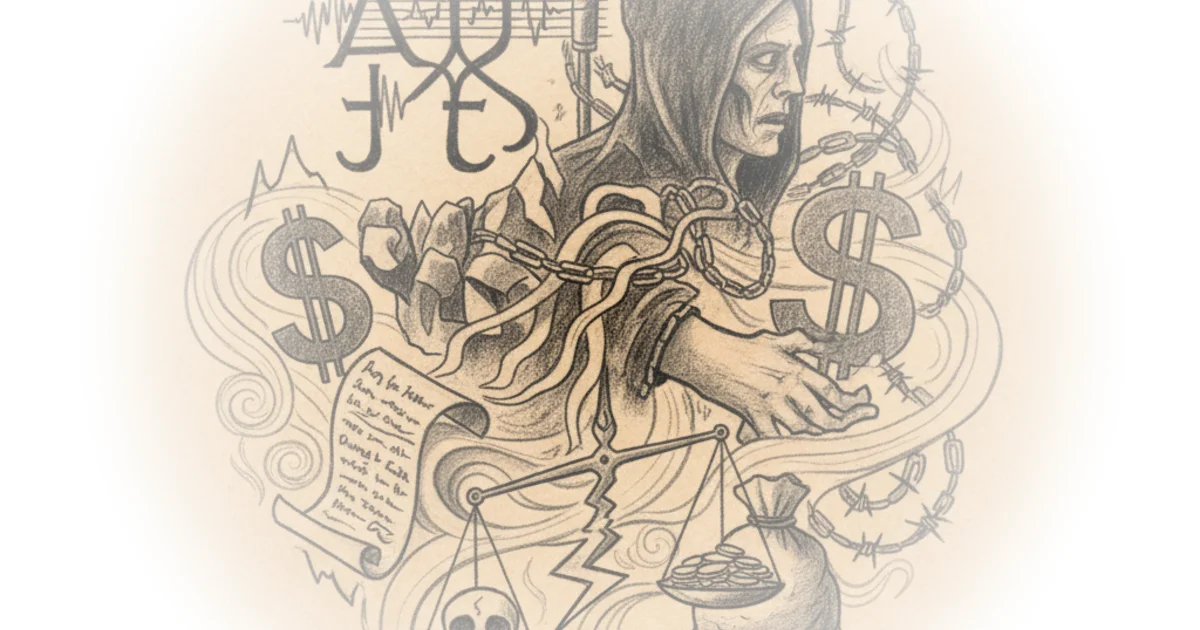
The core of Rubin's argument here is that authenticity often hides in incompetence. He describes Glazer not as a villain, but as a "sweet guy" who was simultaneously "incompetent and quite... incapable of handling a capital murder case." This paradox is central to Rubin's style: he finds the humanity in the flawed. When Glazer jokes to a woman facing execution, "The best advice for my client who's about to be executed is don't sit down," Rubin recognizes the dark, absurd humor that defines their relationship. This framing is effective because it refuses to sanitize the horror of the situation, instead finding a strange, shared humanity in the absurdity.
You would never dream these things up. So, you read about Eileen. You thought she was interesting. And then what happened next?
The journey to Wuornos was further complicated by the crew's own lack of discipline. Rubin admits that after a long drive, the team was incapacitated by Glazer's "unbelievably strong joints," leading to a secondhand smoke haze that left them "finished" before even arriving at the prison. Their attempt to film a perimeter shot resulted in a strip search, an event Rubin claims inadvertently bonded them with their subject. "We were outlaws. We were like stars," he recalls, noting that Wuornos believed they were a band there to perform. This accidental performance of rebellion broke the ice where professional credentials might have failed. Critics might argue that relying on such chaotic, unprofessional behavior is a risky strategy that could alienate subjects or compromise ethical standards, but for Rubin, it was the only way to bypass the institutional walls.
The Documentary of the Documentary
Rubin's most distinctive contribution to the genre is his belief that the process of making a film is often more revealing than the subject itself. He reflects on his earlier work with comedian Lily Tomlin, where the crew failed to capture Tomlin's paralyzing insecurity because they were too focused on the expected narrative of success. "We had worse and worse stories that we would tell friends over dinner," Rubin admits, describing the hidden angst that the final cut missed. He argues that this was an "incredible failing" because the audience was denied the "real angst, the sort of paranoia" that makes a success story compelling.
This realization led Rubin to change his method entirely. He posits that "people define themselves, I think, more with their problems and the things they don't want to talk about or address than what they do." By breaking the fourth wall and including the filmmaker in the narrative, he allows the audience to see the struggle of the encounter. "Your adventure of making that story is so much more complex and revealing than what you had ever imagined," he explains. This is a powerful reframing of the documentary form, shifting the focus from a static observation of a subject to a dynamic, evolving relationship between the filmmaker and the world.
I've learned more by the sort of semi-disasters that I've worked on than anything else.
Rubin contrasts his organic approach with the current state of the industry, which he views as increasingly corporate and controlled. He suggests that the "Wild West" era of legends like Wiseman and Drew is gone, replaced by "corporate bodies like having a lot of control." While this critique is sharp, it overlooks the fact that modern corporate funding often allows for the high production values and distribution reach that independent filmmakers like Rubin once lacked. However, his point stands: the spontaneity that allows for genuine connection is often the first casualty of a rigid schedule.
The Human Cost of Intimacy
Ultimately, Rubin's commentary is a meditation on the emotional toll of deep engagement. He describes Wuornos not as a monster, but as a victim of abuse who "fell between all the cracks with the social services." His relationship with her was long and intense; he served as a witness for her final appeal and received letters that were "13 or 14 pages" long. "She was so kind of trusting with us and so pleased whenever we came to visit her," he says, admitting that her childlike joy was "distressing" to witness given her fate.
This emotional investment is what Rubin argues is the true reward of documentary work. "You become very involved in people's lives and you care about them," he states, describing a "strange family" of outcasts, soldiers, and musicians that he has gathered over decades. He suggests that this process offers a "wide education of people with entirely different backgrounds" that one would never encounter otherwise. The argument is that the camera acts as a passport to a different reality, one where political differences are overridden by a "spiritual bond."
You meet people who you might really not share the same political outlook at all but there was something like a spiritual bond that was so strong and so magnetic that it overrode everything else.
Bottom Line
Rubin's strongest argument is that the most honest documentaries are those that admit their own messiness, turning the camera on the filmmaker's failures and the subject's humanity rather than a polished narrative. The piece's vulnerability lies in its romanticization of chaos; while "semi-disasters" can yield gold, they are not a replicable formula for every story. For the busy reader, the takeaway is clear: true understanding requires the risk of getting lost, both geographically and emotionally, in the lives of others.