Yascha Mounk tackles a provocative accusation: that the very people who warned about "cancel culture" on the left are now partly to blame for the administration's authoritarian assault on free speech. In an era where the executive branch is actively weaponizing federal agencies to purge dissent from universities and museums, Mounk argues that dismissing the genuine threat of left-wing illiberalism is not just historically inaccurate, but strategically dangerous. This is a necessary correction for busy observers who may have assumed the "free speech" debate ended when the political winds shifted.
The Hypocrisy Charge
Mounk begins by confronting the most common critique head-on. He acknowledges that some anti-woke activists have indeed failed the test of consistency. "Political hacks like anti-woke activist Christopher Rufo have gleefully embraced right-wing 'cancel culture,' and have been quite upfront about having double standards on the issue," Mounk writes. He points to figures like Bari Weiss, whose publication has largely accommodated the administration's agenda, noting that "much of its coverage of the Trump presidency... qualifies as out-and-out cheerleading or even attempts to push the administration further."
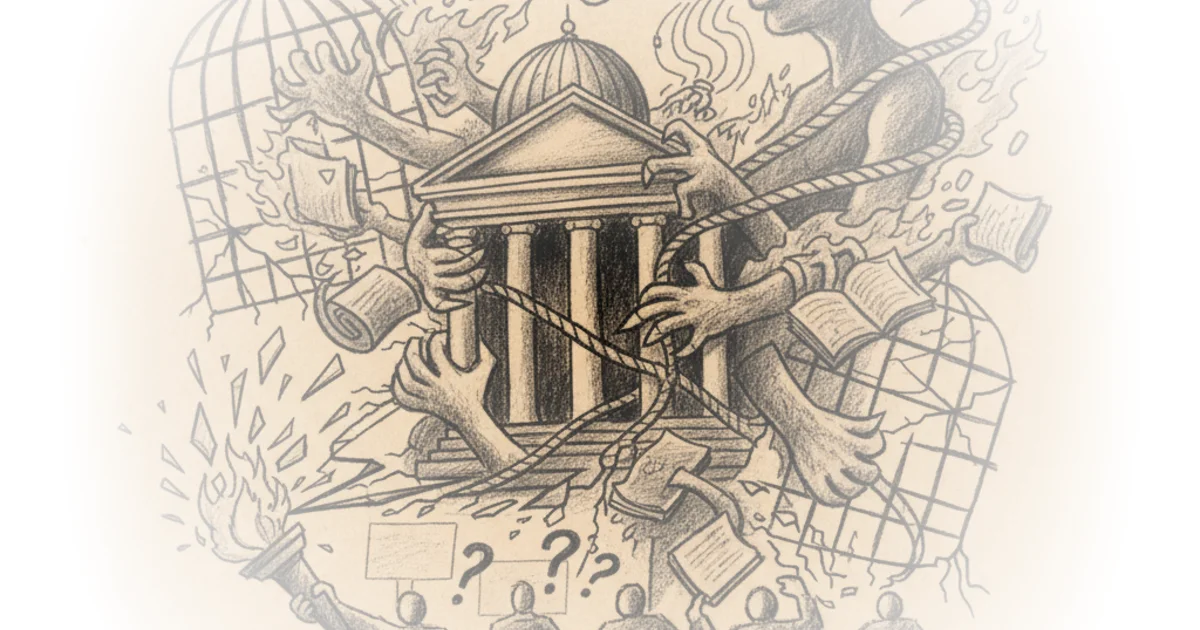
However, Mounk quickly pivots to show that these cases are the exception, not the rule. He marshals a formidable list of the original signatories of the July 2020 "Letter on Justice and Open Debate" who have remained steadfast critics of the current administration. "Such people are vastly outnumbered by those signatories who have been scathingly critical of the administration," he notes, listing heavyweights like Anne Applebaum, Garry Kasparov, and Steven Pinker. This evidence effectively dismantles the blanket claim that the entire free-speech movement has gone silent or complicit.
The 'where are they now?' critique is manifestly wrong.
The argument gains further weight when Mounk highlights the institutional actions of the Foundation for Individual Rights and Expression (FIRE). Far from standing idle, the group has filed legal challenges against the administration's deportation of noncitizen students and supported universities fighting funding cuts. Mounk's framing here is crucial: it shifts the debate from individual tweets to concrete legal and institutional defense of the First Amendment.
The Blame Game
The second, more complex charge Mounk addresses is the idea that the "free speech culture" ethos itself paved the way for authoritarianism. Critics like David Klion and Ken White argue that by hyping a "phantom menace" of student outrage, these advocates inadvertently legitimized the administration's harsher, state-sponsored repression. "White's point, however, is that these were bad-faith arguments in the first place," Mounk explains, suggesting that inflating the threat from "relatively powerless people like students" blurred the line between rudeness and actual repression.
Mounk dismantles this by restoring the historical context of the "Great Awokening." He reminds readers that during the height of left-wing illiberalism, the consequences were real and often devastating for ordinary workers, not just tenured professors. "A truck driver lost his job after being accused of making a 'white supremacist' gesture at another driver," he writes, citing cases where working-class employees were fired for trivial or misinterpreted offenses. He also references the firing of Leslie Neal-Boylan, a nursing dean, after a student "call-out" regarding her email about Black Lives Matter.
This historical grounding is essential. It counters the narrative that "cancel culture" was merely a harmless social media phenomenon. Mounk argues that the backlash against left-wing speech policing was a rational response to actual job losses and social ostracization, not a manufactured panic. "The list goes on and on—and, contrary to White's assertion... many of the casualties were working-class employees," he asserts.
We do have to walk and chew gum.
Mounk quotes Jonathan Rauch to capture the nuance required here: one can oppose cultural repression while acknowledging that state repression is worse. He admits that the existence of left-wing illiberalism complicates the fight against right-wing authoritarianism, noting that "Trump's moves to yank funds from universities... may look a little less outrageous if one acknowledges... that many of these universities have a not-so-great record on intellectual freedom themselves."
Critics might argue that Mounk underestimates how the rhetoric of "free speech warriors" provided a convenient cover for the administration's overreach, regardless of the intent. By focusing so heavily on the validity of the left-wing threat, the argument risks giving the administration a pass on its unique, state-enforced censorship tactics. Mounk acknowledges this tension but insists that ignoring the left's illiberalism does not help the fight against the right's.
Bottom Line
Mounk's strongest contribution is his refusal to let the current political moment erase the genuine harms of the recent past, arguing that the defense of free speech must be consistent across the political spectrum. The piece's vulnerability lies in its reliance on the good faith of the "free speech warriors," a group that has shown significant fractures in its own ranks. As the administration continues to test the boundaries of federal power, the real test will be whether this coalition can maintain its unity against state coercion without falling into the trap of both-sidesism.