This piece cuts through the usual noise of drone warfare to reveal a chilling new reality: the very technology meant to save lives is becoming a tool for mass destruction when it falls into the wrong hands. Tim Mak's reporting exposes a critical vulnerability in modern asymmetric warfare, where a commercial satellite network is being weaponized to bypass the electronic defenses that have kept Ukrainian soldiers alive for years.
The Starlink Paradox
Tim Mak opens with a stark observation from the front lines, quoting 'Friend Barber', a Ukrainian electronic warfare specialist, who notes that "Humans constantly try to find ways to kill their own kind more efficiently." This sets the stage for a narrative that is less about hardware and more about the relentless, adaptive nature of the conflict. The author details how Russian forces, previously unable to guide strike drones past Ukrainian jamming systems, began smuggling in Elon Musk's Starlink terminals. The result was a terrifying shift: drones that could no longer be "blinded" by traditional radio interference.
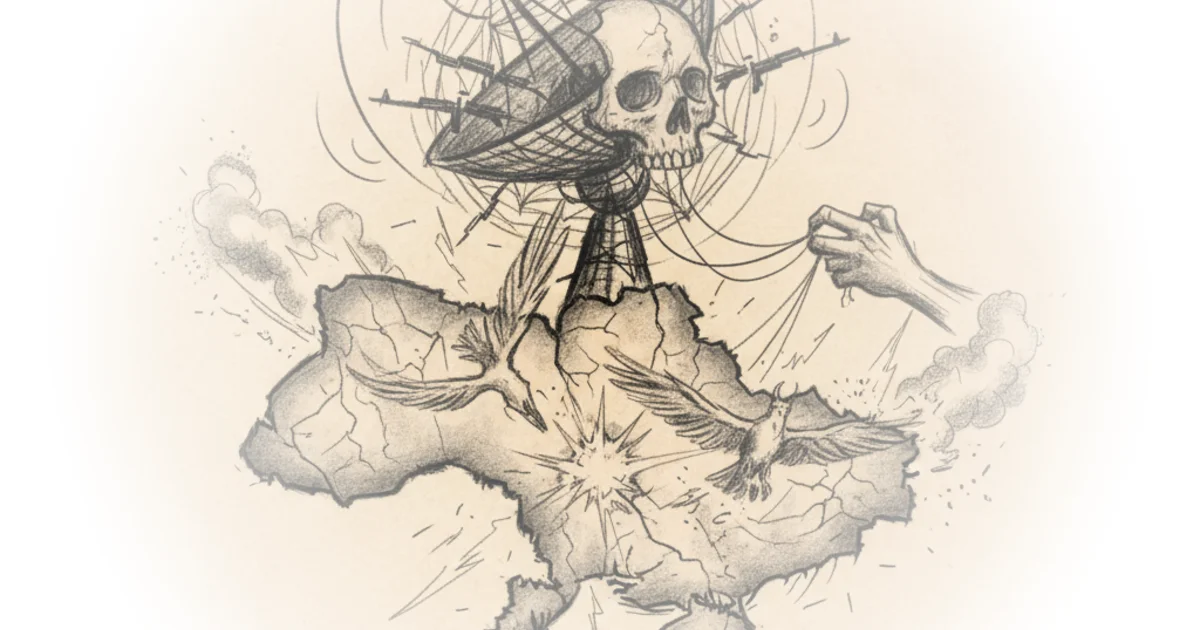
Mak explains that the core of this threat lies in the resilience of the satellite link. Unlike older systems that rely on vulnerable ground signals, these terminals allow operators to see the battlefield in real-time, adjusting flight paths mid-air to evade air defenses. As Mak writes, "That makes it harder to shoot down, complicates its route, and it transmits data directly to the operator's screen… the operator can see exactly where it is, what it's flying over, and gather intelligence in real time." This capability transforms a disposable drone into a precision-guided missile that is incredibly difficult to intercept.
The human cost of this technological escalation is immediate and personal. Mak doesn't hide behind statistics; he centers the experience of soldiers like Barber, who describes the psychological toll of failing to protect his comrades. "The hardest part is when I lose a brother-in-arms to the very thing I now fight against," Barber tells the author. "It leaves a certain weight, a sense that I failed to do something that was within my power." This framing is effective because it grounds high-tech warfare in the visceral reality of loss, reminding the reader that every new gadget on the battlefield translates to a life or death decision for the infantryman.
"The hardest part is when I lose a brother-in-arms to the very thing I now fight against. It leaves a certain weight, a sense that I failed to do something that was within my power."
The Asymmetric Response
The article then pivots to the Ukrainian response, illustrating the speed at which asymmetric warfare evolves. Mak reports that Ukraine managed to neutralize the threat before it could be scaled, implementing a "white list" system that deactivated unauthorized terminals. This move caused chaos in Russian ranks and even led to a temporary halt in their assault operations, allowing Ukraine to recapture significant territory. The author draws a parallel to the 2022 Kherson counteroffensive, where Starlink was a lifeline for Ukrainian communications, highlighting the irony that the same network is now being turned against its original beneficiaries.
However, Mak is careful not to paint this as a permanent victory. He notes that the Russian response has been to exploit human vulnerability rather than technical loopholes. The administration in Moscow has reportedly begun blackmailing the families of prisoners of war, pressuring them to register terminals in their own names to bypass the white list. "There will be an analogue of Starlink that Russians will try to use for further strikes against Ukraine," Barber warns. "I'm ready to work with the consequences." This quote underscores the futility of a purely technical fix in a war where the enemy is willing to weaponize family ties.
Critics might argue that focusing on the Starlink angle distracts from the broader, more systemic issues of drone proliferation and the sheer volume of munitions being fired. While the Starlink story is dramatic, the fundamental challenge of countering swarms of cheap, autonomous drones remains unsolved regardless of the communication link. Yet, Mak's choice to focus on this specific vector is justified; it represents a critical inflection point where commercial technology directly altered the tactical balance of power.
The Human Stakes
Beyond the tactics, Mak weaves a poignant narrative about the soldiers fighting this war. He details Barber's journey from a furniture assembler to a wounded veteran who refused to leave the army. "When the war began [in 2014], I could have left the Armed Forces, but I didn't, because I believed the war had to be seen through to the end," Barber recalls. This personal history adds depth to the technical analysis, showing that the "electronic warfare" experts are not just technicians but individuals with deep, personal stakes in the outcome.
The author also touches on the disconnect between the front-line reality and the perception of the war back home. Barber notes that infantrymen often question the value of electronic warfare efforts until they see the data: "Some infantrymen holding positions say: 'Come on, guys, there were tons of FPV drones flying. So what were you even doing?' But when you start explaining it to them, and show the numbers... their attitude changes a bit." This insight reveals the invisible nature of electronic warfare, where success is measured by the attacks that didn't happen.
Bottom Line
Tim Mak's reporting succeeds in demystifying a complex technological arms race by anchoring it in the human experience of those fighting it. The strongest part of the argument is the demonstration of how quickly commercial technology can be repurposed for lethal ends, forcing defenders into a perpetual cycle of adaptation. The piece's greatest vulnerability is its reliance on the assumption that technical countermeasures can keep pace with an adversary willing to use any means necessary, including the exploitation of prisoners' families. As the conflict evolves, the reader must watch not just for new gadgets, but for how the rules of engagement are rewritten by the very tools meant to bring connectivity to the world.
"I want children. First, we need to end this war. And we must restore our territories, we will have to... After all, this is my country, my home, and I want my children to live here."
The ultimate takeaway is that in modern warfare, there is no such thing as a neutral tool; every innovation carries the potential to become a weapon, and the cost is paid in the lives of those on the front lines.