The most unsettling claim in this analysis isn't that the United States is turning against India, but that this shift is a deliberate, structural response to American anxiety rather than a temporary political glitch. Sinification presents a chilling thesis: Washington has stopped viewing New Delhi as a strategic partner and has reclassified it as a resource to be drained. This isn't just about tariffs; it is a fundamental rewriting of the rules of engagement for the 21st century, suggesting that the era of "strategic altruism" is dead and replaced by a ruthless calculus of survival.
The End of the "Strategic Altruism" Era
For decades, the prevailing wisdom in Washington was that a rising India would naturally balance a rising China. Sinification reports that this logic was built on a foundation of "strategic altruism," a term coined by US officials to describe a policy of supporting India's growth even without immediate returns. The piece notes that "Washington paid real diplomatic costs to back New Delhi—most notably, carving out a special exception to global non-proliferation norms." This historical context is vital; it recalls the 2008 US-India Civil Nuclear Agreement, where the US lobbied the Nuclear Suppliers Group to grant India a unique exemption from non-proliferation treaties despite India not being a signatory to the Nuclear Non-Proliferation Treaty. That was a massive geopolitical gamble made on the assumption that India's rise served American interests.
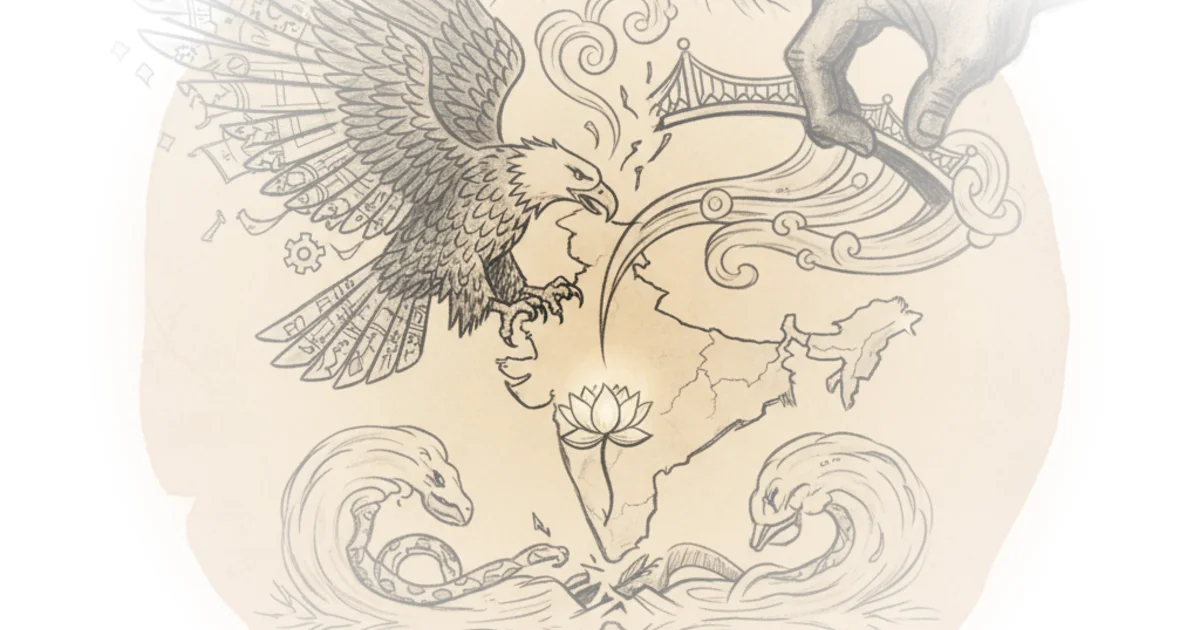
However, the article argues that this generosity was never pure charity. It was a long-term bet that a stronger India would act as a "democratic lock" against China. The shift now is driven by a different fear. "The root driver is US anxiety over its declining strength, which now outweighs concern about external geopolitical threats," the piece asserts. This reframing is powerful because it moves the conversation away from the personality of the current administration and toward a structural crisis of confidence within the US establishment. The argument suggests that when a hegemon feels its own decline, it stops investing in the future and starts squeezing the present.
"Allies become 'blood bags', the US preferring to squeeze partners for immediate gains over paying uncertain costs for long-run strategic contests."
This metaphor of the "blood bag" is the article's most striking image. It implies that the US is no longer looking for partners to share the burden of global order, but rather sources of liquidity to extend its own life. Critics might argue that this view is overly cynical, ignoring the genuine security concerns that still bind the US and India against shared threats. Yet, the evidence of punitive tariffs and visa restrictions cited in the piece suggests that the transactional nature of the relationship has hardened significantly.
From Partner to "Discarded Actor"
The analysis details how India has transitioned from a "darling" to a "discarded" actor in the eyes of the White House. The piece argues that India's unique position—lacking the industrial depth of Japan or South Korea to make massive concessions, yet unwilling to fully align with US demands—has made it a target. "India has enjoyed US indulgence but lacks the industrial/economic heft of Japan, Europe or Korea to make major concessions—and is less willing to bend—so it is cast as 'conspicuously ungrateful'."
This dynamic is exacerbated by the rise of the Indian diaspora and the service-sector competition between the two nations. The article suggests that as the US becomes more isolationist, the visibility of Indian professionals in the West becomes a liability rather than an asset. "The high visibility of the Indian diaspora in Western societies have all, objectively speaking, intensified American perceptions of India as an overall threat." This is a provocative point that challenges the standard narrative of the "Indian-American vote" as a purely positive force in US politics. Instead, it frames the diaspora as a flashpoint for populist anger.
The piece also highlights the "battle for second place" between the US and India. "A future 'battle for second place' between the two countries—over comprehensive national power and aggregate economic size—cannot be ruled out." This suggests that the US is not just reacting to China, but is increasingly wary of India's trajectory as well. The fear is that a rising India will eventually compete with the US for the position of the world's second superpower, a scenario the US is unwilling to tolerate.
"As the gap in national power between the two countries continues to narrow, Washington has in fact grown more wary of, and resistant to, India."
This section of the argument is particularly compelling because it explains the sudden harshness of recent US policy not as a deviation, but as a logical consequence of the US's own strategic recalibration. The piece notes that the administration is "reluctant to pay the costs of geopolitical competition—and instead prefers to bleed its allies dry." This explains why India, which cannot offer the same level of economic concessions as Europe, is being targeted so aggressively.
A Geopolitical Realignment?
The article concludes with a bold prediction: that the structural tensions between the US, India, and China could lead to a fundamental realignment. "Looking ahead, America's relative decline alongside India's rise—and a dominant China—might even allow Beijing's structural tensions with Washington and New Delhi to mutually unwind, triggering a fundamental geopolitical realignment in China's favour." This is a high-stakes prediction that suggests the US strategy of containing China by courting India may have backfired.
The analysis draws on the work of Mao Keji, a researcher at China's National Development and Reform Commission, who has long argued against underestimating India but ultimately sees a "bearish" future for US-India relations. The piece notes that Mao's predictions about a cooling of relations came "well before Trump's punitive August tariffs," lending credibility to the structural argument over the "personality" argument.
"The shift in US policy towards India has attracted widespread attention... none can simultaneously account for the broader commonalities in Trump's recent alliance policy and the particular abruptness of the deterioration in US-India ties."
This critique of Western analysis is sharp. It suggests that observers are too focused on the "Trump anomaly" to see the deeper trend of US decline and the resulting shift in alliance behavior. The piece argues that the US is no longer willing to "commit additional resources to supporting India—particularly a still rapidly rising India." This is a stark departure from the post-Cold War consensus.
Bottom Line
The strongest part of this argument is its refusal to treat US policy shifts as merely the whims of a single leader, instead framing them as a systemic response to American decline. The "blood bag" metaphor effectively captures the new, transactional reality of US alliances. However, the piece's biggest vulnerability is its assumption that India will passively accept this treatment; New Delhi has a long history of strategic autonomy and may not simply become a "discarded actor" without a fight. Readers should watch for how India navigates this new pressure, particularly as the US continues to prioritize immediate economic gains over long-term strategic partnerships.