Chris La Tray reframes the current crisis in Minneapolis not merely as a tragedy, but as the latest chapter in a 250-year lineage of Indigenous resistance, arguing that celebration itself is a vital act of defiance against erasure. While mainstream coverage fixates on the immediate violence, La Tray connects the dots between state-sponsored brutality and the enduring power of community organizing, urging readers to see the "mighty" crowds in the streets as the engine of historical change.
The Architecture of Resistance
La Tray opens by grounding the reader in the immediate reality of the "ICE invasion" in Minneapolis, acknowledging the horror while pivoting quickly to the agency of the people on the ground. He writes, "Movements of everyday people are MIGHTY. It's the only way things change." This assertion is the piece's emotional and analytical core. Rather than treating the protests as a reaction to a single event, La Tray positions them as the inevitable result of a long history of "colonial subjugation" that has never ceased. He notes that the murder of Renée Good and the execution of Alex Pretti are "horrific, ultimate and unsurprising expressions of state-sponsored violence unchecked." By labeling these deaths as "unsurprising," La Tray forces the reader to confront the systemic nature of the violence rather than viewing it as an aberration. This framing is effective because it strips away the shock value that often paralyzes public discourse, replacing it with a call for sustained, organized action.
"Anything truly good that has happened on Turtle Island while under colonial subjugation has been the result of people, everyday people, making them happen."
The author draws heavily on the work of his comrade, Nick Estes, to contextualize the Minneapolis uprising within a broader critique of U.S. imperialism. La Tray highlights Estes's analysis connecting local police actions to global patterns of oppression, a perspective he claims is absent from other media outlets. This reliance on Indigenous scholars provides a depth of historical context that standard political reporting often lacks. However, a counterargument worth considering is whether focusing so intensely on the long arc of history might obscure the specific, immediate policy decisions of the current executive branch that are fueling the crisis. La Tray acknowledges the "heel of our current administration" but keeps the focus on the community's response rather than dissecting the specific federal directives.
Reclaiming the Narrative of Independence
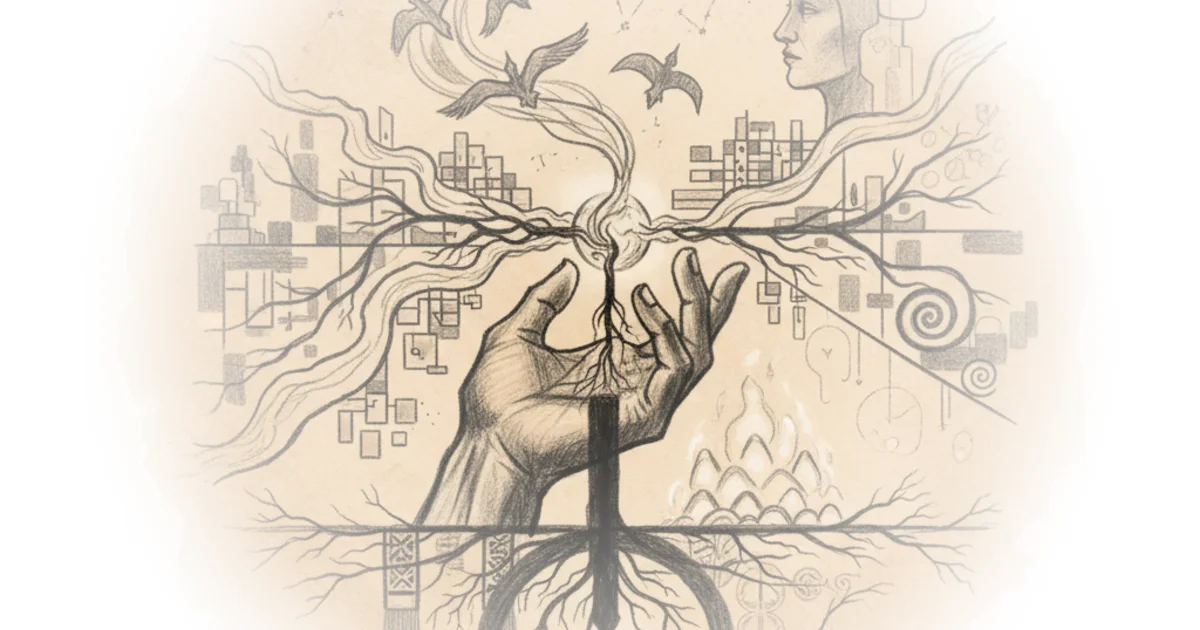
The piece takes a sharp turn into cultural strategy with the introduction of IndigiPalooza MT (IPFEST), a festival designed to celebrate resistance in the shadow of the upcoming 250th anniversary of the Declaration of Independence. La Tray explains the organizers' decision to theme the event "RESISTANCE 250+" as a direct challenge to the national narrative. He writes, "We asked ourselves what this means to Native people, whose stolen land (combined with the forced slave labor of Black people) is the source of the foundational wealth of our settler colonial nation." This is a bold rhetorical move, directly confronting the foundational myth of the United States by citing the document's own description of Indigenous people as "Merciless Indian Savages."
By centering the "Three Sisters"—corn, beans, and squash—as the festival's mascot, La Tray shifts the focus from political grievance to ecological and cultural abundance. He quotes Robin Wall Kimmerer to illustrate this point: "Together these plants—corn, beans, and squash—feed the people, feed the land, and feed our imaginations, telling us how we might live." This choice of imagery serves as a powerful counter-narrative to the violence described earlier, suggesting that survival and thriving are the ultimate forms of resistance. The argument here is that cultural celebration is not a distraction from political struggle but a necessary component of it. La Tray asserts, "If we give up on celebratory acts then that is another form of oppression." This perspective challenges the notion that activism must always be somber or purely reactive.
"History and events and circumstances have put colonizers and colonized and oppressed and oppressors and all of us together here, now, and our only future is a future together. As humans."
The Economics of Survival
La Tray is transparent about the financial realities of sustaining such movements, noting that "massive abundance of money being tossed around by philanthropists is lagging behind as it relates to Indian Country." He cites a study from the NDN Collective to highlight a systemic funding gap, arguing that the "current administration" has exacerbated these issues by canceling federal funding. The author details the costs of the festival—paying presenters, covering travel, and feeding volunteers—to underscore that resistance requires material resources. He writes, "We pay our presenters for their time as well as travel and hotel rooms. We offer stipends to the folks who sell their wares at the market."
This section grounds the lofty ideals of resistance in the mundane but critical logistics of organization. La Tray's appeal for donations is framed not as charity, but as an investment in a shared future. He offers a class, "Native American Resistance for Everyone," as a way for supporters to engage educationally while funding the festival. The course, featuring experts like Waub Rice and Rebecca Nagle, is designed to be accessible, with a "pay what you can afford" model. This approach democratizes the knowledge required to understand the movement, aligning with the author's goal to "EDUCATE and INSPIRE." Critics might argue that relying on small individual donations is an unstable foundation for long-term organizing, yet La Tray counters this by emphasizing the power of community solidarity over institutional grants.
Bottom Line
Chris La Tray's most compelling argument is that celebration and education are not merely complementary to resistance but are its very lifeblood in the face of state violence. The piece's greatest strength lies in its refusal to let the narrative of the current crisis be defined solely by tragedy, instead anchoring it in a 250-year history of Indigenous survival and ingenuity. The biggest vulnerability is the reliance on grassroots funding in an era of shrinking federal support, a challenge La Tray acknowledges but cannot fully solve within the text. Readers should watch for how this model of community-funded resistance scales as the political pressure on Indigenous communities intensifies.