Nate Silver cuts through the noise of political tribalism to reveal a fascinating paradox: the very people who bet their livelihoods on risk and probability are increasingly alienated by the Democratic Party's recent turn toward moral rigidity. This piece stands out because it doesn't just tally up donation totals; it uses the unique psychology of professional poker to explain a broader, silent shift in the "River"—the analytical, competitive class that has quietly drifted away from traditional liberalism.
The River's Political Drift
Silver opens with a provocative observation about the social dynamics of the poker table, noting that while players are guarded about their cards, they are often "no-fucks-given" about their political views. He challenges the prevailing assumption that high-stakes gambling is inherently conservative. "Occupations associated with what I call the River — so analytical, competitive, risk-taking professions — have become more conservative-coded in recent years," Silver writes. He argues that this shift has created a political blind spot for Democrats, who have lost ground with young men and entrepreneurs by adopting an overly prescriptive stance that clashes with the values of risk and self-reliance.
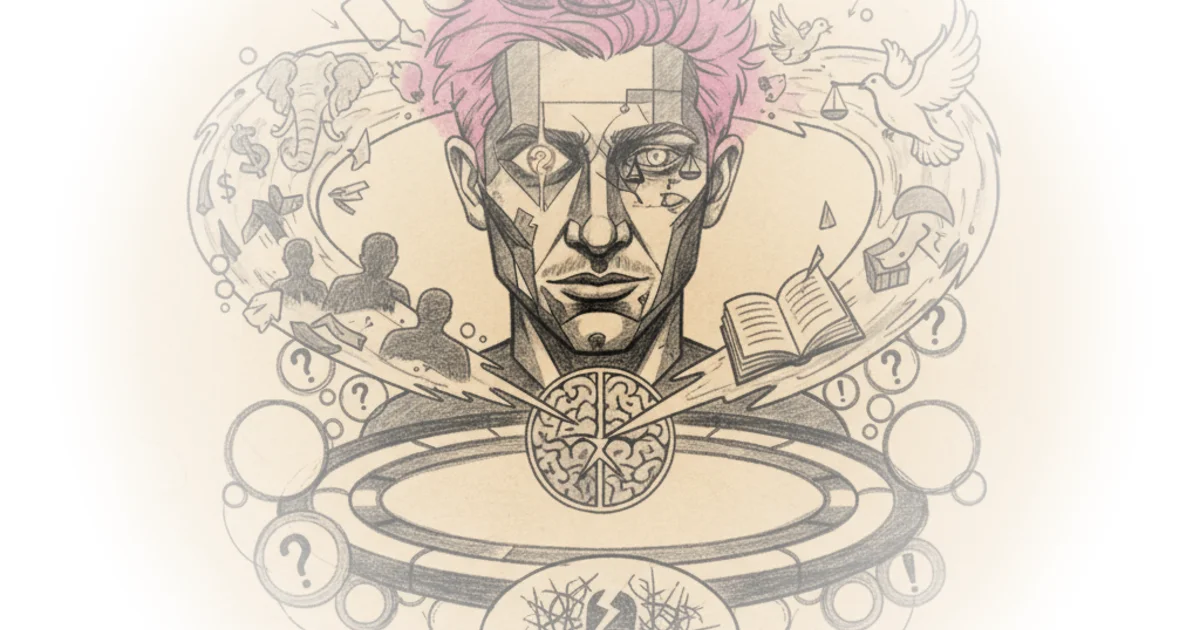
This framing is compelling because it moves beyond demographic stereotypes to analyze cultural friction. The argument suggests that the disconnect isn't about policy specifics, but about a fundamental mismatch in worldview. However, critics might note that labeling an entire professional class as "conservative-coded" risks oversimplifying a group that is notoriously difficult to categorize, often prioritizing individual liberty over traditional party platforms.
"Poker players are basically rational about this. Candidates for president and U.S. Senate raise far more money than they can put to good use, and I think you're generally better off donating to charity or to candidates for lower office."
Silver supports his thesis with hard data on political contributions, revealing that professional poker players are a tiny, tactical constituency. He points out that their donations are "paltry: under six figures in every cycle," yet they are highly strategic. He draws a sharp historical line to 2006, when the outgoing Republican Congress passed the Unlawful Internet Gambling Enforcement Act (UIGEA). This legislation, added as a rider to a port security bill, was a "last gasp of the Reagan/Bush GOP's 'family values' agenda." The political fallout was immediate and ironic: Jim Leach, the lead sponsor of the UIGEA, lost his seat in the 2006 midterms, partly due to contributions from poker players who had been pushed into the Democratic column by the threat to their industry.
The Impact of Regulation and "Black Friday"
The narrative takes a darker turn when Silver discusses the 2011 "Black Friday" indictments, where the federal government targeted online poker operators. "Black Friday killed what was left of the online poker boom that had begun in 2003," he notes. This event fundamentally altered the political calculus for the remaining professionals. With their livelihoods under threat from the executive branch, the community's political engagement shifted. While the majority of contributions in that era went to libertarian-leaning figures like Ron Paul rather than establishment Republicans, the overall political capital of the group evaporated.
Silver's analysis here is particularly astute because it highlights how regulatory overreach can backfire, turning a niche industry into a disillusioned, apathetic bloc. The data shows that while poker players leaned Democratic in 2016 and 2020, the 2024 cycle saw a slight swing toward Republicans. Silver attributes this to a broader trend where Democrats have become "the party associated with greater prudishness," a trait that professional gamblers "instinctively abhor."
"The alliance between Trump and the Trump-curious factions of the River has not gone well for the latter group."
He points to the "One Big Beautiful Bill Act," which included a provision capping the deduction for gambling losses at 90 percent of winnings. For tournament players operating on thin margins, this is potentially devastating. This detail underscores the fragility of the "River's" relationship with the current administration; despite the executive branch's friendliness toward crypto and prediction markets, traditional gamblers are finding themselves on the wrong side of the tax code.
The Psychology of the Professional Gambler
What makes this piece truly distinctive is Silver's deep dive into the psychological profile of the poker pro. He argues that these individuals are "archetypically both entrepreneurial and self-reliant," yet they are also "highly anti-authoritarian." They possess the analytical skills to succeed in high-finance but consciously choose the alternative lifestyle of poker to avoid "working for the man."
"Poker players tend to be suspicious of wokeness, but they are often relatively tolerant people by necessity. They're going to gravitate toward whichever political constituency they think will leave them alone."
Silver suggests that this group is drawn to abstract principles rather than party brands. They are more likely to support figures like Bernie Sanders or Ron Paul, or causes like effective altruism, than mainstream politicians like Kamala Harris or George W. Bush. The argument is that poker players understand the concept of "equilibrium"—the idea that fairness and reciprocity are necessary for the game to function. This game-theoretic thinking makes them skeptical of dogmatism.
"It's a strong suggestion of pragmatism over dogmatism, and a tradition among a bipartisan set of political leaders that spans from Truman to Nixon to Obama."
The inclusion of Zohran Mamdani, a poker-playing mayor-elect, serves as a potent symbol of this pragmatism. Silver uses this to illustrate that the overlap between poker and politics is not about ideology, but about a shared comfort with uncertainty and calculated risk.
Bottom Line
Silver's strongest contribution is his reframing of the "River" not as a monolithic voting bloc, but as a culturally distinct group driven by risk tolerance and a deep suspicion of regulatory overreach. The piece's greatest vulnerability, however, is its reliance on a constituency that is too small and disorganized to significantly influence national elections, rendering the political analysis more of a cultural diagnosis than a strategic roadmap. Readers should watch how the new tax provisions on gambling losses play out, as this could be the catalyst that finally forces this apathetic group to organize or disappear entirely from the political conversation.