L. M. Sacasas delivers a stinging rebuke to the tech industry's current obsession with "AI for good," arguing that the drive to deploy artificial intelligence often masks a profound arrogance rather than genuine altruism. By resurrecting a 1968 speech by social critic Ivan Illich, the author challenges the very premise that Silicon Valley's vision of abundance is universally desirable or even survivable for the communities it claims to serve.
The Hypocrisy of Benevolence
Sacasas anchors his critique in a historical moment that feels startlingly contemporary: a 1968 gathering of American volunteers preparing for service in Mexico. He notes that the invitation promised an "exciting and profitable trip" with "top notch" speakers, yet the event was disrupted by the presence of Ivan Illich, a priest known for his radical critiques of Western development. Sacasas highlights how Illich immediately dismantled the volunteers' self-image, telling them he was there to "stop you, from pretentiously imposing yourselves on Mexicans."
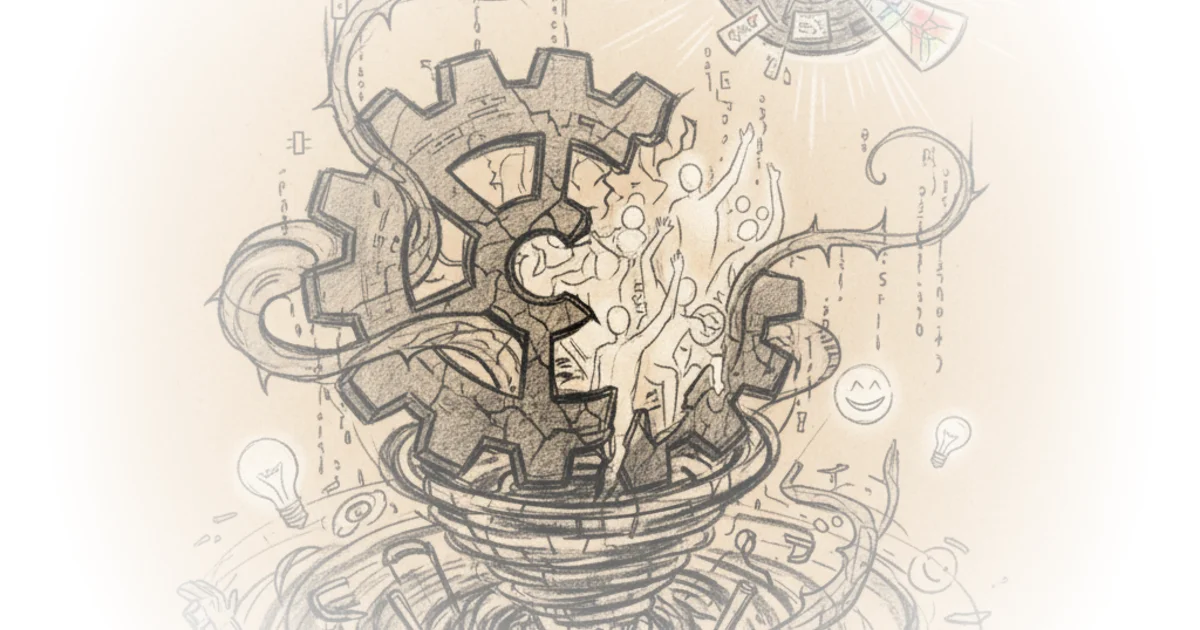
The author draws a direct line from these well-meaning students to today's AI developers. Sacasas writes, "I am here to tell you, if possible to convince you, and hopefully, to stop you, from pretentiously imposing yourselves on the rest of humanity." This parallel is the piece's most provocative move. It suggests that the modern tech evangelist, much like the 1960s volunteer, suffers from an "abysmal lack of intuitive delicacy." The core argument is that when a group defines its own desires as "good" and "sacrifice," they are often just rationalizing the imposition of their specific worldview on others.
Perhaps this is the moment to instead bring home to the people of the U.S. the knowledge that the way of life they have chosen simply is not alive enough to be shared.
Sacasas points out that this dynamic creates what Illich termed "modernized poverty"—a state where people lose the power to fend for themselves because they become dependent on institutional care. The author warns that AI could replicate this by turning basic human needs into demands for "scientifically produced commodities." Critics might argue that this view is overly pessimistic, ignoring the genuine potential for AI to solve intractable problems like disease or climate change. However, Sacasas insists that the question isn't whether the technology works, but whether it leaves users more or less capable of navigating their own lives.
The Illusion of Abundance
The commentary then pivots to a specific, high-profile example: a recent blog post by OpenAI CEO Sam Altman titled "The Intelligence Age." Sacasas acknowledges that Altman traffics in hype, noting his claim that AI will lead to "massive prosperity" and even the "discovery of all of physics." Yet, the author urges readers to look past the cynicism and consider the sincerity of those who believe this vision.
Sacasas writes, "There are those in the tech industry who seek no good but their own profit... But I do not deny it. I know it to be the case." He challenges the earnest developers who believe they are building tools for the marginalized to ask themselves harder questions. Is the technology empowering users, or is it entrapping them in systems of dependency? Will it generate real-world competency, or will it automate away the meaningful labor that builds skill?
The author suggests that the industry is often merely "evangelists for a soulless gospel of optimization and efficiency." This framing is effective because it shifts the debate from technical feasibility to moral consequence. Sacasas asks, "If I were to become the ideal user of the technology you would have me adopt, would I be more fully human as a result?" This question cuts through the jargon of "disruption" and "scale" to address the fundamental human cost of efficiency.
I am here to challenge you to recognize your inability, your powerlessness and your incapacity to do the 'good' which you intended to do.
The Necessity of Listening
The final section of the piece offers a path forward, though it is a difficult one. Sacasas argues that the root problem is not a lack of language skills, but a deeper "incapacity to listen." He references Illich's concept of the "silence of the pure listener," suggesting that true service requires learning the silence of a people rather than just their sounds.
The author posits that if developers could truly hear what the communities they seek to serve are saying, they might realize that the "good" they intended is not the "good" that is needed. Sacasas notes that Illich advised those who insist on working with the poor to "work among the poor who can tell you to go to hell." This is a call for humility: to recognize that the people being "helped" are the only ones who can define what help looks like.
Bottom Line
Sacasas's strongest argument is his reframing of "AI for good" not as a technical challenge, but as a failure of imagination and humility. The piece's vulnerability lies in its potential to paralyze action; if every intervention is suspect, does progress stop entirely? Yet, the warning remains vital: without a radical shift toward listening and away from imposing, the "Intelligence Age" may simply be a new era of modernized poverty. Readers should watch for how the industry responds to these questions of agency and dependency, rather than just its promises of abundance.