In an era where global supply chains are often described as fragile and unpredictable, Economics Explained identifies a rare anomaly: a nation that didn't just survive the post-Arab Spring turmoil but leveraged it to become a manufacturing powerhouse. The author's most striking claim is that Morocco's rise wasn't a lucky break, but a "proactive industrial strategy" executed with surgical precision over the last fifteen years. For busy leaders tracking where capital is flowing next, this piece offers a masterclass in how geography, when paired with relentless policy consistency, can outperform low-wage competitors who lack infrastructure.
The Architecture of Predictability
The core of the argument rests on the idea that Morocco successfully positioned itself as the "safe bet" in a volatile region. Economics Explained writes, "In a region often defined by political instability and sudden shocks, Morocco became the safe bet. It made itself predictable, dependable, and incredibly easy to trade with." This framing is crucial because it shifts the narrative from cheap labor to risk mitigation. While many developing nations compete on wage arbitrage, Morocco competed on reliability. The author notes that the country didn't wait for investors; it built the ecosystem first. "Their goal to build the conditions that global manufacturers need before they arrive," the text explains, highlighting a shift from reactive to proactive governance.
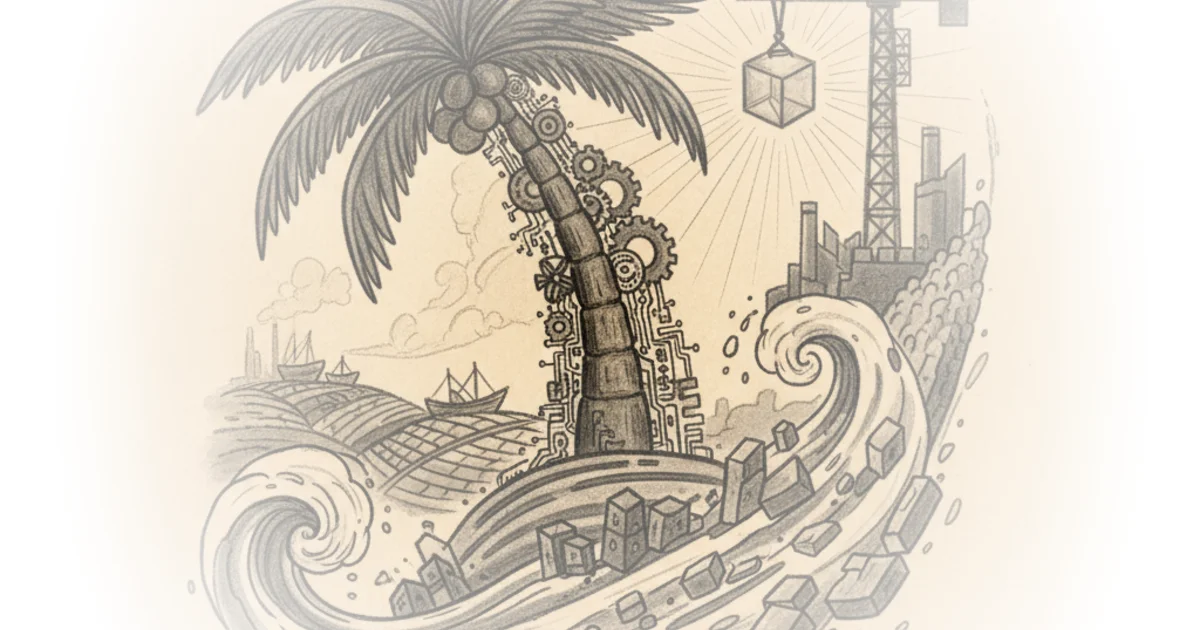
This approach is best illustrated by the country's industrial zones. Unlike other African nations that built parks far inland, Morocco stretched its zones along the coast. Economics Explained points out the stark contrast with Ethiopia, where a flagship zone sat "nearly 900 km from the port of Djibouti," eroding labor cost advantages. In Morocco, the strategy was different: "Goods roll out of factories and straight onto global trade routes." This proximity to the Port of Tangier Med, which handles nearly 10 million containers a year, creates a logistical advantage that is nearly impossible to replicate. Critics might note that this coastal concentration risks leaving inland regions behind, potentially exacerbating regional inequality, but the author argues that the overall consistency is what global manufacturers prioritize.
"That's the difference between an industrial zone that attracts global manufacturers and one that never scales."
Beyond Geography: The Human and Energy Factor
While geography provided the foundation, the author argues that the real genius lies in the human capital and energy strategy. It is not enough to have a port; you need workers who can operate complex machinery. Economics Explained details how the government partnered directly with industry to create tailored training programs. "Renault created a dedicated training center in Tangier to prepare workers for assembly line and quality control roles," the author notes, illustrating a level of public-private integration that goes beyond standard vocational training. This focus on specific skills ensures that the workforce evolves alongside the industry.
Furthermore, the piece highlights a critical, often overlooked constraint: power. "Factories don't just need cheap labor and good logistics. They need power," the author asserts. By investing heavily in renewables like the Noor Ouarzazate solar complex, Morocco insulated its manufacturers from the fossil fuel price swings that plague neighbors like Egypt. "By stabilizing electricity supply and reducing exposure to fossil fuel price swings, Morocco removed a major source of uncertainty," the text explains. This move transforms energy from a volatile cost center into a strategic asset. However, a counterargument worth considering is whether the massive capital outlay for green energy has crowded out other necessary social investments, though the author suggests it was essential for long-term industrial commitment.
The Verdict on Sustainability
The final pillar of the argument is the trade architecture. Morocco's free trade agreements with the EU and US effectively allow it to function as an extension of the European market without the associated labor costs. As Economics Explained puts it, "For European firms in particular, manufacturing in Morocco is almost like manufacturing inside the EU, but with lower labor costs, faster permitting, and cheaper land." This creates a compelling value proposition that combines the best of both worlds. Yet, the author acknowledges the fragility of this model: "Or will its success depend on whether it can remain Europe's affordable workshop?" This question hangs over the entire analysis, suggesting that if European wages rise or automation makes proximity less critical, Morocco's unique selling point could erode.
Bottom Line
Economics Explained makes a compelling case that Morocco's rise is a deliberate triumph of policy over chance, turning geographic luck into a structured industrial engine. The piece's greatest strength is its emphasis on the "predictability" of the Moroccan state, a factor often ignored in favor of raw cost metrics. Its biggest vulnerability, however, is the reliance on being Europe's low-cost alternative; the author wisely flags that this model requires constant evolution to avoid stagnation as the global economy shifts. Watch for how Morocco's investment in high-tech sectors like aerospace and data science will test whether it can move beyond simple assembly to true innovation.