Ryan Grim & Jeremy Scahill deliver a harrowing account of a ceasefire that exists more in diplomatic press releases than on the ground, exposing how military operations continue to reshape the human landscape of the Middle East while the world looks away. Their reporting cuts through the fog of official statements to reveal a grim reality: the killing of civilians, the erasure of bodies, and the systematic dismantling of Palestinian life are not collateral damage but central features of the current strategy. This is not a story about a pause in fighting; it is a story about the acceleration of displacement and the normalization of atrocity.
The Illusion of Ceasefire
The authors immediately dismantle the narrative of peace by presenting raw data that contradicts the political rhetoric. "The total recorded death toll since October 7, 2023 is now 70,125 killed, with 171,015 injured," Grim & Scahill write, grounding the abstract concept of a ceasefire in the brutal arithmetic of loss. They highlight that since the truce began, Israel has killed at least 366 Palestinians and wounded 922, a statistic that forces the reader to confront the continuity of violence. The piece argues that the administration's framing of the situation as "moving along" is a dangerous euphemism that masks the reality of ongoing bombardment.
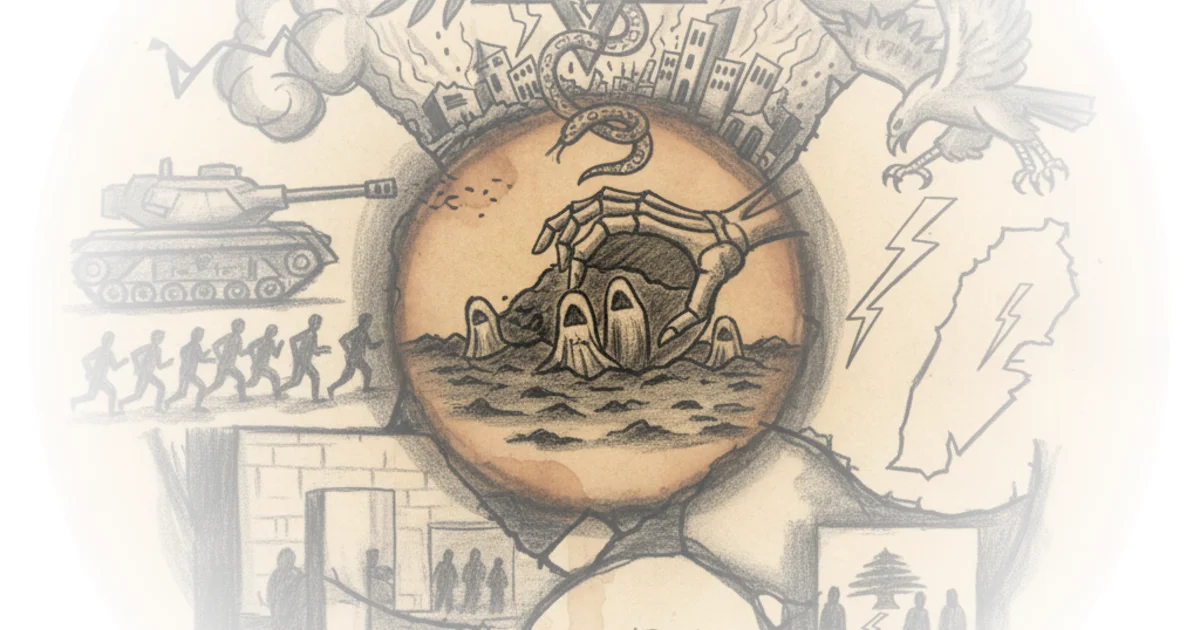
The coverage details how Israeli forces are actively shifting the boundaries of the conflict zone. "Israeli tanks pushed into Gaza City on Tuesday, reaching the Shujaiya roundabout roughly 700 meters west of the agreed-upon 'yellow line,'" the authors report, noting that this line is being moved daily to force families from their homes. This tactical maneuvering echoes the fragmentation strategies seen in the West Bank, where the Golani Brigade has long been a key instrument of ground operations. The authors suggest that these incursions are not accidental but a deliberate strategy to maintain pressure and control over the territory.
"When those fighters attempt to defend themselves, Israel uses it as a pretext to bomb and kill across Gaza, not just Rafah, mostly murdering civilians."
This framing is particularly potent because it exposes the mechanism of justification used by the military. Grim & Scahill describe how the Israeli military frames any resistance as a ceasefire violation, using the wounding of five soldiers in Rafah to launch broader attacks. While critics might argue that any military engagement violates the terms of a truce, the authors provide evidence that the response is disproportionate and targets civilians, such as the drone strike that killed two young boys collecting firewood. The UN's response—"It's hard to see how two boys, eight and 10, can be considered a threat"—underscores the absurdity of the official narrative.
The Erasure of Evidence
Perhaps the most disturbing section of the report concerns the treatment of the dead. The authors cite a CNN investigation revealing that Israeli forces used bulldozers to bury Palestinians killed while seeking aid at Zikim. "The investigation found that corpses were often left for days and then buried without identification or record, including what one veteran described as 'nine bodies of unarmed Palestinians' pushed together and covered by a bulldozer," Grim & Scahill write. This act of burying the dead without identification is not just a logistical failure; it is a deliberate erasure of identity and a barrier to accountability.
The report connects this to the broader context of the West Bank barrier, noting how the construction of new fences in the Jordan Valley aims to cut Palestinian farming communities off from their land, mirroring the fragmentation caused by the separation wall. The authors argue that these physical barriers are part of a larger strategy to make life untenable for Palestinians, effectively creating a prison without walls. The fact that the Department of Homeland Security is simultaneously launching "Operation Catahoula Crunch" in New Orleans suggests a global trend of using immigration enforcement to target marginalized communities, drawing a parallel between the treatment of Palestinians and immigrants in the United States.
"The only people who pay the price for being wrong in this culture in complete fashion are poor people, while elites... outsource all the times we're wrong and stupid to the whole society."
This quote from Palantir's Alex Karp, as reported by Grim & Scahill, serves as a chilling indictment of the tech industry's role in modern warfare. The authors highlight how companies like Microsoft are integrating their technology into Israeli targeting systems, potentially exposing executives to liability for aiding and abetting atrocity crimes. The argument here is that the technology of war is no longer just about weapons; it is about data, algorithms, and the dehumanization of the target. The authors' focus on the human cost of these technological advancements is a necessary counterweight to the sanitized language of "precision strikes."
The Global Ripple Effect
The piece expands its scope to show how the conflict in Gaza is influencing events far beyond the region. From the first direct talks between Lebanon and Israel in 40 years to the interception of Ukrainian-manufactured drones by the Romanian navy, the authors paint a picture of a world increasingly drawn into the orbit of these conflicts. They note that fighting has intensified in the eastern Democratic Republic of Congo and that peace talks between Afghanistan and Pakistan have stalled, suggesting a global instability that is being exacerbated by the ongoing war in the Middle East.
The authors also touch on the domestic political fallout, noting that the administration has pardoned a congressman for bribery because he shares its views on immigration. This connection between foreign policy aggression and domestic political maneuvering is a recurring theme in the piece. Grim & Scahill argue that the administration's actions are not just about security but about consolidating power and silencing dissent. The fact that the Department of Veterans Affairs is launching a flawed electronic health records overhaul, linked to six deaths, further illustrates the broader pattern of institutional neglect and the prioritization of political goals over human welfare.
Bottom Line
Ryan Grim & Jeremy Scahill's reporting is a masterclass in connecting the dots between military strategy, technological complicity, and human suffering. Their strongest argument is that the ceasefire is a fiction that masks a continued campaign of displacement and erasure. The piece's biggest vulnerability is its reliance on sources that are inherently opposed to the Israeli government, which may lead some readers to question the objectivity of the reporting, though the evidence presented is overwhelming. Readers should watch for how the international community responds to the burial of bodies without identification and the potential legal consequences for tech companies involved in the targeting systems. The human cost is no longer a footnote; it is the headline.