Victor Shih argues that understanding Xi Jinping's paranoia is key to understanding China itself. The Chinese leadership isn't just cautious about artificial intelligence — they're terrified of it.
Shih, director of the 21st Century China Center at UC San Diego, describes a regime that views AI not as an opportunity but as an existential threat to its hold on power. The party fears that actors outside — or even inside — the CCP could use AI as a tool to usurp the leadership's authority. It's a fear that shapes every major policy decision.
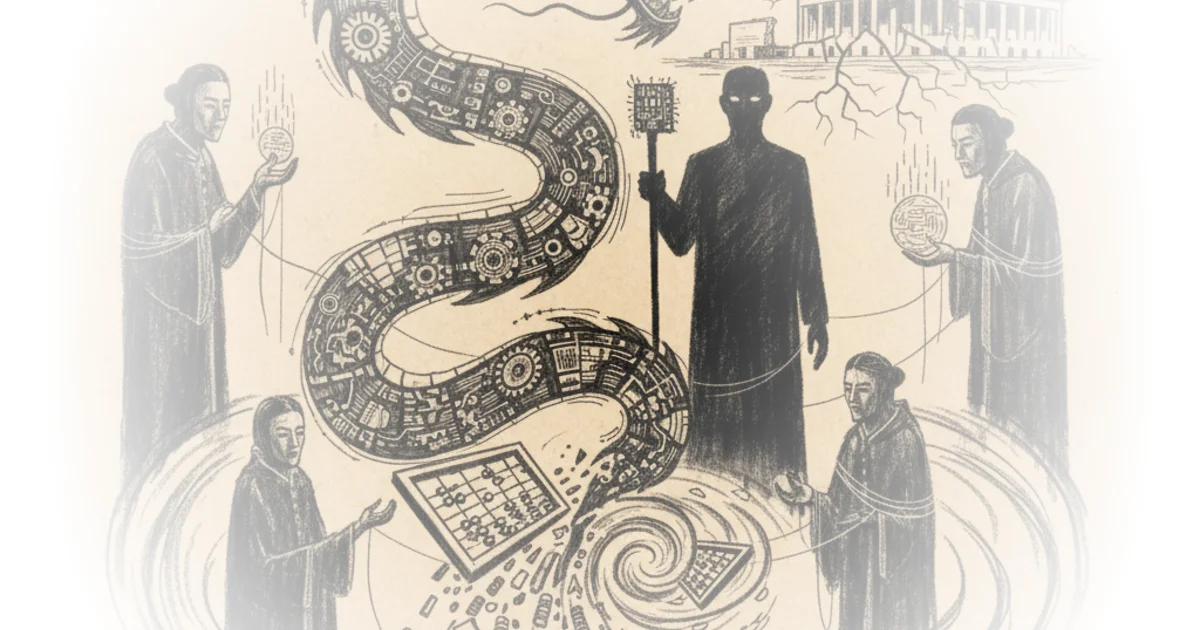
The evidence? Xi and his colleagues hold policy meetings roughly 270 days per year. When Xi expresses a preference, that's now the direction the entire system moves toward. Officials who drag their feet get purged. There's no succession plan for when Xi exits — and Shih expects any transition to be ruthless, brutal, and potentially disruptive.
The Decentralization Myth
China's fiscal system tells a similar story. Provincial governments handle roughly 85% of government spending while the national government handles 15%. In America, state and local governments handle about half, with the federal government handling the other half. On the surface, China appears more decentralized than the US.
But this is misleading. From the mid-1970s to mid-1994, Chinese provinces generated significant revenue locally and spent it freely — a period that drove strong growth through local investment and FDI attraction. Then in 1994, the central government centralized tax collection, particularly value-added tax, and effectively neutered fiscal autonomy.
Today, localities depend heavily on central government grants. The land sales boom between 2000-2020 gave them some independence, but when Xi cracked down on the property market in 2022, that ended. Now provinces are highly dependent on Beijing.
Who's Running China?
The Politburo composition reveals something crucial: many members have backgrounds in engineering and military industry rather than economics or governance. Xi himself studied chemical engineering. Others graduated from top programs in metallurgy, industrial engineering, and computer science — but these technical credentials don't necessarily translate to understanding how markets work.
Some hold degrees in Marxist theory that seem purely decorative. Yet the party isn't dysfunctional — there's a clear pipeline where lower-level expertise feeds upward. The real dysfunction emerges because the party's instinct is always to preserve its power first, even when it produces worse public health or economic outcomes.
The party prioritizes survival of its political power above all else — even if that means accepting lower growth or more deaths.
Why Economically Irrational Decisions Get Made
The traditional explanation: Chinese STEM education tracks students away from economics entirely. Even those who study social sciences rarely learn basic supply and demand. Government ideology classes now require annual courses on "situations and policy" — essentially telling students what the party prefers rather than teaching them economic fundamentals.
But there's a newer reason. One very powerful figure has centralized decision-making so thoroughly that even Politburo members lose autonomy in their domains. When Xi expresses a preference, that becomes mandatory direction. Officials who pursue slightly different agendas get purged.
The "leading small groups" — weekly meetings organized around specific projects — reveal how this works. These groups assemble relevant ministry heads and hammer out bottlenecks. The head of each group must be the most senior person. When Xi leads them personally, no one challenges him. The result is micromanagement that would make Stalin proud.
How Real Are These Meetings?
Shih has talked to people who've lectured to Politburo members. The main remarks are prepared — but the Q&A portion is genuinely unpredictable. It's terrifying for professors brought in to answer questions they can't anticipate. After these sessions, Xi's remarks become policy directly.
This system produces outcomes that economists call suboptimal: zero-COVID policies that dragged on too long, economic rebalancing that most specialists would reject. The reason isn't ignorance alone. It's the party's calculation that political survival matters more than public health or growth outcomes. They'll accept slower growth for a few years if it means preserving power.
Bottom Line
Shih's core argument is compelling: China's governance dysfunction stems not from lack of expertise but from deliberate prioritization of regime survival over all other outcomes. The most interesting vulnerability is strategic — the party itself may be optimizing for the wrong variables, and that pattern isn't changing anytime soon. Watch for how Xi consolidates power through these small groups; that's where actual decisions get made.