In a landscape often dominated by algorithmic churn and artificial shortcuts, Kathy Gerstorff offers a grounded, human-centric roadmap for the modern indie author. Rather than chasing viral trends, she argues that the most sustainable path forward lies in blending traditional storytelling with strategic community building and pragmatic use of emerging tools. This is not merely a newsletter update; it is a manifesto for the 'humanity keepers' of our time, asserting that while technology can accelerate the process, it cannot replace the core necessity of a compelling story.
The Economics of Visibility
Gerstorff frames the current publishing environment as a battlefield where marketing often outweighs the quality of the prose itself. She highlights the stark reality facing creators who believe their work will speak for itself. "Marketing and promotion can be even more important than producing a great book," she writes, a claim that challenges the romantic ideal of the solitary genius. She notes that the "Achilles' heel of most authors" is not a lack of talent, but a misunderstanding of the Amazon algorithm and the necessity of treating promotion as a business investment equal to production costs.
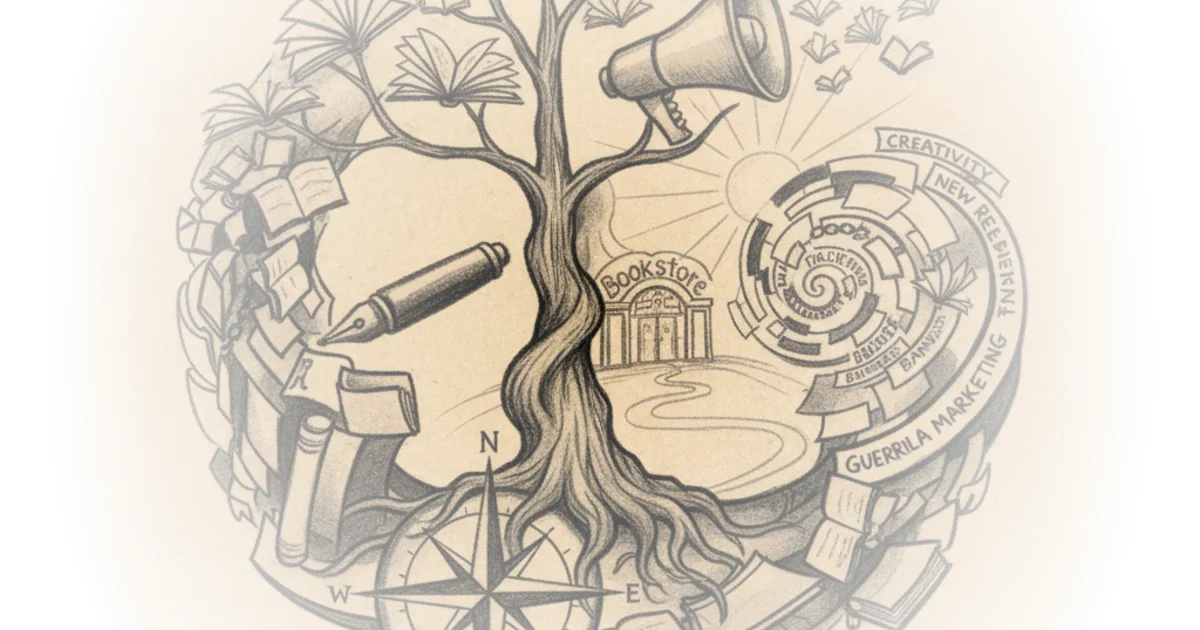
This framing is effective because it strips away the mystique of publishing and treats it as a commercial enterprise, which it undeniably is. However, this pragmatic approach risks alienating writers who view their craft as purely artistic. Critics might argue that over-emphasizing marketing metrics can homogenize creative output, pushing authors toward safer, more algorithm-friendly topics rather than risky, innovative work. Yet, Gerstorff's insistence on financial literacy for artists remains a vital corrective to the industry's tendency to let creators starve.
"Every shithead and his brother thinks that they can do what we do... The most valuable lesson is that you can't keep a good story down."
The Human Element in a Digital Age
Despite her focus on the mechanics of sales, Gerstorff's commentary is deeply rooted in the human experience of creation. She profiles Tom McAuliffe, an author who blends journalistic precision with fiction to fill the gaps in real-world mysteries like the disappearance of MH 370. Gerstorff uses his perspective to illustrate that stories are not just products but vessels for truth. "We take a real world event, and then extrapolate from our research about what might've occurred," McAuliffe explains, a sentiment Gerstorff champions as a way to preserve voices and histories.
She also tackles the psychological hurdles of the writing process, quoting the late Michelangelo's philosophy that the artist merely chips away the excess to reveal the image already inside the stone. "Great stories are out there. It's up to us to go and find them and share them," she paraphrases, using this metaphor to encourage persistence. This section serves as a crucial counterbalance to her earlier business advice, reminding readers that the drive to create must be intrinsic. The argument holds weight because it acknowledges that while the market is cold, the act of writing is a warm, personal endeavor.
Technology as a Tool, Not a Master
A significant portion of Gerstorff's analysis is dedicated to the integration of artificial intelligence into the creative workflow. She does not shy away from the controversy but instead presents a case study of efficiency. She details how she used generative AI to refine sales copy, outline a business plan, and even design merchandise, noting that the technology "saved countless hours." She contrasts the speed of tools like ChatGPT with the current limitations of image generators, admitting that while the text output is sharp, the visual results can still be "a mix of jumbled words."
This nuanced view is refreshing in an era of polarized debates on AI. Gerstorff treats these tools as assistants rather than replacements, a distinction that is vital for the future of the industry. "For an indie author who wears all the hats, it's helpful to have this time and money saving technology," she concludes. However, the reliance on these tools raises questions about the long-term value of human curation. If the barrier to entry for marketing and design drops to zero, will the market become so saturated that human stories are harder to find? Gerstorff hints at this by emphasizing the need for a "captivating and inspiring" underlying story, suggesting that AI can handle the packaging, but not the soul.
"Most folks die with the stories left inside them… Don't let that be you."
Community as the New Distribution
Perhaps the most distinctive move in Gerstorff's piece is the pivot from individual struggle to collective action. She describes a grassroots effort to crowdfund an independent bookstore, the "Bookworm Orchard," through a collaborative anthology. This project reframes the problem of funding from a personal burden to a community mission. "Why not create one for us all to pursue our dreams?" she asks, positioning the anthology as a vehicle for both artistic expression and economic survival.
This approach highlights a shift in the publishing ecosystem where direct-to-consumer models and community support are replacing traditional gatekeepers. By inviting submissions for an anthology that supports a physical space, Gerstorff is arguing that the future of bookselling lies in hyper-local, community-driven initiatives that have global reach through digital distribution. The strategy is sound, leveraging the network effects of the indie author community to solve a capital-intensive problem.
Bottom Line
Gerstorff's piece succeeds by refusing to choose between the romanticism of art and the pragmatism of business; instead, she demands that authors master both. The strongest part of her argument is the insistence that marketing is a non-negotiable skill for the modern creator, while her biggest vulnerability is the assumption that every author has the bandwidth to become a tech-savvy entrepreneur. As the industry evolves, the ability to navigate this dual identity will likely separate the fleeting from the enduring.
"If the underlying story is captivating and inspiring… It will rise to the top. It may take a while, but that's the other thing, have patience."
Readers should watch for how the "Bookworm Orchard" project scales, as it serves as a real-world test case for whether community-funded, author-led retail can survive in an economy dominated by giants. The experiment is just beginning, but the philosophy behind it—that stories are worth fighting for—is timeless.