Scot McKnight tackles a question that has divided churches for centuries, but he does so by dismantling the very language used to ask it. Rather than arguing for a modern political agenda, McKnight forces a linguistic and historical reckoning, suggesting that the debate over women elders rests on a translation error that has obscured a distinct, vetted office for women in the early church. This is not a plea for change, but an archaeological dig into the first century that reveals a startling gap between our assumptions and the ancient text.
The Linguistic Trap
McKnight begins by exposing the rigidity of our English translations. He points out that the Greek word presbyteros literally means "older man," evoking an image of gray hair and physical maturity, yet we use it as a gender-neutral title for church leadership. "In the Greek New Testament presbyteros means literally 'older man' or 'elder,'" McKnight writes, "Think of a guy with gray hair and the experience and wisdom that can come with physical maturity." This distinction is crucial because it suggests that the male-specific nature of the term was not an accident of history, but a feature of the language itself.
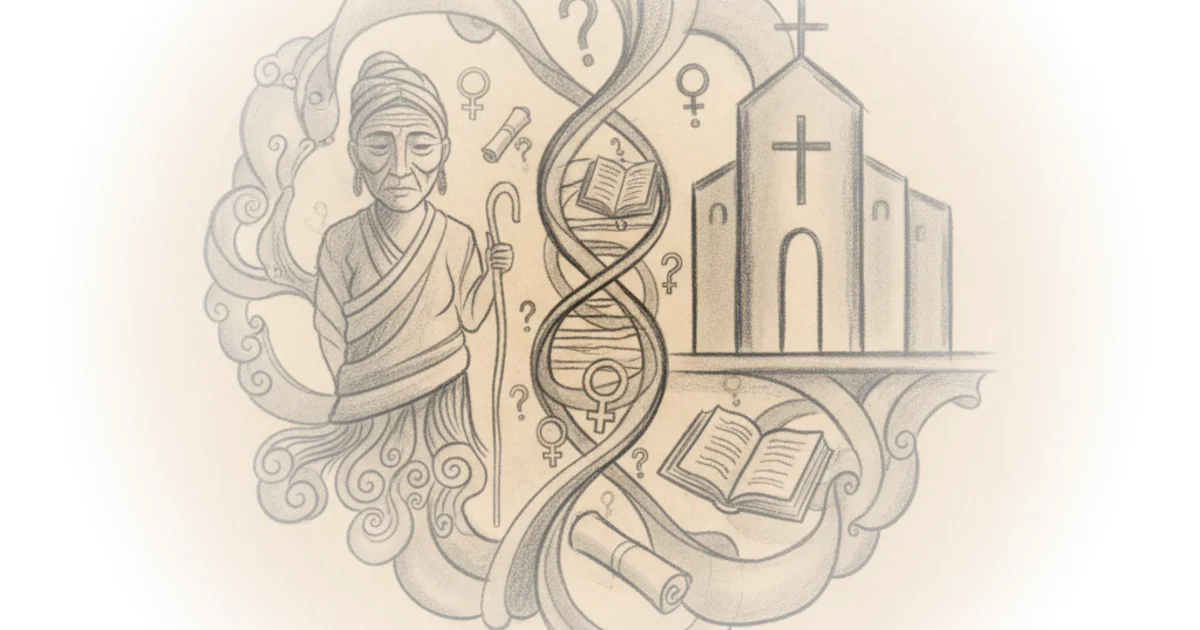
However, McKnight argues that this does not mean women were excluded from leadership roles; rather, they held a parallel office that we have largely forgotten. He draws a compelling analogy to family structures: "I see a parallel in the English for 'parents' vs. 'moms' and 'dads.'" Just as a mother and father are both parents but have distinct titles, the early church had distinct roles for men and women that were both authoritative. "Asking if a woman can be a presbyteros is like asking if a man can be a mother or if a woman can be a father," he observes. This reframing shifts the debate from "can women be elders?" to "what was the specific office women actually held?"
The plural form of elder, presbyteroi, is like the word for 'parent' and can refer to a male-only group or a mixed-gender group, in the same way that amigo and amiga become amigos.
Critics might argue that this linguistic gymnastics ignores the clear pastoral instructions in the New Testament that restrict certain teaching roles to men. Yet McKnight's evidence suggests that the restriction was on the specific title, not the function of spiritual authority. He notes that even the heavenly elders in Revelation have been depicted in ancient art, such as the Ravenna mosaics from around AD 500, as a mix of men and women. "I find it interesting that churches more than a thousand years ago saw in the twenty-four elders a male/female lineup," McKnight writes, hinting that the early church's visual theology was more inclusive than our modern textual debates allow.
The Forgotten Office of the Widow
The core of McKnight's argument lies in identifying the actual office women held. He posits that while the title "elder" was male-coded, the role of "widow" was a formal, vetted position with its own qualifications that mirrored those of the overseer. "What makes it more complicated is that we often talk about qualifications for 'elders' when referencing a passage where qualifications are outlined, but the word there is not elder; it's overseer," he explains. The qualifications for an overseer include being the husband of one wife, while the qualifications for a widow include having been the wife of one husband. "The lists for the two offices have a lot of overlap," McKnight notes, suggesting a structural symmetry rather than a hierarchy of exclusion.
This is where the historical context deepens the argument. McKnight leans on the work of scholars like Bonnie Bowman Thurston to show that the "widow" was not merely a charitable recipient but a spiritual officer. "Thurston builds a case for the grounding of an official order of widows in the New Testament Scriptures before examining the ensuing ministry of widows through the 3rd century," McKnight writes. These women were enrolled, tested, and given specific duties that included prayer, caring for the sick, and teaching younger women. "The tasks of widows include prayer, duties corresponding to those of a wife, and probably the training of younger women," he summarizes, drawing a direct line from the presbytides mentioned in Titus 2:3 to the institutionalized widows of the early church.
The order of widows was linked to spiritual gifting and reached its height in the 3rd century, especially (but not exclusively) in the Eastern Church.
The evidence for this office is not just literary but liturgical. McKnight cites the Testamentum Domini, a 4th or 5th-century document that outlines an ordination prayer for widows. "While she is praying at the entrance of the altar... let the bishop say quietly... impart, O Lord, a spirit of power upon this your servant," he quotes. This is not a casual blessing; it is a formal installation into a role of power and service. The fact that this order eventually disappeared, replaced by the rise of female deacons and later monastic orders, explains why modern readers struggle to find the "elder" title applied to women. "It perhaps finds a new form in the monastic orders for women, for nuns take up many of the duties that widows originally discharge," McKnight concludes.
The Cost of Semantic Confusion
McKnight's analysis reveals that the modern impasse over women in leadership is largely a result of semantic drift. By insisting that women must hold the title "elder" to have authority, the church has ignored the actual office they did hold. "We often talk about qualifications for 'elders' when referencing a passage where qualifications are outlined, but the word there is not elder; it's overseer," he reminds us. This confusion has led to a situation where the church has forgotten a vital part of its own history. "Maybe that's because historians saw the word 'widow' and read it only as 'a woman who lost a husband,'" McKnight suggests, arguing that this narrow reading has obscured a robust ministry of women.
Ministry. 'True' widows are selected for service in the church. This is implied by the 'enrollment' of vv. 9, 11.
The implication is profound: if the church is to recover the fullness of its early practice, it must look beyond the specific title of "elder" and recognize the authority of the office that women actually occupied. McKnight does not demand that women be called "elders" today; he demands that we recognize they were leaders, just under a different name. "The evidence points to 'yes,'" he writes regarding whether biblical writers envisioned women serving in vetted office, "But the office is not called 'elder.'" This distinction allows for a historical recovery that does not require rewriting the text, but rather reading it with the eyes of the early church.
Bottom Line
McKnight's strongest move is his refusal to accept the modern binary of "male elder" versus "female deacon," replacing it with a historical reality of "male elder" and "female widow" as parallel, vetted offices. His biggest vulnerability lies in the fact that the historical record of the widow's office is fragmentary and eventually fades, leaving modern churches without a clear blueprint for restoration. Readers should watch for how this linguistic distinction might reshape the conversation on women's authority, shifting the focus from titles to the substance of the office itself.
The evidence points to 'yes.' But the office is not called 'elder.'"