In a war defined by attrition, the most startling development isn't a new frontline breakthrough, but a shift in the very fuel that powers the conflict. Good Times Bad Times argues that Ukraine has successfully turned the tables on Russia's energy sector, transforming a defensive struggle into an offensive campaign that is now strangling Moscow's economy from the inside out. This piece stands out because it connects the dots between burning refineries in Siberia, a surprising pivot in American political rhetoric, and the desperate race to keep Ukrainian cities warm before winter sets in.
The Burning Backbone
The author's central thesis is that Ukraine's deep-strike campaign has moved beyond symbolic gestures to become a structural threat to the Russian state. Good Times Bad Times writes, "Since the start of Ukraine's long range drone campaign in January 2024, Ukrainian forces have successfully hit 29 of Russia's 39 refineries, about 74% of the total." This statistic is not merely a tally of damage; it represents a fundamental disruption of Russia's logistics and revenue streams. The commentary notes that while early estimates suggested a 15% disruption, recent data indicates that over 40% of refining capacity is now idle, with 70% of those outages caused directly by drone strikes.
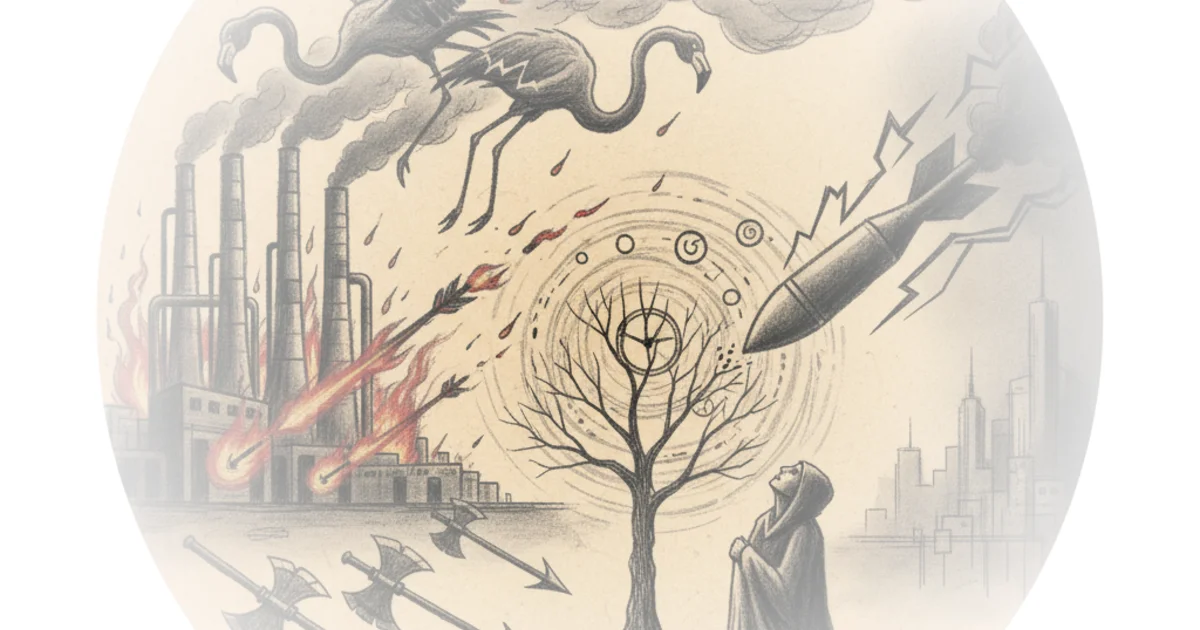
The author effectively illustrates the cascading effects of these strikes, noting that the problem extends far beyond fuel shortages. "Refinary attacks are hitting the backbone of Russia's logistics, governance, and roughly 40% of its export revenues," the text states. This framing is crucial because it moves the conversation from tactical battlefield gains to strategic economic warfare. The piece highlights that Russia is now facing a "long, slow farewell to Russian oil" as its easy-to-extract reserves deplete and sanctions bite deeper.
It is essentially a long, slow farewell to Russian oil.
Critics might note that Russia has historically shown resilience in adapting to sanctions and has significant stockpiles, suggesting that these figures could be temporary disruptions rather than permanent losses. However, the author counters this by pointing to the rising costs of extraction and the internal cracks visible in the form of angry drivers and price hikes, arguing that the systemic pressure is becoming unsustainable.
The Frontline Reality
While the energy sector faces chaos, the ground war presents a more complex and grim picture for Ukraine. The author does not shy away from the severe challenges facing the Ukrainian armed forces, citing a chronic shortage of infantry and dangerous gaps in the defensive line. Good Times Bad Times writes, "Gaps between Ukrainian strong points stretch from 200 to 700 m and in some cases even a full kilometer." This vulnerability allows Russian forces to exploit weaknesses with precision, sometimes advancing deep into Ukrainian territory to reach artillery positions.
The commentary also addresses the human cost, referencing staggering casualty figures that suggest Russia is paying a heavy price for every inch of ground gained. "For every 100 acres, about 40 hectares of captured ground, the Kremlin pays the price of 7.3 million, 11 dead, 19 wounded, and four missing," the author calculates based on internal Russian figures. This stark arithmetic serves as a counter-narrative to the idea of an unstoppable Russian advance, suggesting that their momentum is being bought at a price they may eventually be unable to pay.
However, the author balances this by acknowledging the dire situation on the Ukrainian side, noting that morale is fragile and logistics hubs have been forced to retreat 40 to 50 kilometers behind the front due to the sheer volume of Russian glide bombs. This duality creates a tense narrative where neither side is winning decisively, yet both are bleeding.
The Winter Gamble and the American Pivot
As winter approaches, the stakes shift from territorial control to survival. The author identifies a critical vulnerability in Ukraine's energy grid, with Russia having destroyed an estimated 60% of its gas production capacity. The target, as the piece puts it, is "not the army so much as public morale to survive the coming months." This sets the stage for the most significant development in the article: a potential shift in US policy under Donald Trump.
Good Times Bad Times reports that the US president has reportedly given a "green light for sharing intelligence with Ukraine" and is considering the sale of Tomahawk cruise missiles. "Make them feel the pain," Trump reportedly said, frustrated by earlier strategies of appeasement. This quote encapsulates the article's argument that domestic politics in the US are driving a more aggressive foreign policy, with polls showing broad bipartisan support for tougher sanctions and continued arms deliveries.
The author also explores the technological race to replace these capabilities, highlighting Ukraine's homegrown "Flamingo" missile. While the manufacturer claims a range of up to 3,000 km and a massive warhead, the author notes that visual evidence of its success is scarce and that Russian sources claim it is "easy to shoot down." This skepticism adds necessary nuance to the optimism surrounding new weapons systems, reminding readers that innovation in wartime is often a race between offense and defense.
If you want to understand foreign policy, look at domestic politics.
A counterargument worth considering is that even with new weapons, the time required to train crews and integrate systems like Tomahawks could delay their impact until after the critical winter months. The author acknowledges this, noting that stocks are limited and training takes time, which is why the immediate reliance remains on intelligence sharing and existing drone capabilities.
Bottom Line
Good Times Bad Times delivers a compelling, if sobering, assessment of a war where the lines of victory and defeat are blurring into a struggle for endurance. The strongest part of the argument is the clear linkage between Ukraine's successful energy strikes and the long-term economic erosion of Russia, a narrative often overshadowed by daily frontline updates. The piece's biggest vulnerability lies in the uncertainty of Western political will, as the author admits that the timeline for new weapons systems may not align with the immediate threat of winter. Readers should watch closely for the actual deployment of long-range missiles and the resilience of Russia's energy sector as the cold sets in.