This piece cuts through the diplomatic fog to reveal a chilling reality: a proposed "peace" that functions as a blueprint for permanent subjugation. Tim Mak does not merely report on a 28-point document; he exposes it as a surrender that mirrors Russian demands so closely it appears drafted in Moscow, forcing a painful reckoning with the cost of survival.
The Architecture of Capitulation
Mak's central thesis is that the proposed agreement, brokered by the administration's inner circle, is less a path to peace and more a mechanism for freezing a Russian victory. He highlights the document's linguistic fingerprints, noting that specific phrasing like "It is expected that Russia will not invade" mirrors Russian syntax, suggesting the terms were likely written by the aggressor and simply translated. "Some phrases in the U.S. peace proposal for Ukraine were likely originally written in Russian," Mak writes, pointing to the passive construction as a telltale sign of who truly holds the pen. This observation is critical because it shifts the narrative from a neutral mediation to a coerced ultimatum.
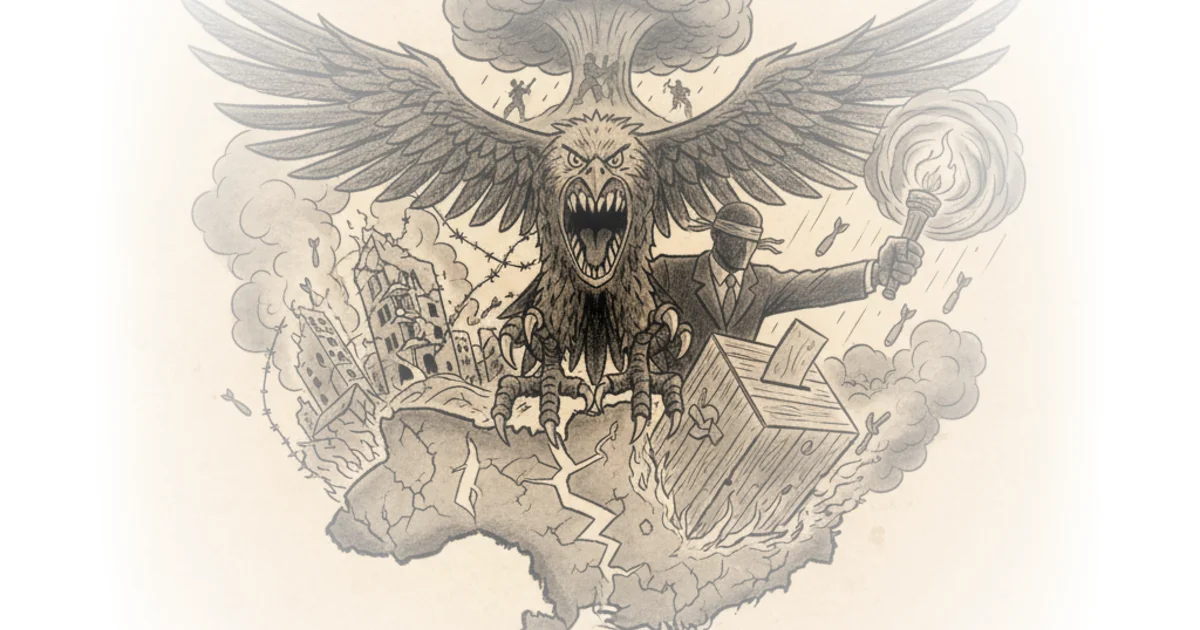
The stakes are laid bare in the specific constraints demanded of Kyiv. The plan requires Ukraine to recognize the annexation of Crimea and the Donbas, cap its military at 600,000 troops, and constitutionally bar NATO membership. Mak argues that these are not standard negotiation points but existential threats. "The document rather resembles a capitulation scenario that returns influence to Russia and leaves Ukraine in fear of the future," he observes. This framing is powerful because it strips away the euphemisms of "diplomacy" to reveal the raw power dynamics: a smaller nation being asked to disarm while the invader retains its conquests.
Critics might argue that without such concessions, the war could drag on indefinitely, causing further devastation. However, Mak counters this by invoking the historical precedent of the Minsk agreements, which promised security but delivered only more violence. "Ukrainians are promised reliable security guarantees, but from whom and what kind exactly?" he asks, noting that Russia's history of breaking treaties makes these promises hollow. The argument holds weight when one considers that the administration is prioritizing a quick political win over long-term stability.
Either die, or live not as slaves.
The Human Cost of "Rent"
Mak masterfully weaves personal narratives into the geopolitical analysis to illustrate why abstract territorial concessions are unacceptable to those on the ground. He introduces Sashko Matviienko, a reporter from the Donetsk region, to challenge the notion that Russia paying "rent" for occupied land is a viable solution. "Why will Russia pay some kind of rent for 'controlling' the Donetsk region [my hometown region], if they already included Donetsk into the Russian constitution?" Matviienko asks, a sentiment Mak uses to dismantle the economic logic of the plan. The piece suggests that for a nation whose land has been legally absorbed into the aggressor's constitution, financial compensation is a cruel joke.
The emotional core of the commentary rests on the memory of the 2014 Battle of Ilovaisk, where a "green corridor" for retreat turned into a massacre. Mak reminds readers that "the tragedy that struck me most as a child was Ilovaisk... Ukrainian troops found themselves encircled... Russian forces opened fire on columns of Ukrainian soldiers." This historical anchor serves as a stark warning against trusting the current administration's or Russia's assurances of safety. The parallel drawn between the broken promises of 2014 and the current proposal underscores a terrifying continuity in Russian strategy.
The human toll extends beyond the battlefield to the erosion of the future. Mak quotes medical worker Olena Lazorenko, who refuses to trade land for safety: "My son did not die for us to give up territories... So no concessions." This quote captures the moral weight of the decision, framing the peace plan not as a pragmatic choice but as a betrayal of the fallen. The commentary suggests that the administration's push for a deal ignores the reality that for many Ukrainians, the war is a fight for the very right to exist.
A Crisis of Confidence
The piece also addresses the internal fractures within Ukraine that the administration hopes to exploit. Mak notes a growing sense of hopelessness among the youth, with many leaving the country due to the uncertainty of the future. "A lot of young people are leaving the country... It gives a sense of hopelessness," says journalist Nastia Kryvoruchenko. This demographic exodus is presented as a direct consequence of the perceived lack of a fair path forward. The administration's pressure to sign a deal before the end of the year is framed not as a diplomatic necessity, but as a political maneuver to secure a victory amid domestic scandals.
Mak highlights the irony of a plan that demands Ukraine limit its army while facing an existential threat. "Ukraine's greatest security guarantee has always been and remains its army," he writes, contrasting this with the proposal to reduce forces by nearly a third. This contradiction exposes the fundamental flaw in the administration's approach: it treats the symptoms of the war while ignoring the cause. The plan assumes that reducing Ukraine's capacity to fight will satisfy Russia, a logic that ignores the lessons of history where appeasement only emboldened aggression.
The narrative concludes with a reflection on the destruction of the Kakhovka dam, a symbol of the irreversible loss inflicted by the conflict. Mak describes the loss of a childhood landscape, noting that "a whole part of my childhood disappeared" when the dam was blown up. This imagery serves as a metaphor for the proposed peace: a deal that would cement the loss of territory and history, leaving a scar that cannot be healed. "If we sign this now, we will simply be spitting at the cemeteries holding the graves of those whose lives were taken by Russia," Mariana Lastovyria is quoted as saying. This final image cements the argument that the proposed peace is not a resolution, but a desecration.
Bottom Line
Tim Mak's commentary succeeds by refusing to accept the administration's framing of the 28-point plan as a viable solution, instead exposing it as a capitulation that ignores the lessons of Ilovaisk and the Minsk agreements. The piece's greatest strength is its refusal to separate the geopolitical from the personal, grounding the abstract terms of a peace treaty in the lived trauma of those who have lost everything. The most significant vulnerability in the opposing view is its reliance on the assumption that Russia can be trusted to honor a deal it has already violated multiple times, a risk that history suggests is too high to take.