The news media is hemorrhaging readers. A recent analysis by Enders Analysis found that The Mirror's presence on Google has dropped 80% since 2019. The Mail has lost more than half its traffic. Even the Financial Times, a specialist publication with a loyal subscriber base, saw a 21% decline this spring. The culprit isn't poor editorial strategy—it's Google's AI overviews and AI mode features that now answer questions directly on the search page, often without crediting original sources.
This isn't a minor disruption. Google referrals to news sites have fallen from roughly 65% in 2019 to just 30% today. Millions of users have switched from traditional search engines to AI chat tools like ChatGPT, Claude, and Perplexity for research and real-time answers. In April, Apple reported the first ever decline in Safari search volume, directly attributed to users turning to AI chatbots instead of search. A December survey found 27% of American users and 13% of UK users now begin their information gathering with AI tools rather than search engines.
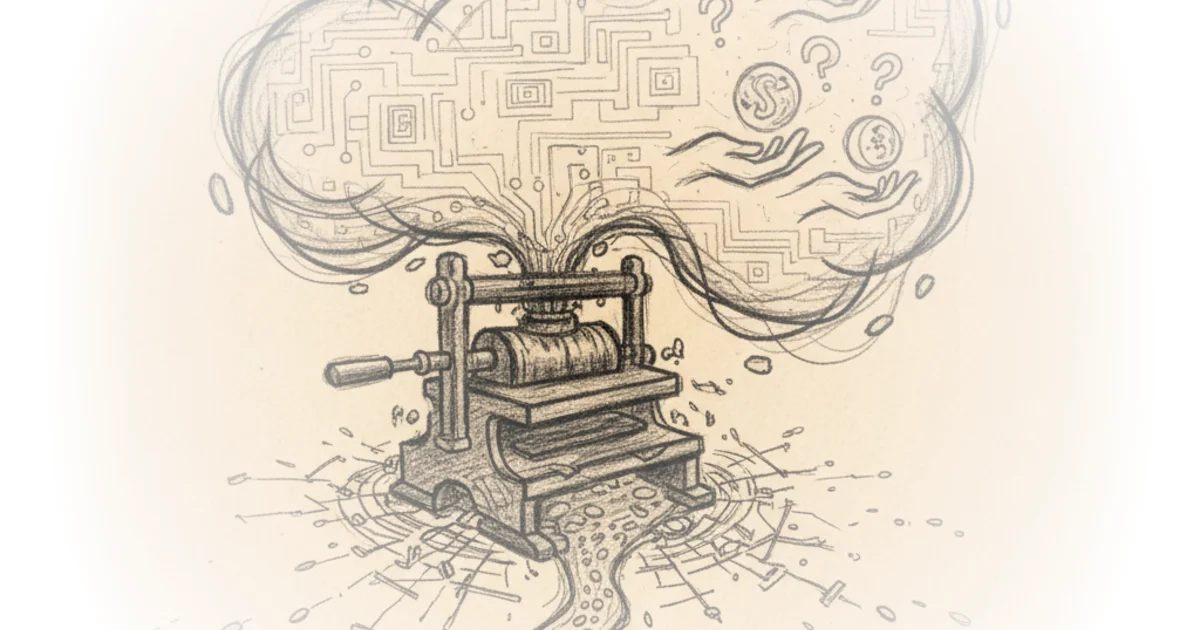
The shift is structural. These AI tools intercept audiences before they ever reach the source material. Publishers can't opt out without disappearing from search entirely. The economic model that sustained journalism—clicks, subscriptions, advertising—is being rapidly eroded by systems that extract value from news providers without returning any.
The Economics of Information
Good journalism is expensive to produce. It requires reporters on the ground, editors with judgment, and teams of fact-checkers. Traditionally, this work was funded through subscriptions or advertising. If users stop visiting websites, the incentive to produce original content disappears entirely.
Why would anyone write a news report simply for it to be scraped by AI bots, scrambled with other news, and delivered to an audience with no interest in how it was created? The result would be fewer investigations, fewer foreign correspondents, fewer deep dives into complex issues. The web turns into a hall of mirrors reflecting summaries of summaries—AI hallucinations and press releases with no original source in sight.
This isn't speculative. It's already happening. Science and education sites like Wikipedia are performing even worse than news publications. Health information sites have been the most impacted by this shift. Search engines were the gateway to the internet, but that gate is rapidly closing.
The Review Ecosystem Collapse
The problem extends beyond journalism. The entire ecosystem of online reviews—once vital for consumer decision-making—is breaking down. Before the internet, reviews were published in magazines, often influenced by big advertisers. The internet offered an alternative: independent reviewers who built trust through transparency and consistency. Tech reviewers, car reviewers, niche experts earned loyal audiences by being honest.
That trust didn't last. Sellers began gaming the system—offering free gifts or discounts in exchange for five-star reviews, paying bot farms to flood platforms with fake praise or sabotage competitors. Studies show that in categories like electronics and supplements, the majority of reviews may be fake. Now AI tools summarize these reviews but don't distinguish between honest feedback and manipulated content.
The review ecosystem isn't just about choosing the right headphones or booking a good hotel. It's part of how we evaluate truth. If AI tools can't be trusted because their source material is compromised, they lose a key pillar of credibility.
The Path Forward
Publishers are fighting back through multiple strategies. Some are deploying countermeasures—Cloudflare and other infrastructure providers now offer tools to block AI crawlers. Others are negotiating licensing deals with AI firms or suing. The New York Times has filed lawsuits against OpenAI and Microsoft, arguing that their models were trained on copyrighted journalism without permission.
The most effective approach may be branding. In a world where AI can mimic tone and summarize content, personality becomes currency. Publishers are promoting individual voices—columnists, YouTubers, Substack writers—as a way to build loyalty and retain traffic. The Wall Street Journal recently advertised for a talent coach to help journalists build personal brands. This mirrors the rise of the creator economy where independent journalists build direct relationships with audiences through newsletters, podcasts, and paid subscriptions.
But even these models depend on visibility. If AI tools intercept the audience before they reach the creator, the economics still collapse.
Some startups are trying new approaches. Toll Bid describes itself as a paywall for bots, allowing content sites to charge AI crawlers variable rates—charging more for fresh stories than old ones. The firm argues that charging for access incentivizes uniqueness, unlike traditional search which rewards generic content. Another approach from Pratta proposes that ad revenue from AI-generated answers should be redistributed to the sites whose content contributed to those answers.
The Authenticity Problem
The irony is that building personality as a mode only works if the personality is real. AI-generated influencers are already gaining traction—synthetic voices, synthetic faces, synthetic opinions. If the last defensible asset is authenticity, then the next arms race is over what it means to be real.
There's also a growing concern with users turning to AI chatbots: these companies have aggressively oversold their capabilities. The systems are pitched as super-intelligent beings, smarter than any expert, unbiased by design, capable of answering anything. That framing gives users a false sense of confidence in the output. Elon Musk has claimed his chatbot Grock is more intelligent than PhD holders in every discipline—that it can discover new physics and outperform humans on humanity's last exam.
But here's the real problem: AI tools depend on fresh, high-quality content to function. They need journalists to gather facts, analysts to interpret data, reviewers to test products. If those people can't earn a living, the source material dries up. The bots will still generate answers, but they'll be stitched together from outdated articles, press releases, and propaganda.
AI ends up eating itself.
"If news organizations and reporters can no longer earn a living by doing the hard work of researching an important story, that work just won't be done."
Bottom Line
The core argument is clear and well-supported: AI tools are systematically destroying the economic model that funds original journalism. The evidence is measurable—traffic declines, user behavior shifts, revenue evaporation. The weakness is less obvious but equally significant: even if publishers successfully pivot to personal branding and direct audience relationships, they still depend on visibility in a landscape where AI intercepts everything. The path forward requires not just adaptation but fundamental restructuring of how AI companies compensate for the content that trains them—otherwise the open web evolves into something unrecognizable: a hall of mirrors reflecting summaries of summaries with no accountability and no original source in sight.