Sub Club reframes the act of literary submission not as a transactional hurdle, but as a vital, unpaid labor that sustains the entire ecosystem of contemporary writing. While most guides focus solely on acceptance rates, this piece argues that the very act of sending work out is a "noble thing" that upholds the community, a perspective that shifts the reader's focus from personal validation to collective stewardship.
The Economics of Community
The piece opens with a candid admission about the nature of modern writing work: "It can be a wonderful thing to get to work as a writer full time, but it's also very rare." Instead of dwelling on the scarcity of paid positions, the editors pivot to the value of the submission process itself. They posit that when writers submit, they are "actively taking part in the literary world, propped up by other working writers just like you." This is a crucial distinction. It suggests that the literary field is not a pyramid where only the few at the top succeed, but a network where the act of participation is the glue holding it together.
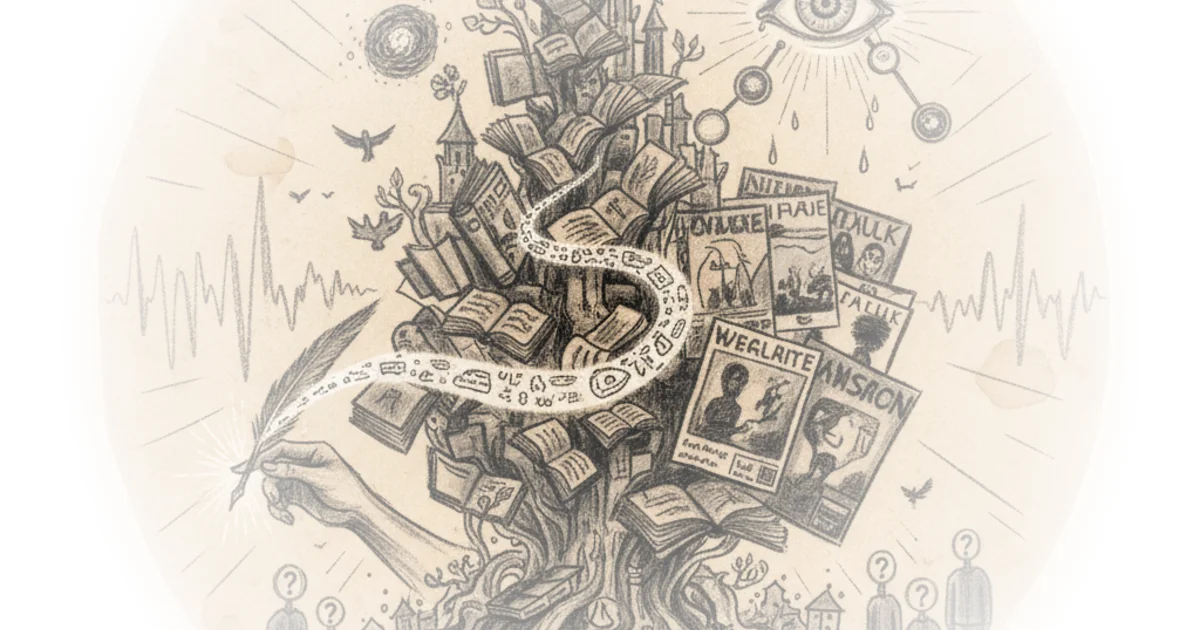
Sub Club reports, "You're working for yourself, but not exactly for any money... And you're also working for other writers in a way." This dual motivation—personal ambition mixed with communal duty—resonates deeply in an era where the traditional gatekeepers of publishing are increasingly inaccessible. The editors note that while goals vary from "career or prestige" to simply "finding a husband," the shared action of submitting creates a unified front. This framing is effective because it validates the frustration of rejection while elevating the process to something meaningful regardless of the outcome.
"In this act of submitting our work I think we're also upholding in our small ways the literary community at large. Call me grandiose or whatever, but I think that's a noble thing."
However, the piece acknowledges the financial reality that often complicates this noble ideal. The editors explicitly state, "I wanted to specifically give you opps that are monetarily accessible," filtering the list to exclude those with reading fees. This is a significant editorial stance. In the landscape of literary magazines, the practice of charging "article processing charges" or reading fees has become a contentious barrier, particularly for emerging voices. By curating a list that pays and charges nothing, Sub Club is not just offering opportunities; they are implicitly critiquing a system that monetizes the hope of publication. This aligns with historical shifts where the rise of digital platforms has democratized access, yet financial barriers have often replaced physical ones.
Curated Access and Human Curation
The core of the article is a list of 23 magazines, but the value lies in the "Mole Notes"—a new feature where a fictional mascot provides personalized, almost conversational advice for each outlet. This is a clever way to humanize the often sterile process of reading submission guidelines. Sub Club writes, "Moles be crazy sometimes. But seeing as he's super cute... I think it'll be worthwhile." This whimsical approach masks a serious utility: it translates dry guidelines into actionable, emotional intelligence.
For instance, regarding Haven Speculative, the note warns, "They have a firm stance against LLM-gen'd work, so, like, don't send that." This is a timely intervention. As artificial intelligence floods the literary market, many small presses are scrambling to define their boundaries. By flagging this early, the piece protects writers from wasting time on platforms that explicitly reject machine-generated content. Similarly, for Sun Thief Literary Journal, the editors highlight that the magazine wants "difficult" work, a term rarely seen in standard calls for submissions. This signals to writers that they don't need to dilute their voice to fit a mold, but rather that some spaces are actively seeking the complex and the challenging.
Critics might note that focusing exclusively on magazines that pay and charge no fees, while admirable, could inadvertently narrow the scope of the "best" places to submit. Some of the most prestigious literary journals operate on a volunteer basis or charge small fees to cover printing costs. By excluding these, the piece risks reinforcing a binary where only "accessible" (i.e., free and paying) venues are worth the writer's time, potentially overlooking venues that offer immense prestige despite their financial models.
"Even though we're not making millions by submitting our work and trying to build our writing careers, it's a beautiful thing to get paid for your writing. I know folks who have framed their first checks from lit mags. How fucking sweet."
The inclusion of specific, granular details—such as the 40-line limit for Carmen et Error or the biannual print-only nature of Edmontonland—demonstrates a deep familiarity with the landscape. The editors remind readers that Poet Lore, founded in 1889, is "America's oldest poetry magazine," grounding the modern submission in a long lineage of literary history. This historical context is vital; it reminds writers that they are entering a conversation that has been ongoing for over a century, not just chasing a fleeting trend.
The Shape of the Future
The piece concludes with a call to action that is both urgent and encouraging: "Go be your amazing writer selves, friends, and go get published, but go make money but most of all GO SUBMIT!" This rallying cry cuts through the paralysis that often accompanies the submission process. By emphasizing the "noble" nature of the act, the editors provide a psychological buffer against the inevitable rejections. The argument is that the community needs the work as much as the writer needs the publication.
Sub Club's approach to curation—blending hard data (deadlines, pay rates) with soft intelligence (tone, specific preferences)—offers a model for how writers can navigate an overwhelming field. They are not just listing opportunities; they are teaching writers how to read the room. Whether it's noting that Foglifter is interested in "intersectional identities" or that Gordon Square Review is run by Literary Cleveland to spotlight local writers, the piece provides a map of the literary world's diverse ecosystems.
Bottom Line
Sub Club's strongest argument is that the submission process is a form of community labor that deserves to be recognized as such, regardless of the paycheck. Its biggest vulnerability lies in its strict financial filtering, which, while ethically sound, may overlook prestigious outlets that operate on different economic models. Writers should watch for how the industry continues to grapple with the intersection of AI, fees, and accessibility in the coming year.
"In this act of submitting our work I think we're also upholding in our small ways the literary community at large. Call me grandiose or whatever, but I think that's a noble thing."
The piece succeeds not by promising fame, but by validating the quiet, persistent work of writers who keep the literary world alive. It is a reminder that while the checks may be small, the contribution to the culture is immense.