Matthew Clayfield delivers a stinging critique of a cultural phenomenon that has long festered in plain sight: the transformation of a literary giant into a hollow, masculine lifestyle brand. While many critics have dissected Hemingway's prose, Clayfield uniquely targets the modern devotees who idolize the man's vices while ignoring the nuance of his work, arguing that this selective worship reveals a desperate need for purpose in a fractured world.
The Idol vs. The Work
Clayfield begins by contrasting his own deep, text-based engagement with the author against the superficial fandom he observes in online communities. He notes that while he has read everything from A Farewell to Arms to the posthumous The Garden of Eden, the typical fan in his Facebook group seems to prefer the myth. "My problem with the members of this group... is that their love of Hemingway is entirely back-to-front: they idolise the man, not the work," he writes. This distinction is crucial; it suggests that the modern appeal of Hemingway has shifted from literary merit to a performative identity.
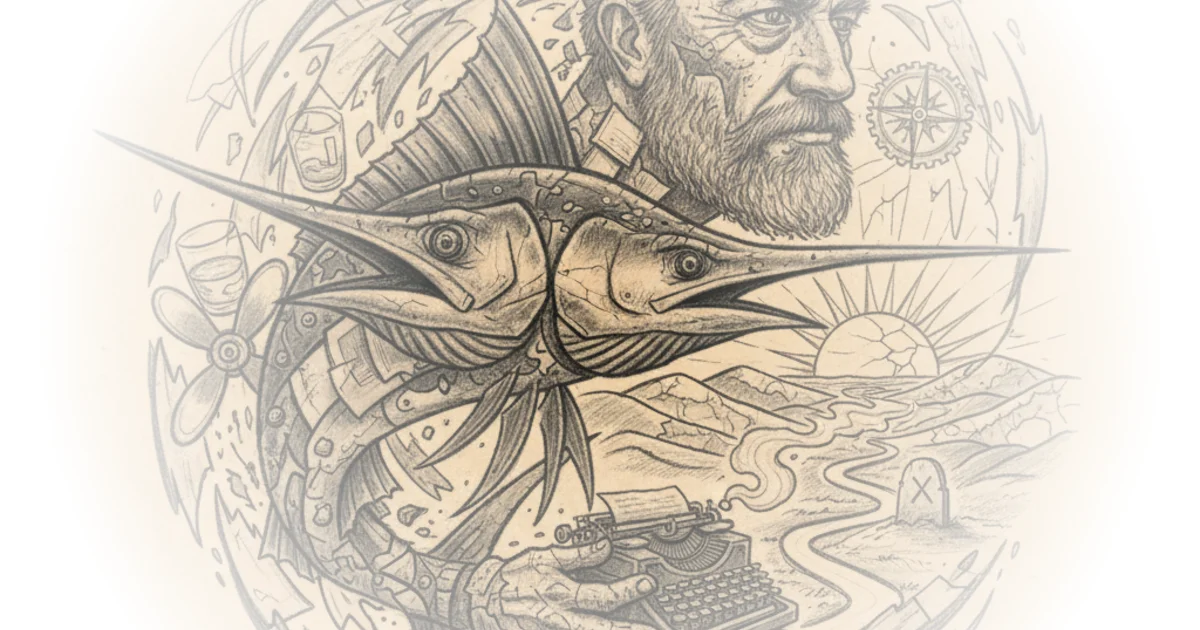
The author observes that these fans often claim to love the books but fail to distinguish between masterpieces and failures. Clayfield points out that they treat Across the River and Into the Trees as equal to A Farewell to Arms, a novel he bluntly dismisses. "Believe me when I say that it isn't. Across the River and Into the Trees is bad," he asserts. This blunt assessment serves as a litmus test for the reader's engagement: if you cannot tell the difference, you are likely consuming the brand, not the literature. The argument holds weight because it exposes a cognitive dissonance where the aesthetic of the writer is celebrated while the actual quality of the writing is ignored.
Ernest Hemingway is not your friend, and not only because he's dead. He wouldn't have been your friend had he lived.
The Brand of the Boor
Clayfield traces the origins of this phenomenon to Hemingway himself, identifying him as America's first "author-as-lifestyle-brand." He argues that prior to Hemingway, Mark Twain was the most famous American author, but Hemingway changed the game by making his face and life the product. "His face could sell magazines, his life could sell products, his travel choices could sell package tours," Clayfield notes. This commercialization has outlasted the man, creating a feedback loop where the brand overshadows the text. The irony is palpable, especially when considering how the literary world now treats other icons like Joan Didion, whose belongings have been similarly commodified despite her own objections to such practices.
The commentary takes a darker turn when examining the psychological drivers behind this fandom. Clayfield suggests that for many older men, the Hemingway myth offers permission to be a "boor" in a culture that no longer values such behavior. "The fact that he would most likely have loathed you is evidenced by the work. But then these guys wouldn't know that, having not read it properly in the first place," he argues. This is a devastating critique of the fanbase's self-awareness. It implies that the very traits they emulate—aggression, competitiveness, emotional detachment—are the traits Hemingway himself used to alienate others, a fact that would be obvious to a careful reader.
Critics might argue that this analysis is too harsh on the fans, suggesting that their admiration for the "literary outdoorsman" is a harmless nostalgia for a simpler time. However, Clayfield counters this by linking this nostalgia to a dangerous political drift. He references the "desperate unmet need for community" that drives men toward conspiracy theories or extremist politics, noting that Hemingway's grandson has become a vocal Trumpist. The connection between the romanticized violence of the past and the chaotic politics of the present is a compelling, if unsettling, thread.
The Lens of History
The piece also pivots to critique the broader cultural narrative surrounding American history, specifically targeting filmmaker Ken Burns. Clayfield finds Burns' recent comments on the American Revolution to be "positively unhinged," particularly the claim that it is the single most important event since the crucifixion. "I have to remind myself that he, the man who rightly made the history of baseball a story about racism, insisted on describing the Mỹ Lai massacre as 'killing' rather than 'murder,'" Clayfield writes. This observation highlights a recurring issue in liberal American exceptionalism: the tendency to sanitize violence and center the American experience even when discussing atrocities.
This section serves to broaden the scope of the argument beyond literature. It suggests that the same "brainworm" of myopic nationalism that distorts the memory of the Vietnam War also fuels the romanticization of Hemingway's life. The refusal to engage with the full horror of history—whether it be the My Lai massacre or the brutal reality of Hemingway's personal relationships—creates a distorted mirror in which these men see themselves. As Clayfield puts it, "Read in a blinkered, romantic way, Hemingway's life seems vital and important in a way a lot of our lives now do not."
The impulse to live lives of action and purpose, like Hemingway's during the 1930s, is understandable, and, to me, familiar. It is also wrongheaded.
Bottom Line
Clayfield's most potent argument is that the Hemingway cult is a symptom of a deeper cultural malaise, where men seek a sense of purpose in a hollowed-out version of the past. The piece succeeds by refusing to separate the art from the artist's toxic legacy, forcing the reader to confront the uncomfortable reality that the man they admire would likely despise them. The biggest vulnerability of the argument is its sweeping generalization of the fanbase, which risks alienating genuine admirers who may not fit the "boor" archetype. However, the core insight remains undeniable: we must read the work, not the myth, if we are to understand the true cost of this literary legacy.