In an era where privacy advocates are desperate for a single, trustworthy sanctuary, The Hated One delivers a jarring counter-narrative: the very ecosystem designed to protect you might be the most dangerous trap of all. While most coverage celebrates Proton's expansion from encrypted email to a full digital suite, this piece argues that consolidating your entire digital life into one provider creates a single point of failure that no amount of encryption can fix.
The Trap of Convenience
The Hated One opens with a fundamental warning about the nature of digital ecosystems, regardless of their ethical branding. "Ecosystem is a trap. It lures you in with a promise of convenience only to lock you inside a walled garden like Google and Apple." This comparison is provocative because Proton has built its reputation explicitly on being the anti-Google. The author argues that the danger isn't just about selling user data for ads, but about the sheer concentration of power. "Ecosystems are concentrating all of your data and your digital life in the hands of a single entity. An entity that grows so large and powerful it will start making compromises against your rights only to find more ways to profit or to protect their business."
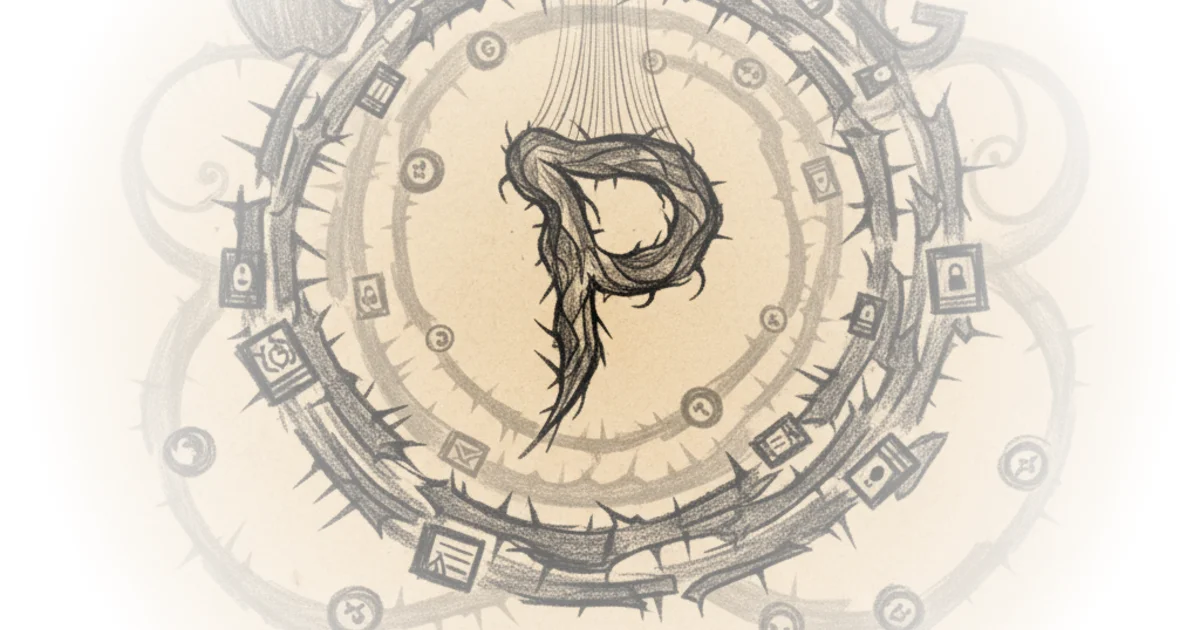
This framing is effective because it shifts the debate from "who has the best encryption" to "what is the structural risk of centralization." The author points out that while Proton doesn't sell data for advertising, it still holds the metadata—the IP addresses, payment methods, and usage patterns—that can be just as revealing. The Hated One writes, "The US government kills people based on metadata." By expanding into VPNs, calendars, and password managers, Proton has inadvertently created a comprehensive profile of its users that, if compromised or subpoenaed, offers a complete map of a person's digital existence.
Critics might note that the author's fear of a "single point of failure" applies to any major service provider, and that the convenience of a unified account often outweighs the theoretical risks for average users. However, for the specific demographic Proton targets—journalists, activists, and dissidents—the stakes are indeed life-or-death.
The Metadata Paradox
The core of the argument hinges on the distinction between content encryption and metadata visibility. The Hated One highlights a critical vulnerability: even if the email content is unreadable, the provider knows who you are talking to and when. "Your Proton metadata? It's your IP address, your recovery phone and email address, payment methods, usage data, telemetry, browser fingerprints, all things that can be and are used to crack down on dissidents, activists, journalists, all the people Proton is supposed to protect."
The piece cites a specific incident where French police compelled Proton to log an IP address and browser fingerprint of an activist. This real-world example dismantles the idea that a "privacy-first" company can remain immune to legal pressure. The Hated One notes that Proton's website used to claim they did not keep IP logs by default, a statement that proved misleading when authorities intervened. "It doesn't matter what Proton's default policy is if it can be ordered by authorities to change it." This is a sobering reminder that legal frameworks, not just code, dictate privacy.
Your data belongs to you is exactly from the textbooks of every big tech company. Sure you own your data but we are the ones who hold it and have an irrevocable license to do whatever we want with it is the translation.
The author's critique of Proton's language is sharp and necessary. By adopting the vague, user-friendly slogans of the very tech giants they oppose, Proton risks obscuring the reality of their legal obligations. The argument gains weight when the author contrasts Proton with competitors like Tuta Mail, who deliberately avoid building a VPN service to prevent this exact conflict of interest. "You're absolutely right. It doesn't make sense to put all eggs into one basket. This is exactly the reason why we would never um build a VPN service because if you have email and VPN in the same from the same provider, it is just too dangerous if you get a court order."
The Fragility of the Monolith
Beyond legal risks, The Hated One explores the operational dangers of a massive, interconnected system. The more products a company offers, the larger the attack surface for hackers and nation-state actors. "Compromising just one of them means compromising all of them. Ecosystems are incompatible with security." The author paints a terrifying scenario where a single vulnerability in the password manager could lead to the loss of email, cloud storage, and two-factor authentication tokens simultaneously.
The piece also addresses the human element: account suspension. The Hated One points to the recent purging of journalist accounts at the magazine Frag following a government request. "Proton has the right to suspend your accounts. They can do this of their own volition when they of course suspect suspicious activity. But they can also be asked or compelled by an agency to get rid of your account." This highlights the fragility of relying on a private company to uphold your rights when that company is subject to political pressure.
Furthermore, the author warns that businesses inevitably evolve, often away from their founding principles. "On the long enough timeline, every business becomes the villain. You either die a hero or you live long enough to see yourself become the villain." The history of WhatsApp, sold to Meta and subsequently monetized, serves as a cautionary tale for any privacy-focused startup that seeks scale. Even if Proton's current leadership is ethical, the author argues that the pressure to grow revenue and the potential for acquisition make long-term privacy guarantees impossible.
The Solution: Compartmentalization
The Hated One concludes with a practical, albeit inconvenient, solution: "droton." This involves breaking up the ecosystem and using different providers for different functions. "The most important thing to separate would be the VPN. If you want to use Proton Mail, you should use a different VPN like Mullvad VPN or IVPN." The author suggests a strategy of compartmentalization, where no single entity holds all the keys to a user's digital life.
This advice is grounded in the principle of defense in depth. By spreading data across multiple providers, users ensure that a breach or legal compulsion against one service does not result in total exposure. The Hated One writes, "What we learned from ecosystems of Google and Apple is that we cannot and should not trust a single entity with all of our data." While this approach requires more effort from the user, the author argues it is the only way to maintain true privacy in an increasingly hostile digital landscape.
Ecosystems are incompatible with security.
Critics might argue that this level of compartmentalization is too burdensome for the average user, potentially driving them back to the convenience of a single provider. However, for those whose safety depends on privacy, the trade-off is non-negotiable.
Bottom Line
The Hated One's critique is a vital corrective to the uncritical praise often directed at Proton, exposing the inherent risks of consolidating digital life into a single, albeit ethical, ecosystem. While the argument relies heavily on worst-case scenarios regarding legal compulsion and corporate evolution, its core message—that convenience is the enemy of security—resonates deeply in the post-Snowden era. The strongest takeaway is not that Proton is malicious, but that its very success in building a comprehensive suite creates vulnerabilities that no amount of encryption can fully mitigate.