Jacob Siegel's new book arrives at a moment of peculiar institutional irony: the very administration that dismantled the federal government's anti-disinformation infrastructure is now rebuilding something functionally identical under different branding. Compact Magazine's review of The Information State seizes on this contradiction and refuses to let go.
The Apparatus That Would Not Die
The review opens with a recent State Department cable directing embassies worldwide to "launch coordinated campaigns against foreign propaganda" — with Secretary of State Marco Rubio recommending partnerships with military psychological operations units and promoting Elon Musk's X as an "innovative" tool for "countering anti-American propaganda." The piece notes the rich irony: this is essentially the same mandate the administration had spent its first months dismantling.
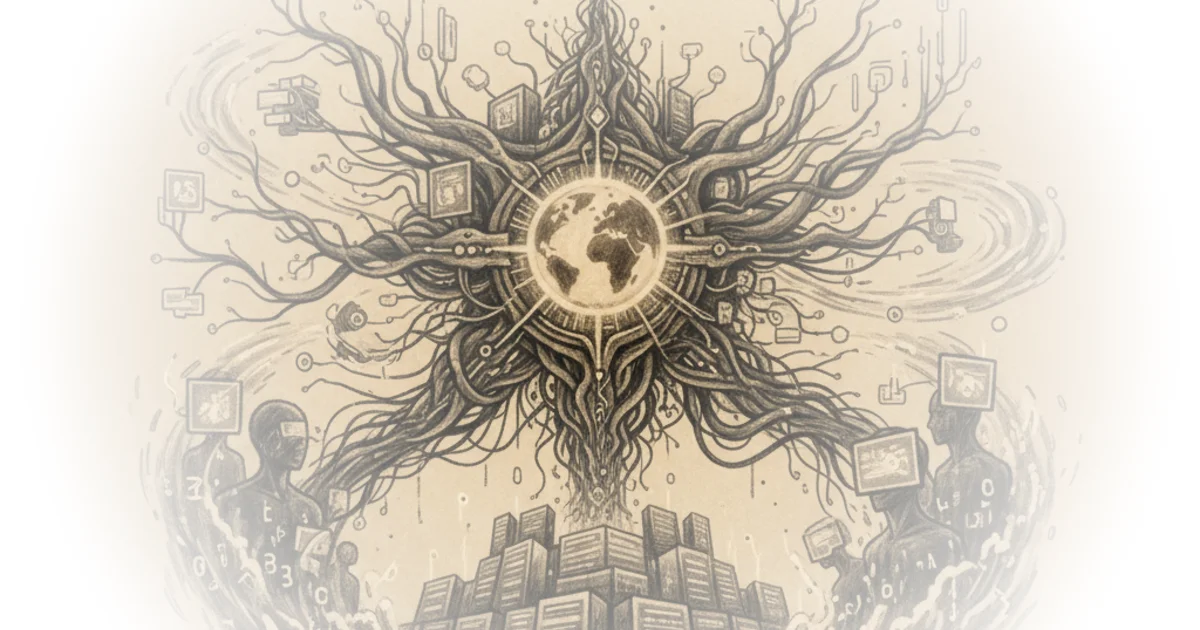
The Global Engagement Center, established by executive order in the final year of Barack Obama's presidency, existed precisely to counter foreign propaganda. Congress defunded it shortly before the current administration took office; Rubio shut down what remained in April 2025. The official rationale, as Compact Magazine summarizes, was that the center had become part of a "censorship industrial complex" targeting American citizens — conservatives and critics of liberal institutional power in particular.
Conservative journalist Benjamin Weingarten, in testimony to the House Foreign Affairs Committee around the time of the center's dissolution, decried the "turning of federal agencies … tasked with targeting foreign adversaries instead on Americans and our core political speech," calling the center "a key cog in such efforts." Musk's release of internal Twitter documents — the so-called Twitter files — helped popularize this critique, revealing the platform's content moderation decisions and its interactions with government and nonprofit actors concerned with disinformation.
Siegel's 2023 Tablet essay, "A Guide to Understanding the Hoax of the Century," was the most comprehensive account of this network's formation, tracing its roots to military and intelligence responses to ISIS, Ukraine's Euromaidan uprising, and Russia's annexation of Crimea in 2014. Those events, in Siegel's telling, "convinced US and NATO security officials that the power of social media to shape public perceptions had evolved to the point where it could decide the outcome of modern wars." The concept of "hybrid warfare" — military force combined with digital influence operations — was the result.
How Foreign Tools Came Home
Siegel's new book extends this argument across centuries, tracing state efforts to control information from the France of Louis XIV to the present. But his particular emphasis falls on two earlier American episodes when rapid technological change collided with military adventurism: the Wilson presidency and the Vietnam era.
World War One, in Siegel's account, was the founding moment of modern state propaganda. Progressive intellectuals — convinced of their technocratic mission — went to Washington to help manage public opinion using the new mass media of the day. The result was Woodrow Wilson's Committee on Public Information, which mobilized newspapers, films, and speakers' bureaus in support of the war effort while suppressing dissent. Walter Lippmann, among the committee's most prominent intellectual collaborators, later regretted his participation.
A generation later, the "best and the brightest" around Lyndon Johnson tried again, instrumentalizing early information technology for military ends in Vietnam — and discovered, as Compact Magazine summarizes, that their computer models were not the war. The arrogance deflated elite technocratic authority for a decade. Congressional backlash produced new civil liberties protections, including the Foreign Intelligence Surveillance Act courts, which Siegel dismisses as largely symbolic: the courts, he writes, have "turned into a rubber stamp."
The pattern in both cases, as the piece emphasizes, is that the damage outlasted the backlash. Wilson's Committee on Public Information was disbanded, but "the functions of propaganda, censorship, and publicity diffused throughout countless government offices, public relations agencies, military and intelligence bureaus, and advertising firms." The apparatus did not die; it dispersed.
"The weapons of hybrid warfare were still lying around, waiting to be picked up."
The Pendulum and Its Limits
Siegel draws an explicit parallel between Warren Harding's 1920 election — won "with a mandate to roll back the excesses of the Woodrow Wilson administration" — and the current administration's return to power in 2024. Voters in both cases turned against governments that had used emergency measures to suppress political criticism. But Compact Magazine's reviewer presses on a significant asymmetry: Harding pardoned Socialist presidential candidate Eugene Debs along with two dozen other political prisoners, bailing out ideological enemies on something like principle. "Comparable magnanimity to left-wing enemies," the review dryly observes, "is hard to imagine coming from the Republican currently in the White House."
More pointedly, the review questions whether the information state was ever really dismantled. The administration demolished the central bureaucratic mechanisms of the prior decade's disinformation apparatus, but it "maintained the state of emergency" to pursue political targets on the left. Meanwhile, "much of the technical infrastructure of the information state, while dormant, remained fundamentally intact." Rubio's new cable is the clearest evidence yet that dormancy was temporary.
The reviewer also challenges Siegel's framing of the Musk-administration alliance as somehow outside the information state's logic. During the period when Musk held a White House office and his DOGE operation was overseeing agency demolitions, he publicized the effort on X, whose algorithm was weighted to amplify his own posts and those of his political allies. This, the review argues, "was another, more chaotic, iteration of the public-private partnerships that, in Siegel's telling, are the essence of the information state." Whether or not the government was formally directing algorithmic decisions, the outcomes were structurally similar.
The Cyberlibertarian Contradiction
Here the review identifies what may be the book's deepest tension. Siegel's intellectual guide is not the optimistic cyberlibertarianism of John Perry Barlow — whose "Declaration of the Independence of Cyberspace" celebrated the internet as a spontaneously free space beyond state reach — but the French philosopher Jacques Ellul, whose 1954 work The Technological Society argued that "technique" colonizes all human values and relationships. TikTok, in Siegel's Ellulian reading, "attacks the intrinsic worth of human values and relationships by demanding that anything that can be converted into data will be."
The reviewer finds Siegel unable to resolve the contradiction these two frameworks generate. If Ellul is right that algorithmic platforms are inherently coercive regardless of state involvement, then freedom from state censorship does not make a platform free. But at points, Siegel seems to endorse the cyberlibertarian conclusion that the government should leave the internet alone — that the fact "the government was no longer directing how the social media companies deployed those algorithms … made public life freer." The reviewer's verdict is unambiguous: Musk's X "is neither less manipulative nor less enmeshed with state power" than its predecessor.
Critics might note that this critique cuts both ways. If all algorithmic platforms are information states by another name, then the relevant question shifts from "is there state involvement" to "whose interests does the platform serve and how transparently." Siegel's Ellulian frame, taken seriously, would demand scrutiny of private algorithmic power that goes well beyond the review's scope — and would complicate any simple verdict about which information regime is more or less free.
The China Convergence Question
Toward the end of the book, Siegel engages with N.S. Lyons's theory of "China convergence" — the proposition that all advanced technological societies are gravitating toward the same terminus of "totalizing techno-administrative governance," with China's social credit system as the most fully realized version and everyone else moving in the same direction. The American iteration under the prior administration was a "whole of society" approach: "a new technique of governance that circumvented the normal legislative process by seizing the levers of the digital system to enact sweeping policy changes."
What separates the American and Chinese cases, in Siegel's account, is outcome rather than intent. China's Communist Party has been largely successful in using digital technology to consolidate its rule. The American "whole of society" apparatus failed — and worse, "accelerated a debilitating collapse of legitimacy across American society." The Biden administration's reliance on digital opinion management fostered an "illusion of control" that "blinded the administration to the limits and costs of its reliance on digital opinion formation," causing it to lose "not only the consent of the governed but its tether to a shared reality."
The reviewer extends this diagnosis to the present, suggesting that reality-detachment may be a structural liability for any administration that attempts to govern the information state — not a pathology specific to one party or tendency. That observation carries more weight than either side of the current political debate is likely to find comfortable.
The Temperance Misdiagnosis
Compact Magazine's reviewer pushes back on one of Siegel's more striking analogies: his characterization of "anti-disinformation crusaders" as "a modern temperance movement" that "demanded that wicked information be purged from the public square to save innocent souls." The comparison, the review argues, flatters the crusaders by association. The original temperance movement was a mass democratic movement, not an elite technocratic project, and it was animated by explicit moral convictions about the good life. The anti-disinformation enterprise, by contrast, offered "no positive vision of the future" — its practitioners "focused on the state's power to remediate harm" rather than any affirmative account of human flourishing.
Critics might further note that Siegel's historical framework, for all its sweep, treats the information state primarily as a problem of elite overreach rather than a problem of democratic deficit. The populations subjected to propaganda — whether by Wilson's committee, Johnson's technocrats, or the Obama-era disinformation apparatus — are largely passive in his account. A fuller treatment might grapple with why mass audiences have proven so susceptible to each iteration of manufactured consent, a question Walter Lippmann himself raised when he coined the phrase not primarily in reference to state projects but to the "proliferation of unregulated private enterprise dedicated to different forms of publicity and propaganda."
The reviewer ends on a note that is both diagnosis and lament: the absence of any social consensus on norms for the online public sphere — the kind of rough agreement that exists around alcohol regulation, however imperfect — will "inevitably lead to heavy-handed attempts to reimpose order." The weapons are lying around. They will be picked up.
Bottom Line
Jacob Siegel's The Information State is, by Compact Magazine's account, the most historically serious treatment yet of how foreign propaganda infrastructure came to be turned on domestic audiences — and why dismantling it proves harder than it looks. The book's deepest tension, unresolved, is whether its Ellulian technological determinism leaves any meaningful political agency at all, or whether every administration, whatever its promises, inherits the same apparatus and eventually reaches for the same tools. Given Rubio's March cable, the answer appears to be arriving faster than expected.